Alabama DMV Permit Test Simulator

4.5 out of 5 (933 votes)
80% Passing score
30 Questions
6 Mistakes allowed
Preparing for the Alabama DMV permit test is not something you want to treat casually, even if the test itself looks simple on the surface. This Alabama permit practice test is built to feel close to the real DMV written test, with 30 questions and a passing target of 24 correct answers, or 80%. That number matters. It is the line between being ready and having to come back and try again. The questions focus on the same core material Alabama applicants are expected to know: traffic laws, road signs, safe-driving rules, and the Alabama Driver Manual. And yes, road signs count. Alabama does not break them off into some separate little road-sign-only test for a standard Class D learner license. They are folded into the main knowledge exam, right alongside rules about signals, pavement markings, right of way, and the everyday decisions that make driving either manageable or, frankly, a mess. What makes this Alabama DMV practice test useful is the way it keeps you from getting too comfortable. The questions are randomly selected each time, so you are not simply memorizing one fixed set of answers and calling that studying. That kind of shortcut can feel reassuring for about five minutes, until the real Alabama permit test gives you something worded differently. Here, the repetition works the right way. You see the topics again and again, but not always in the same order or the same shape. It is especially helpful for new drivers working toward a Class D learner license. Alabama allows a restricted learner license at 15, while applicants 16 and older may also qualify for a learner license after passing the required examination. The written test is only one step, of course—there are documents, fees, vision screening, and eventually the road test—but this is the part you can actually practice before you walk into an ALEA office. And there is something practical about that. Whether you are picturing Birmingham traffic, rural roads, sudden weather, slow-moving vehicles, or just the ordinary pressure of sitting for a test you really do not want to fail, this Alabama permit test online gives you a steadier way to prepare. Take it once, take it again, miss a few, learn why, and keep going until the material feels familiar instead of merely memorized.
FREE DMV Practice Test App
Study for your Alabama permit test or driver’s license with the NextDoorDriving app. 700+ DMV questions and answers, 100% free!
Download on the App Store

Sample Alabama Permit Test Questions

Question 1

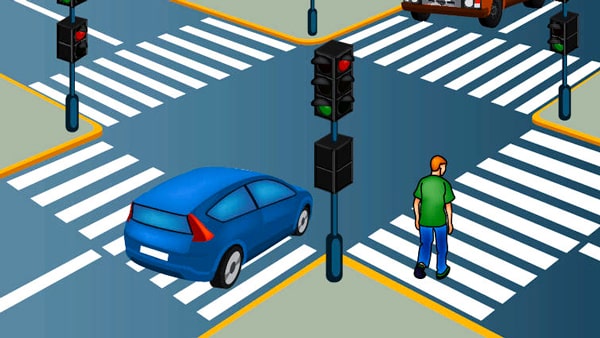
At a steady red signal, where must you stop if there is no marked stop line?

  1. A In the middle of the intersection
  2. B Before entering the near-side crosswalk
  3. C Immediately beyond the crosswalk
  4. D At least 15 feet from the corner

Correct answer: B – Before entering the near-side crosswalk

In Alabama, a driver facing a steady red signal must stop at the marked stop line. If there is no stop line, the driver must stop before entering the crosswalk on the near side. If neither a stop line nor a crosswalk exists, stop before entering the intersection.

Source: Ala. Code § 32-5A-32(3)a – Traffic-Control Signal Legend

Question 2

Brake lights appear on several vehicles ahead of you. What should you do?

You should usually drive slower when:
  1. A Move closer before traffic slows
  2. B Look away from traffic to find another route
  3. C Move your foot toward the brake and prepare to stop
  4. D Maintain speed until the vehicle directly ahead brakes

Correct answer: C – Move your foot toward the brake and prepare to stop

Brake lights ahead indicate that traffic may be slowing or stopping. Move your foot toward the brake promptly and watch whether the distance ahead is decreasing. Early preparation gives you more time to reduce speed and helps prevent a rear-end collision.

Source: Alabama Driver Manual — Ch. 4, “How to Avoid Rear-End Collisions”

Question 3

You are turning right on green as a pedestrian begins crossing the street you are entering. Who must yield?

You are waiting at a red light to turn right, and a pedestrian on your right is waiting to cross the street you want to enter. Who has the right-of-way when your light turns green?
  1. A You must yield to the pedestrian
  2. B The pedestrian must yield unless the crosswalk is marked
  3. C The pedestrian must yield because your signal is green
  4. D Whoever enters the crosswalk first has right-of-way

Correct answer: A – You must yield to the pedestrian

A pedestrian facing a green signal may generally cross within a marked or unmarked crosswalk unless a pedestrian signal directs otherwise. A driver turning on a circular green signal must yield to a pedestrian lawfully within the adjacent crosswalk. In Alabama, the green light permits the turn but does not provide absolute right-of-way.

Source: Ala. Code § 32-5A-32(1)a, c – Traffic-Control Signal Legend

Question 4

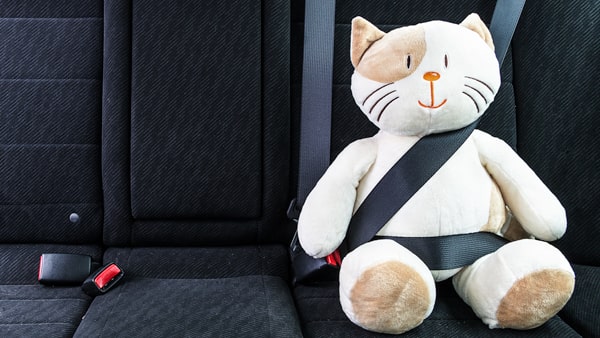
Properly worn seat belts are:

  1. A Effective only during high-speed crashes
  2. B An effective way to reduce death and serious injury in crashes
  3. C Designed primarily to prevent collisions
  4. D Needed only in heavy traffic

Correct answer: B – An effective way to reduce death and serious injury in crashes

Seat belts help protect occupants from death and serious injury when a traffic crash occurs. They should be worn on every trip, regardless of speed or traffic conditions. A belt is an occupant-restraint system and does not prevent the driver from becoming involved in a collision.

Source: Alabama Driver Manual — Ch. 3, “Alabama’s Safety Belt and Child Restraint Laws”

Question 5

Which statement correctly describes Alabama’s safety-belt requirement?

You must use your seat belt:
  1. A Belts are required only on interstate highways
  2. B Only front-seat occupants are required to buckle up
  3. C A violation may result in a fine of up to $25
  4. D Belts are optional when traveling below 35 mph

Correct answer: C – A violation may result in a fine of up to $25

Each occupant of a covered passenger car must have a safety belt properly fastened while the vehicle is moving, subject to the listed statutory exemptions. An adult occupant is charged for his or her own violation. A violation may be punished by a fine of up to $25; rear-seat enforcement is secondary after a lawful stop for another violation.

Source: Ala. Code § 32-5B-4(a) – Safety Belt Requirements for Occupants of Passenger Cars; Exemptions, Ala. Code § 32-5B-5 – Penalty for Violations of Chapter

Question 6

At night, an approaching driver does not dim high beams. Where should you direct your vision?

At night, if an oncoming vehicle fails to dim its high-beams, look:
  1. A Toward the center line
  2. B Toward the right-hand edge of the pavement
  3. C Toward the vehicle’s headlights
  4. D Into your rearview mirror

Correct answer: B – Toward the right-hand edge of the pavement

Avoid staring directly into an approaching vehicle’s bright headlights. Direct your vision toward the right-hand edge of the pavement and use the white edge line as a reference. This reduces the effect of glare while helping you remain properly positioned in your lane.

Source: Alabama Driver Manual — Ch. 7, “Night Driving”