Alabama Practice Permit Test 5

4.8 out of 5 (186 votes)
80% Passing score
20 Questions
4 Mistakes allowed
Getting ready for the Alabama permit test is not the time for vague “I skimmed the handbook once” confidence. The test pulls from real Alabama driving rules, and this Alabama practice permit test is built to get you used to that world before you are sitting at the testing office, trying to remember whether a sign shape matters more than its color. It does, usually. Annoying, but useful. This DMV practice test permit includes 20 multiple-choice questions and gives special attention to DUI-related material, including blood alcohol content, impaired driving, and the legal trouble that follows when someone decides they are “probably fine” to drive. Alabama does not treat that lightly, and neither should you. Knowing those rules is part of being ready for the knowledge exam, but it is also part of becoming the kind of driver who does not make everyone else on the road nervous. Road signs are worked into the main Alabama knowledge test, not handled as some separate little side quiz for a standard Class D learner license. So this Alabama DMV practice test also helps you deal with the sign material that tends to show up in different forms: regulatory signs, warning signs, guide signs, pavement markings, traffic signals, and roundabouts. It is all connected, even when it feels like the manual is wandering around from topic to topic. The nice thing—well, useful thing—is that this Alabama permit test practice is not timed. You can slow down, miss a question, figure out why you missed it, and then go back with a better grip on the rule. That diagnostic piece matters. It shows whether you are shaky on DUI laws, safe-driving habits, road signs, or the Alabama-specific requirements that people sometimes forget about until the paperwork is suddenly very real. And yes, there are state details worth knowing. Applicants under 19 have school compliance requirements, 16-year-old road-test applicants need a parent or guardian with them, and the road-test vehicle has to be properly equipped, insured, registered, and able to pass inspection. Alabama’s Hands-Free Law is also part of the bigger picture now, with penalties that increase for repeat convictions. Take this Alabama drivers permit practice test more than once. Not because repetition is glamorous—it is not—but because it works. Each round makes the real test feel less strange, less rushed, and a lot less like a guessing game.
FREE DMV Practice Test App
Study for your Alabama permit test or driver’s license with the NextDoorDriving app. 700+ DMV questions and answers, 100% free!
Download on the App Store

Sample Alabama Permit Test Questions

Question 1

If your engine stops while the vehicle is moving, what should you do first?

  1. A Turn the ignition to the locked position
  2. B Pump the brakes and remain in the traffic lane
  3. C Hold the wheel firmly, check traffic, signal, and steer safely off the roadway
  4. D Shift into Park immediately

Correct answer: C – Hold the wheel firmly, check traffic, signal, and steer safely off the roadway

An engine failure may cause the loss of power-steering and power-brake assistance, making the controls harder to operate. Keep a firm grip, observe surrounding traffic, signal, and guide the vehicle off the traveled roadway. Avoid locking the steering or making an abrupt maneuver.

Source: Alabama Driver Manual — Ch. 7, “Driving Emergencies”, Alabama Driver Manual — Ch. 8, “Driving the Freeways”
Question 2

When is it appropriate to sound your vehicle's horn?

  1. A Whenever you approach a bicyclist
  2. B When a warning is reasonably necessary for safe operation
  3. C To encourage a slower driver to speed up
  4. D To express frustration with another road user

Correct answer: B – When a warning is reasonably necessary for safe operation

Alabama law permits horn use when a warning is reasonably necessary to help ensure safe vehicle operation. A driver may use it to alert someone to an immediate hazard or the vehicle's presence. The horn should not be used merely to show impatience, criticize another road user, or announce your arrival.

Source: Ala. Code § 32-5-213 — Horns and Warning Devices, Alabama Driver Manual — “Your Car Must Have This Equipment: Horns”

Question 3

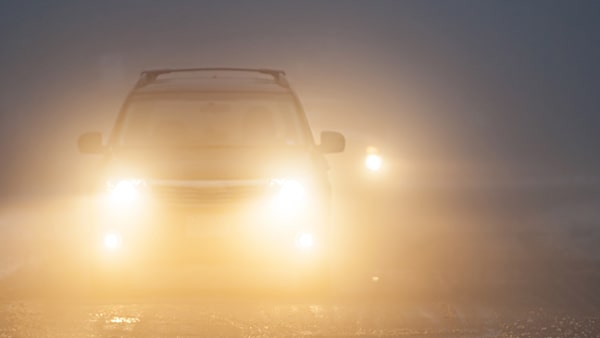
Which condition requires you to turn on your headlights?

When should you use your headlights while driving?
  1. A Only after the sky becomes completely dark
  2. B When there is not enough light to clearly see persons or vehicles 500 feet away
  3. C Exactly 30 minutes before sunset
  4. D Only when another driver flashes headlights at you

Correct answer: B – When there is not enough light to clearly see persons or vehicles 500 feet away

Alabama requires headlights from one-half hour after sunset until one-half hour before sunrise and whenever available light is insufficient to reveal persons or vehicles 500 feet away. Headlights are also required when wipers are continuously used because of rain, sleet, or snow. Reduced visibility can require lights during daytime hours.

Source: Ala. Code § 32-5-240(a)(1) — Required Lighting Equipment and Illuminating Devices of Vehicles, Alabama Driver Manual — Ch. 7, “Night Driving” and “Windshield Wipers/Headlights”

Question 4

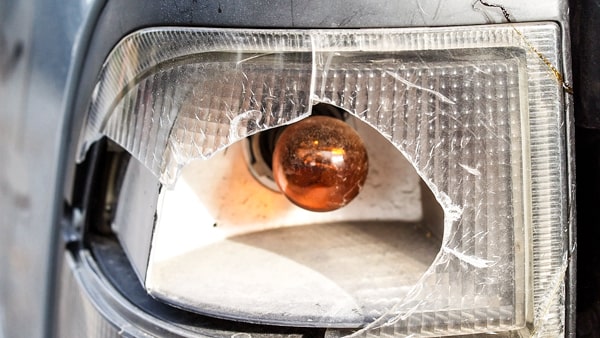
If your vehicle's turn-signal lamps stop working, how should you communicate a turn?

If your turn signals fail, you should use _____ to indicate you are turning.
  1. A Sound the horn before turning
  2. B Flash the high-beam headlights
  3. C Use the proper hand-and-arm signal
  4. D Activate the hazard lights

Correct answer: C – Use the proper hand-and-arm signal

A required turn signal may be given with approved signal lamps or the standard hand-and-arm signal. Extend the left arm horizontally for a left turn and upward for a right turn. The signal must be given clearly enough to communicate the intended movement to other road users.

Source: Ala. Code § 32-5A-133 — Turning Movements and Required Signals, Ala. Code § 32-5A-134 — Signals by Hand and Arm or Signal Lamps, Alabama Driver Manual — Ch. 6, “Changing Lanes”

Question 5

Before entering a highway from a private driveway, what must you do?

  1. A Sound the horn and enter immediately
  2. B Move partly into the highway to make traffic stop
  3. C Accelerate quickly before checking for traffic
  4. D Stop as needed and yield to highway traffic and pedestrians crossing your path

Correct answer: D – Stop as needed and yield to highway traffic and pedestrians crossing your path

A driver entering from a private road or driveway must yield to vehicles approaching on the highway. The Alabama manual also directs drivers to stop and yield before entering a public street or highway. When crossing a sidewalk, the driver must yield to pedestrians using it.

Source: Ala. Code § 32-5A-114 — Vehicles Entering Highway from Private Road or Roadway, Ala. Code § 32-5A-218 — Pedestrians’ Right-of-Way on Sidewalks, Alabama Driver Manual — Ch. 6, “Right of Way and Yielding”

Question 6

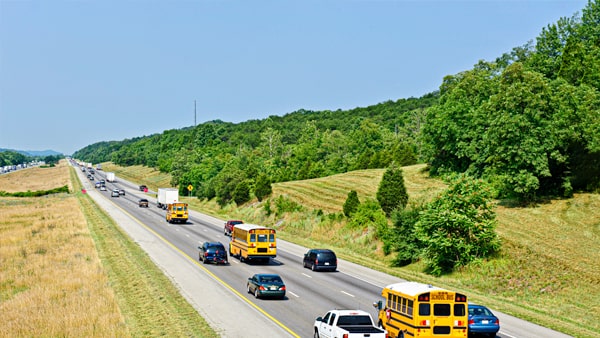
A school bus displays flashing red lights while stopped on a four-lane undivided highway with only a painted center strip. What must opposing traffic do?

If a school bus stops to unload children on a four-lane highway, divided by a four-foot paved strip, vehicles traveling in the opposite direction are:
  1. A Stop and remain stopped until the bus signals are off or the driver permits movement
  2. B Stop briefly and then pass at low speed
  3. C Move onto the shoulder before passing
  4. D Continue without stopping

Correct answer: A – Stop and remain stopped until the bus signals are off or the driver permits movement

Drivers meeting or following a school bus on a four- to six-lane undivided highway must stop when its red lights and stop arm are activated. Alabama's opposite-direction exception applies to qualifying divided highways when the bus is stopped in the opposing roadway. Remain stopped until the bus resumes motion, its signals stop, or its driver signals you to proceed.

Source: Ala. Code § 32-5A-154 — Overtaking and Passing School or Church Bus, Alabama Driver Manual — Ch. 6, “School Buses”