Alabama DMV Practice Test 6

4.9 out of 5 (148 votes)
80% Passing score
20 Questions
4 Mistakes allowed
Preparing for the Alabama DMV permit test is not just about recognizing a Stop sign and vaguely remembering who has the right-of-way at a four-way stop. The real knowledge test is handled through the Alabama Law Enforcement Agency’s Driver License Division, and it is built around the Alabama Driver Manual, which means the questions can reach into traffic laws, road signs, safe driving rules, and all those small details that seem easy until you are sitting at the testing station and suddenly, annoyingly, they are not. This sixth Alabama DMV practice test gives you a cleaner way to study before that moment arrives. It includes 20 multiple-choice questions, and you will need at least 16 correct answers to pass. The test puts extra weight on turn signals, which sounds basic, sure, but Alabama roads would be a lot less mysterious if everyone treated signaling like an actual rule instead of a friendly suggestion. Each answer comes with immediate feedback and a clear explanation, so you are not just clicking through questions and hoping some of it sticks. You see what you missed, why you missed it, and what the rule actually expects from you. The official Alabama learner license knowledge test comes with a $5 testing fee per attempt, and ALEA notes that checks are not accepted. Automated testing is available, too. The full permit-test format used by many Alabama practice test providers is typically 30 questions, with 24 correct answers needed for an 80% passing score, so this shorter DMV written test practice is best used as a focused warm-up, not a shortcut. And no, a “DMV test cheat sheet” is not the clever workaround people think it is. This practice test can help whether you are 15 and working toward a restricted learner license, 16 or older and getting a learner license for instruction, or an adult applicant who needs to pass the required driver examination. The details may shift depending on your age, license history, or whether you are transferring from another state, but the basic expectation stays the same: you need to know the rules well enough to use them when it counts. That is also where this practice test starts to matter outside the testing station, because it can help get you ready for real Alabama driving. Iron Bowl traffic, beach-bound festival crowds, rural roads, sudden rain, impatient drivers doing impatient-driver things, none of that cares whether you barely skimmed the manual. Studying the rules in a calm setting now makes the real Alabama DMV permit test feel less like a trap and more like a way to prove you really know your stuff.
FREE DMV Practice Test App
Study for your Alabama permit test or driver’s license with the NextDoorDriving app. 700+ DMV questions and answers, 100% free!
Download on the App Store

Sample Alabama Permit Test Questions

Question 1

A vehicle moves into the small gap directly ahead of you. How should you restore a safe following distance?
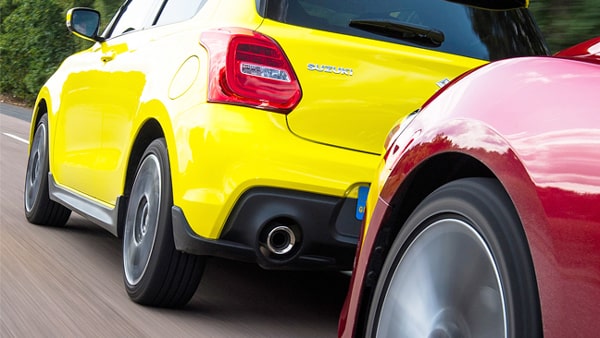
When you follow too closely and another driver cuts suddenly in front of you, what is the best thing to do?
  1. A Swerve immediately into another lane
  2. B Apply the brakes as hard as possible
  3. C Move onto the shoulder
  4. D Ease off the accelerator and slow gradually

Correct answer: D – Ease off the accelerator and slow gradually

The space ahead is the part of your safety cushion you can control most directly. If that space becomes too short, gradually reduce speed until a safe following distance is restored. Swerving, driving onto the shoulder, or braking abruptly can create additional hazards unless an immediate emergency requires such action.

Source: Alabama Driver Manual — Ch. 4, “How to Avoid Rear End Collisions”

Question 2

Which substances can interfere with a driver's ability to operate safely?

What kinds of drugs, other than alcohol, can affect your driving ability?
  1. A Some allergy medicines
  2. B Marijuana
  3. C Some nonprescription cold remedies
  4. D All of these choices

Correct answer: D – All of these choices

The Alabama manual warns that marijuana and some allergy or cold remedies can affect driving. Certain medicines contain antihistamines, alcohol, codeine, or other ingredients that may cause confusion, inattention, or drowsiness. Read medication warnings and ask a doctor or pharmacist about driving-related side effects.

Source: Alabama Driver Manual — Ch. 4, “Drugs”

Question 3

What must you do before moving into another lane on a multilane highway?

Before changing lanes on a multi-lane highway you should:
  1. A Sound the horn
  2. B Switch on the headlights
  3. C Reduce speed regardless of traffic conditions
  4. D Check the mirrors and the blind spot beside the vehicle

Correct answer: D – Check the mirrors and the blind spot beside the vehicle

Before changing lanes, check for safe clearance ahead, behind, and beside your vehicle. Use your mirrors, then glance over the appropriate shoulder to inspect the blind spot the mirrors do not cover. Signal your intention and wait until the destination lane is clear; signaling alone does not make the movement safe.

Source: Alabama Driver Manual — Ch. 6, “Changing Lanes”

Question 4

Which statement about medicines and driving is correct?

Which of these statements is true about driving and taking drugs?
  1. A Only illegal drugs can interfere with driving
  2. B Some over-the-counter medicines can impair driving
  3. C Every prescription medicine is safe if it does not cause drowsiness
  4. D Medicine affects driving only when combined with alcohol

Correct answer: B – Some over-the-counter medicines can impair driving

Some over-the-counter allergy and cold medicines contain ingredients that can cause drowsiness, confusion, or inattention. The Alabama manual advises drivers taking prescription medicine to ask about side effects related to driving. Check the warning label or consult a doctor or pharmacist before driving after taking an unfamiliar medicine.

Source: Alabama Driver Manual — Ch. 4, “Drugs”

Question 5

Which driving practice helps keep a vehicle-and-trailer combination stable?

  1. A Never exceed 45 mph under any conditions
  2. B Steer smoothly and avoid sudden lane changes
  3. C Obtain special state permission before every trip
  4. D All of these choices

Correct answer: B – Steer smoothly and avoid sudden lane changes

A trailer can react more sharply than the towing vehicle to sudden steering movements. Smooth steering, adequate following distance, and advance observation reduce the need for abrupt lane changes. Enter turns at a safe speed because quick movements can cause a trailer to swing outward or overturn.

Source: Alabama Commercial Driver License Manual — § 6.1, “Driving Combination Vehicles Safely”; § 6.1.2, “Steer Gently”

Question 6

Double solid yellow center lines tell drivers that:

  1. A Passing is permitted when no vehicle is visible
  2. B Only traffic in one direction may pass
  3. C Traffic in both directions is prohibited from crossing to pass
  4. D Only large trucks are prohibited from passing

Correct answer: C – Traffic in both directions is prohibited from crossing to pass

Double solid yellow lines separate opposing traffic where passing across the center is prohibited in both directions. Alabama's manual distinguishes them from a broken yellow line, which permits passing when it is otherwise safe and lawful. Drivers must wait until the pavement markings permit a pass.

Source: Alabama Driver Manual — Ch. 5, “Pavement Markings”; Ch. 6, “No Passing Zones”