


Alabama DMV Practice Test 9

4.9 out of 5 (116 votes)
80% Passing score
20 Questions
4 Mistakes allowed
If you’re getting ready for the Alabama DMV practice test, this ninth Alabama practice permit test is a smart place to slow down and pay attention, especially because it focuses on one rule Alabama does not treat lightly: school buses. And honestly, that is one of those rules people think they know until the test starts asking about divided highways, stopped traffic, flashing lights, and which side of the road you’re actually on. It gets a little more specific than “see bus, stop,” which is exactly why this practice DMV permit test is useful. This Alabama permit practice test gives you 20 multiple-choice and true or false questions, with 16 correct answers needed to pass. The questions are built from the Alabama Driver Manual, the same source used for the official learner license knowledge test. That matters. The real test covers Alabama traffic laws, road signs, safe-driving rules, and material from the manual, so guessing from general driving knowledge is not the great strategy it sometimes feels like it should be. Now, the official Alabama knowledge test is commonly treated as a 30-question exam where you need 24 correct answers, or an 80% score, to pass. This practice test is shorter, yes, but it still puts you in the right testing mindset. It makes you read carefully, catch the little wording traps, and deal with the kind of Alabama-specific road rules that can feel obvious until they are sitting in front of you in multiple-choice form. There is also the practical side of the licensing process, because of course there is. Alabama knowledge testing is handled through ALEA Driver License offices, the test fee is $5 per attempt, and automated testing is available for applicants. Road signs are folded into the main DMV written test, not handed off to some separate little sign quiz, so you still need to know regulatory signs, warning signs, traffic signals, pavement markings, and all those details people tend to half-study. For 15-year-old applicants, passing the required exam is part of getting a restricted learner license. Applicants 16 and older may also need a learner license if they are still getting instruction. Either way, expect the usual identity documents, school enrollment proof for younger applicants, fees, and a vision screening. Use this Alabama DMV learners permit test like a rehearsal, not a shortcut. It helps you get ready for the real test at the office, and more importantly, for actual Alabama roads where school bus rules are not theoretical.
FREE DMV Practice Test App
Study for your Alabama permit test or driver’s license with the NextDoorDriving app. 700+ DMV questions and answers, 100% free!
Download on the App Store

Sample Alabama Permit Test Questions

Question 1

A turn signal should be used when:

  1. A Turning or moving into another lane
  2. B Entering or leaving a freeway
  3. C Pulling away from a curb or parking place
  4. D All of the above

Correct answer: D – All of the above

A driver must signal before turning or moving right or left whenever other traffic may be affected. The driver manual also directs motorists to signal before leaving a parking place, merging onto a freeway, and entering an exit lane. Signaling communicates the intended movement but does not itself give the driver the right-of-way.

Source: Ala. Code § 32-5A-133 — Turning Movements and Required Signals, Alabama Driver Manual — Ch. 3, “Starting from a Parking Place”, Alabama Driver Manual — Ch. 8, “Entering the Freeway” and “Leaving the Freeway”
Question 2

For a normal right turn from a two-way street, which lane should you enter?

  1. A The lane nearest the centerline
  2. B The available lane nearest the right edge
  3. C Any lane on the new street
  4. D The left lane unless it is occupied

Correct answer: B – The available lane nearest the right edge

Alabama law requires both the approach and the right turn to be made as close as practicable to the right-hand curb or edge. Enter the right lane rather than swinging across other lanes. Follow signs, pavement markings, or traffic-control devices when an intersection is designed for a different turning path.

Source: Ala. Code § 32-5A-130 — Required Position and Method of Turning, Alabama Driver Manual — Ch. 3, “Rules for Turns”

Question 3

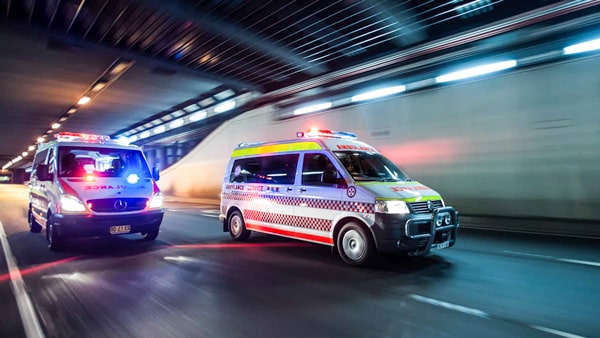
In Alabama, an emergency vehicle with the required light and audible signal is approaching. You must:

When you hear the sirens or see the red emergency lights of a closely approaching emergency vehicle, you must:
  1. A Accelerate until you are ahead of it
  2. B Continue slowly in your lane
  3. C Move near the right edge, clear of the intersection, and stop
  4. D Stop immediately within the intersection

Correct answer: C – Move near the right edge, clear of the intersection, and stop

The driver must yield, move parallel and as close as possible to the right-hand edge or curb, and stop clear of an intersection. Remain stopped until the emergency vehicle passes unless a police officer directs otherwise. If already within an intersection, clear it before pulling over and stopping.

Source: Ala. Code § 32-5A-115 — Operation of Vehicles on Approach of Authorized Emergency Vehicles; Signals on Emergency Vehicles; Duty of Emergency Vehicle Driver, Alabama Driver Manual — Ch. 6, “Right of Way and Yielding”

Question 4

If fog or heavy rain makes it impossible to see the roadway ahead, you should:

  1. A Use high beams and maintain speed
  2. B Pull completely off the road and wait for visibility to improve
  3. C Continue at the posted speed limit
  4. D Stop in your traffic lane

Correct answer: B – Pull completely off the road and wait for visibility to improve

When visibility is limited, reduce speed and be prepared to stop within the distance you can see. Use low-beam headlights because high beams reflect from fog and make vision worse. If seeing the roadway becomes impossible, pull completely off the road, park with the vehicle’s lights on, and wait for conditions to improve.

Source: Alabama Driver Manual — Ch. 7, “Driving in Fog, Snow”

Question 5

After consuming alcohol, what is the reliable way for its effects to diminish?

  1. A Allow time for the body to process it
  2. B Drink strong coffee
  3. C Take a cold shower
  4. D Exercise vigorously

Correct answer: A – Allow time for the body to process it

Alcohol affects judgment, alertness, coordination, vision, and reflexes. Coffee, exercise, or other attempts to feel more alert do not provide a reliable basis for safe driving after drinking. Allowing the body time to process the alcohol is necessary, and a driver should not use a simple time estimate as proof that impairment has ended.

Source: Alabama Driver Manual — Ch. 4, “Drinking and Driving”

Question 6

If you become so sleepy that ordinary efforts do not keep you alert, you should:

  1. A Drink coffee while continuing to drive
  2. B Open the windows and increase the radio volume
  3. C Leave the highway at a safe place and take a nap
  4. D Increase speed to shorten the trip

Correct answer: C – Leave the highway at a safe place and take a nap

Stop driving when you feel drowsy rather than trying to fight it. Coffee and stretching may help with mild tiredness, but the manual directs a driver who is truly sleepy to get off the highway and take a nap. Use a rest stop, service area, or another safe place away from moving traffic.

Source: Alabama Driver Manual — Ch. 4, “Highway Hypnosis and Fatigue”