


Alaska CDL General Knowledge Test (AK) 5

5 out of 5 (35 votes)
80% Passing score
50 Questions
10 Mistakes allowed
Ready to tackle the third Alaska CDL General Knowledge Practice Test? This test is a valuable resource for anyone aspiring to master the essentials of commercial driving in The Last Frontier. Designed to emulate the real DMV experience, this CDL permit test consists of 50 questions. A score of 40 correct answers is required to pass, and the consistency of the question set each time you attempt it ensures a thorough understanding of the material. The beauty of this practice test lies in its relaxed, no-pressure environment. It's a stark contrast to the often tense atmosphere of the actual DMV CDL test, offering a calm space to hone your skills and knowledge. Another unique aspect is the instant feedback provided for each question. Not only do you learn if your answer is correct or incorrect, but you also receive detailed explanations. This approach deepens your understanding of the subject matter, making learning more effective and engaging. Moreover, the content of this Alaska CDL practice test is meticulously curated by professional driving instructors, who bring a wealth of experience and expertise. These instructors have not only taught for decades but have also helped thousands of aspiring drivers in Alaska to achieve their goal of obtaining a CDL. This level of professionalism ensures that the general knowledge practice test is not just a tool, but a comprehensive guide to understanding the nuances of commercial driving in Alaska.
FREE CDL Practice Test App
Pass your Alaska CDL General Knowledge test with the NextDoorDriving app. Real questions and answers—100% free and ad-free.
Download on the App Store

Sample Alaska CDL Test Questions - General Knowledge

Question 1

A CMV driver must be placed out of service for 24 hours when which alcohol condition is found while the driver is on duty or operating?

  1. A An alcohol concentration of 0.10% or higher
  2. B Any measured alcohol concentration or detected presence of alcohol
  3. C An alcohol concentration of 0.05% or higher
  4. D An alcohol concentration of 0.04% or higher

Correct answer: B – Any measured alcohol concentration or detected presence of alcohol

Federal regulation prohibits a CMV driver from having any measured alcohol concentration or detected presence of alcohol while on duty, operating, or in physical control of a CMV. A driver who violates this prohibition must immediately be placed out of service for 24 hours. The period begins when the out-of-service order is issued.

Source: 49 CFR § 392.5(a)(2), (c) — Alcohol prohibition
Question 2

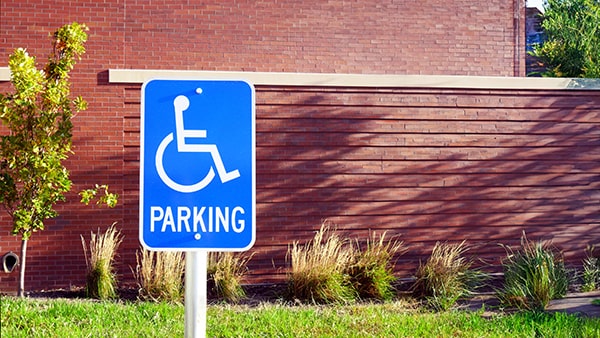
A RESERVED PARKING sign displaying the wheelchair accessibility symbol designates what?

This sign indicates ___________.
  1. A A space reserved for authorized vehicles used by or transporting a person with a disability
  2. B An area where all parking is prohibited
  3. C A parking space available to any vehicle
  4. D A short-term commercial loading area

Correct answer: A – A space reserved for authorized vehicles used by or transporting a person with a disability

The Accessible Parking sign displays the International Symbol of Accessibility and designates a space reserved for persons with disabilities. Alaska law restricts parking in such a space to vehicles meeting the applicable permit, plate, operator, or passenger requirements. It is not a general-use or loading space.

Source: Manual on Uniform Traffic Control Devices for Streets and Highways, 11th ed. — § 2B.52, “Parking, Standing, and Stopping Signs (R7 and R8 Series)”, AS 28.35.235 — Unauthorized use of parking reserved for persons with disabilities; penalties

Question 3

How far ahead should a commercial driver normally scan the roadway?

  1. A 10 to 12 seconds
  2. B 8 to 10 seconds
  3. C 12 to 15 seconds
  4. D 15 to 17 seconds

Correct answer: C – 12 to 15 seconds

A commercial driver should normally look at least 12 to 15 seconds ahead. This provides time to identify traffic changes and determine whether there is room to slow, stop, or change lanes. The driver must continue shifting attention between nearby conditions and the roadway farther ahead.

Source: Alaska Commercial Driver License Manual — § 2.4.1, “Seeing Ahead”

Question 4

An individual cargo article is 8 feet long and is not blocked against forward movement. At least how many tiedowns are required?

  1. A 1
  2. B 2
  3. C 3
  4. D 4

Correct answer: B – 2

Federal cargo-securement rules require at least two tiedowns for an unblocked article that is longer than 5 feet but no longer than 10 feet, regardless of its weight. Different minimums apply to shorter, lighter articles and to cargo that has been blocked against forward movement. Longer articles may require additional tiedowns.

Source: 49 CFR § 393.110(b) — Additional requirements for determining the minimum number of tiedowns

Question 5

How should you adjust your driving when another vehicle is following too closely?

  1. A Brake suddenly to warn the other driver
  2. B Continuously operate the four-way flashers
  3. C Increase the space between your vehicle and the traffic ahead
  4. D Signal the other driver to pass immediately

Correct answer: C – Increase the space between your vehicle and the traffic ahead

The Alaska CDL manual recommends increasing your following distance when you are being tailgated. More space ahead allows you to slow gradually and avoid abrupt maneuvers that could contribute to a rear-end collision. It can also provide the following driver with a better opportunity to pass.

Source: Alaska Commercial Driver License Manual — § 2.7.2, “Space Behind”

Question 6

Water should not be used on which pair of vehicle fires?

  1. A Tire and paper fires
  2. B Wood and cloth fires
  3. C Electrical and gasoline fires
  4. D Paper and cardboard fires

Correct answer: C – Electrical and gasoline fires

Water must not be used on an electrical fire because it can create an electrical-shock hazard. It also should not be used on a gasoline fire because it can spread the burning fuel and flames. Water may be appropriate for ordinary combustibles such as wood, paper, or cloth.

Source: Alaska Commercial Driver License Manual — § 2.21.3, “Fire Fighting”