


Alaska CDL Practice Test (AK) 2026

4.7 out of 5 (62 votes)
80% Passing score
20 Questions
4 Mistakes allowed
Welcome to the first step of your journey towards earning a CDL in the beautiful and challenging landscapes of Alaska. Our Alaska CDL Practice Test is meticulously crafted to set you on the right path, regardless of whether you're eyeing a Class A or Class B license, along with any endorsements you're aspiring to add. This initial practice test, featuring 20 well-rounded questions, is your gateway to mastering the general knowledge essential for all driver's license classes. Embarking on this CDL practice test, you're not just answering questions; you're engaging in an interactive learning experience. Each question is accompanied by immediate, insightful feedback and detailed explanations. This isn't just about getting the right answers; it's about understanding the 'why' behind them, ensuring that each question becomes a stepping stone in your learning journey. What sets our CDL practice test apart is its commitment to Alaskan relevance. We recognize that driving in Alaska, with its unique terrains and weather conditions, demands specific knowledge and skills. Therefore, our test is tailored to reflect the specific rules, regulations, and road signs unique to Alaska. From pre-trip vehicle inspections in icy conditions to handling downgrades on our steep roads, every aspect of this test is designed with the Alaskan driver in mind. Remember, whether you're tackling hills or learning about safe driving practices, this CDL practice test is your reliable companion, designed to reflect the real DMV written test. It's a tool not just to pass your CDL permit test, but to become a knowledgeable and confident driver on Alaska's roads. So, let's get started and pave the way to your driving success in the Last Frontier!
FREE CDL Practice Test App
Pass your Alaska CDL General Knowledge test with the NextDoorDriving app. Real questions and answers—100% free and ad-free.
Download on the App Store

Sample Alaska CDL Test Questions - General Knowledge

Question 1

A yellow diamond sign showing the roadway dividing into two branches warns of what ahead?
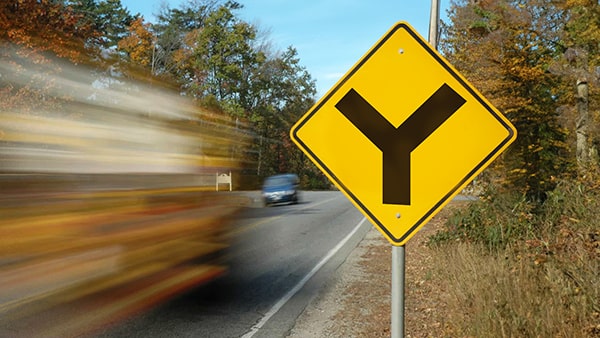
This sign warns drivers to _____________.
  1. A. A T-intersection
  2. B. A Y-intersection
  3. C. A road construction area
  4. D. A dip at an intersection

Correct answer: B. – A Y-intersection

In Alaska, this symbol warns that the roadway approaches a Y-shaped intersection. Intersection warning signs provide advance notice of the intersection and the possibility of turning or entering traffic. Adjust your speed as conditions require and watch both branches of the intersection.

Source: Alaska Traffic Manual — MUTCD § 2C.41, “Intersection Warning Signs (W2-1 through W2-8)”
Question 2

The signal is green, but there is not enough room beyond the intersection for your vehicle. What should you do?

  1. A. Wait before entering until sufficient space is available
  2. B. Enter and stop in the intersection
  3. C. Sound the horn and continue through
  4. D. Change lanes within the intersection to get around traffic

Correct answer: A. – Wait before entering until sufficient space is available

Alaska regulation prohibits entering an intersection unless enough space exists on the other side to accommodate your vehicle without obstructing vehicles or pedestrians. This requirement applies even when a traffic signal indicates that you may proceed. Remain behind the intersection until your entire vehicle can clear it.

Source: 13 AAC 02.265 — Stop when traffic may be obstructed

Question 3

According to the Alaska CDL manual, the average driver's reaction time is approximately:

  1. A. ¼ to ½ second
  2. B. ¾ second to 1 second
  3. C. 1½ to 2 seconds
  4. D. 2 to 3 seconds

Correct answer: B. – ¾ second to 1 second

The manual uses an average reaction time of three-quarters of a second to one second under ideal conditions. During that interval, the vehicle continues moving before the brakes are physically applied. At 55 mph, the manual estimates that reaction distance alone is about 61 feet.

Source: Alaska Commercial Driver License Manual — § 2.6.1, “Stopping Distance”

Question 4

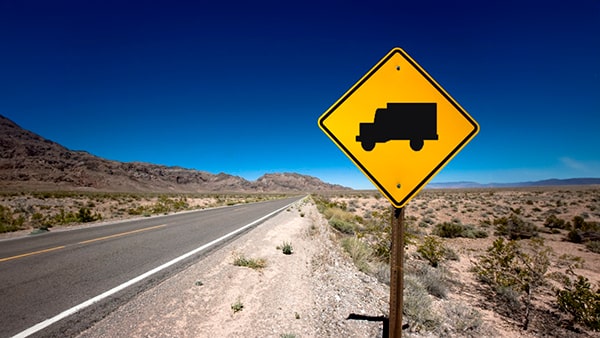
A yellow diamond sign displaying a black truck silhouette warns that:

This sign warns drivers to _____________.
  1. A. A railroad crossing is ahead
  2. B. Only trucks may use the road ahead
  3. C. Drivers must pass trucks on the left
  4. D. Trucks may enter or cross the roadway unexpectedly

Correct answer: D. – Trucks may enter or cross the roadway unexpectedly

The truck warning symbol identifies a location where trucks might enter the roadway unexpectedly. It may be used where entering truck traffic would not be readily anticipated or where sight distance is restricted. Watch for large vehicles entering, leaving, or crossing your path.

Source: Alaska Traffic Manual — MUTCD § 2C.54, “Vehicular Traffic Warning Signs”

Question 5

A yellow diamond sign with a short road branching from the right side of the main road warns of:

This sign warns drivers to _____________.
  1. A. A one-way street beginning to the right
  2. B. Traffic approaching only from the left
  3. C. A side road joining from the right
  4. D. A reverse turn ahead

Correct answer: C. – A side road joining from the right

The side-road symbol shows the general configuration of an upcoming intersection. A branch on the right warns that a road joins the main roadway from that side and that turning or entering traffic might be present. Scan the side road and adjust your speed when necessary.

Source: Alaska Traffic Manual — MUTCD § 2C.41, “Intersection Warning Signs (W2-1 through W2-8)”

Question 6

After an emergency move onto a clear right shoulder, what is the preferred way to return to the roadway?

  1. A. Stay on the shoulder until stopped, then signal and check the mirrors before returning
  2. B. Brake hard and steer sharply back onto the pavement
  3. C. Turn sharply onto the pavement and then brake hard
  4. D. Maintain speed and immediately drift back onto the pavement

Correct answer: A. – Stay on the shoulder until stopped, then signal and check the mirrors before returning

If the shoulder remains clear, stay on it until the vehicle has stopped. Avoid braking until speed has dropped to about 20 mph when possible, and then brake gently to reduce the risk of skidding on a loose surface. Before returning to the roadway, signal and check your mirrors.

Source: Alaska Commercial Driver License Manual — § 2.17.1, “Steering to Avoid a Crash”