Alaska Permit Practice Test

4.6 out of 5 (110 votes)
80% Passing score
20 Questions
4 Mistakes allowed
Getting ready for the Alaska DMV permit practice test sounds simple enough until you remember Alaska is not exactly a casual little driving environment. Ice, darkness, long stretches of road, moose with terrible timing: it all adds up. So yes, the official test is “just” 20 questions, but those 20 questions are doing more work than they may look like at first glance. The real Alaska permit knowledge test is the General Knowledge Test for a non-commercial Class D instruction permit or driver license. It is based on the Alaska Driver Manual, which means the DMV is not pulling questions out of some mysterious back room. You are expected to know Alaska traffic laws, rules of the road, road signs and signals, lane markings, right-of-way rules, speed limits, safe driving practices, impaired driving rules, and how to share the road without making life harder for pedestrians, bicyclists, motorcycles, emergency vehicles, school buses, and large vehicles. Quite a crowd, honestly. This Alaska DMV practice test gives you 20 multiple-choice questions, just like the real DMV written test. To pass the official exam, you need 16 correct answers, which works out to 80%. You can miss 4. Not 5. Four. The real test also has a 25-minute time limit, so practicing in advance is a smart move, not just a nervous overachiever move. You may take the official test online through KnowTo Drive or through an approved in-person or proctored option, but either way, the material comes back to the manual. Every question on this DMV learners permit test is built to help you get comfortable with the stuff that actually shows up: signs, signals, pavement markings, right-of-way situations, safe driving choices, and the responsibilities that come with carrying a valid driver license. First-time Class D applicants can use it, adults applying for a first Alaska license can use it, and teen drivers working toward a provisional license can use it too. Teens still have to meet Alaska’s permit-holding, driving-experience, road-test, and parental-consent requirements, because apparently the state would like you to do more than simply vibe your way into traffic. Use this Alaska practice permit test to sharpen your knowledge before test day — and, more importantly, before real Alaska driving starts asking questions the DMV never had room to print.

FREE DMV Practice Test App
Study for your Alaska permit test or driver’s license with the NextDoorDriving app. 700+ DMV questions and answers, 100% free!
Download on the App Store

Sample Alaska Permit Test Questions

Question 1

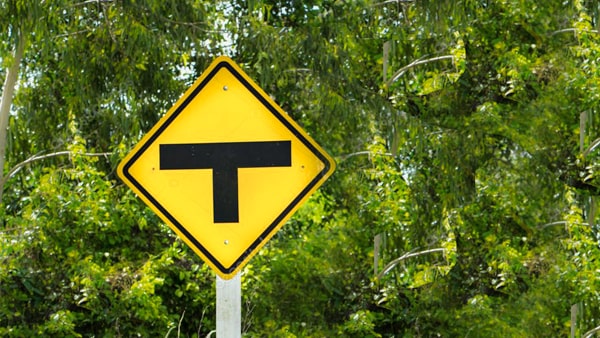
A yellow diamond sign shows a black horizontal bar with a vertical line meeting it from below. What does it warn of?

This sign shows one type of:
  1. A A sharp right turn
  2. B A T-intersection
  3. C A lane reduction
  4. D A winding road

Correct answer: B – A T-intersection

This is the T-intersection warning sign. The vertical line represents the approaching roadway, while the horizontal line represents the road crossing its end. Drivers should recognize that the roadway does not continue straight through the intersection and prepare for the intersection ahead.

Source: Alaska Sign Design Specifications — W2-4, “Intersection T (Symbol)”, Alaska Traffic Manual — MUTCD Part 2, § 2C.11, “Intersection Warning Signs”

Question 2

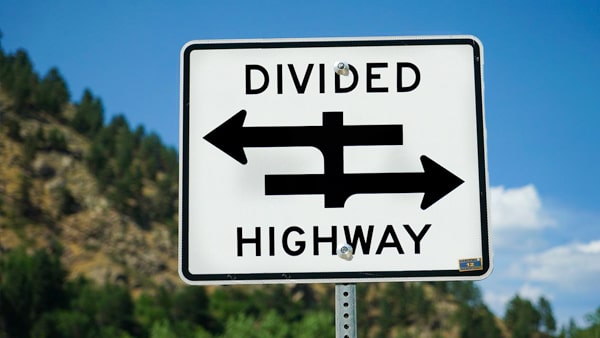
A rectangular sign marked “DIVIDED HIGHWAY” with arrows pointing left and right identifies:

This sign means:
  1. A A mandatory left-or-right turn
  2. B A T-intersection ahead
  3. C An intersection with a divided highway
  4. D An overpass above a divided highway

Correct answer: C – An intersection with a divided highway

The Divided Highway Crossing sign advises drivers that they are approaching an intersection with a divided highway. The highway’s opposing directions of travel are separated and may function as two separate intersections. Drivers must observe the directional signs and other traffic controls governing each roadway.

Source: Alaska Traffic Manual — MUTCD Part 2, § 2B.50, “Divided Highway Crossing Signs (R6-3 and R6-3a)”

Question 3

After drinking alcohol, which choice will make alcohol leave the body more quickly?

  1. A Drinking black coffee
  2. B Eating food
  3. C Taking a cold shower
  4. D None of these; only time helps

Correct answer: D – None of these; only time helps

Coffee, food, fresh air, and cold showers may make someone feel more alert, but they do not sober that person. Alcohol must be processed and eliminated by the body, and only the passage of time helps. A person who has been drinking should not treat any supposed quick remedy as preparation to drive.

Source: Alaska Driver Manual — “Facts You Should Know About Alcohol”

Question 4

On a two-lane road, a curve blocks your view of possible oncoming traffic. What must you do if you want to pass?

  1. A Remain behind the other vehicle
  2. B Signal for at least 100 feet and pass
  3. C Accelerate quickly around the curve
  4. D Sound the horn before moving left

Correct answer: A – Remain behind the other vehicle

Do not attempt a pass when a curve prevents a sufficient view of approaching traffic. A driver may move left to pass only when the roadway is visible and free of oncoming traffic for enough distance to complete the maneuver safely. The Alaska Driver Manual specifically warns against passing near a hill or curve without a clear view ahead.

Source: 13 AAC 02.065(a), (b)(1) – Limitations on Overtaking on the Left, Alaska Driver Manual — “Passing Safely,” “Do Not Pass”

Question 5

At an intersection without painted crosswalk lines, a pedestrian is crossing on your half of the roadway. What must you do?

  1. A Continue because there are no painted lines
  2. B Proceed if you remain below the speed limit
  3. C Yield to the pedestrian and stop if necessary
  4. D Sound the horn and pass before the pedestrian reaches your lane

Correct answer: C – Yield to the pedestrian and stop if necessary

An intersection may have an unmarked crosswalk even when no lines are painted. Under Alaska regulations, a driver must yield when a pedestrian in a crosswalk is on the driver’s half of the roadway or is approaching closely enough from the other half to be in danger. A pedestrian may not suddenly enter the path of a vehicle that is too close to stop safely.

Source: 13 AAC 02.155(a), (b) – Pedestrian Right-of-Way in Safety Zones, 13 AAC 02.160(a) – Crossing at Other Than Crosswalks

Question 6

Which statement about breath-alcohol testing is correct?

  1. A A breath sample can be tested with a portable breath-testing instrument
  2. B A chemical test is required in every alcohol-related conviction
  3. C Physical fitness lowers a breath-alcohol reading
  4. D Coffee or a cold shower immediately lowers the reading

Correct answer: A – A breath sample can be tested with a portable breath-testing instrument

A portable preliminary breath-testing instrument can analyze a driver’s breath for alcohol. In Alaska, an officer may require this test after certain crashes or moving violations when there is probable cause to believe alcohol has impaired the driver. A chemical breath test may also be required following a lawful DUI arrest under the implied-consent law.

Source: AS 28.35.031(a), (b) – Implied Consent, Alaska Driver Manual — “Implied Consent”