


Alaska Permit Practice Test 2

4.8 out of 5 (71 votes)
80% Passing score
20 Questions
4 Mistakes allowed
This Alaska DMV permit practice test gives you 20 multiple-choice questions built around the material new drivers are expected to understand, including traffic signals, seat belt laws, right-of-way rules, road signs, and the everyday judgment calls that do not feel very “everyday” when snow, darkness, or a distracted moose enters the picture. It is a solid fit for first-time drivers working toward an instruction permit, but it is not only for teenagers trying to survive their first DMV experience. Renewing drivers, older drivers brushing up, and anyone who has not looked at the Alaska Driver Manual in a while can use it to find the little gaps that tend to hide in plain sight. After the practice test, you get a review of your answers, including the correct ones, so you can see where your knowledge is steady and where it is, well, doing that slightly wobbly learner-driver thing. The official Alaska knowledge test can be taken online through KnowTo Drive or in person at a DMV office or approved proctor location. Online testing sounds convenient, and it is, mostly. You need a desktop or laptop, internet access, and a front-facing camera or webcam because the test is monitored. Touch devices are not supported, and you must test alone while staying visible on camera. You get results right away, but passing online does not magically hand you a permit. You still have to finish the credentialing process with the DMV. For rural communities, Alaska also allows testing through approved proctors such as DMV business partners, schools, government offices, police departments, Troopers, and Village Public Safety Officers. The online test is available in English and Spanish, with audio playback available, and applicants needing disability or access accommodations should contact the DMV before testing. Fees are not the fun part, but they are part of it: $15 for an instruction permit, $20 for a standard non-commercial license, $40 for a REAL ID license, and $15 for a non-commercial road test. Study with the Alaska Driver Manual, use this Alaska DMV permit practice test to sharpen the rough edges, and go in knowing more than “I skimmed it once.” That strategy rarely ages well.
FREE DMV Practice Test App
Study for your Alaska permit test or driver’s license with the NextDoorDriving app. 700+ DMV questions and answers, 100% free!
Download on the App Store

Sample Alaska Permit Test Questions

Question 1

At an uncontrolled intersection, the right-of-way rule favors your vehicle. What is the safest approach?

  1. A Enter without slowing because the other driver must stop
  2. B Stay prepared to yield if necessary to avoid a collision
  3. C Always stop and give every other vehicle the right-of-way

Correct answer: B – Stay prepared to yield if necessary to avoid a collision

Alaska requires every driver to exercise care to avoid colliding with another vehicle. The driver manual also warns that a driver approaching from the right should not assume the other driver will yield. Approach under control and be prepared to give way when that is necessary to prevent a crash.

Source: 13 AAC 02.120(a)–(b) – Vehicle Approaching or Entering Intersection or Roundabout, 13 AAC 02.545(b) – Drivers to Exercise Care, Alaska Driver Manual — “Intersections,” “Right of Way Law”
Question 2

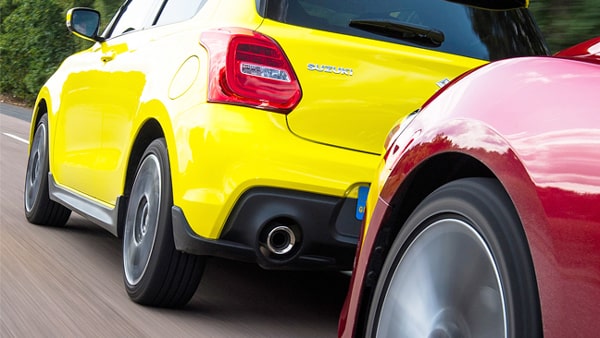
Another vehicle suddenly merges ahead of you and greatly reduces your following space. What should you do?

When you follow too closely and another driver cuts suddenly in front of you, what is the best thing to do?
  1. A Swerve immediately into the next lane
  2. B Brake as hard as possible
  3. C Drive onto the shoulder
  4. D Reduce speed smoothly to rebuild a safe following interval

Correct answer: D – Reduce speed smoothly to rebuild a safe following interval

A sudden cut-in can leave too little room to stop safely. Watch the shrinking distance, reduce speed smoothly, and be ready to brake if necessary. Swerving, leaving the roadway, or braking abruptly may create another hazard unless an emergency makes such action necessary.

Source: 13 AAC 02.090(a) – Following Too Closely, Alaska Driver Manual — “Control of Vehicle,” “How to Avoid Rear End Collisions”

Question 3

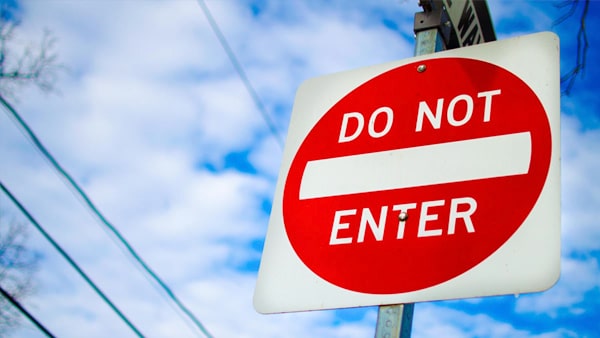
A red circular sign containing a horizontal white bar means:

This sign means:
  1. A Stop before proceeding
  2. B U-turns are prohibited
  3. C Yield to approaching traffic
  4. D Do not enter from this direction

Correct answer: D – Do not enter from this direction

The red circle with a horizontal white bar is the DO NOT ENTER sign. It marks a roadway or ramp that traffic must not enter from that direction. It is a regulatory sign, so drivers must obey its instruction rather than proceed past it.

Source: 13 AAC 02.005(a) – Obedience to and Required Traffic-Control Devices, Alaska Driver Manual — “Signs,” “Do Not Enter Sign”

Question 4

If your accelerator becomes jammed, what should you do?

  1. A Shift to Neutral, use the brakes, and concentrate on steering
  2. B Apply the parking brake immediately and fully
  3. C Reach down and pull the pedal upward by hand
  4. D Pump the brake pedal as rapidly as possible

Correct answer: A – Shift to Neutral, use the brakes, and concentrate on steering

The Alaska driver manual instructs a motorist with a jammed accelerator to use the brakes, shift into Neutral, and concentrate on steering. Neutral prevents engine power from continuing to drive the wheels. Maintain control while slowing and move out of traffic when it is safe.

Source: Alaska Driver Manual — “Emergencies,” “Accelerator Jammed”

Question 5

Under normal driving conditions, the recommended following interval is at least:

  1. A Twenty feet
  2. B One vehicle length for every 10 mph
  3. C Four seconds
  4. D Eight seconds in every situation

Correct answer: C – Four seconds

The Alaska driver manual recommends the four-second rule for determining a safe following distance. When the vehicle ahead passes a fixed point, count four seconds; reaching that point sooner indicates that you are too close. Increase the interval to six seconds or more when towing or when the roadway is wet or slippery.

Source: 13 AAC 02.090(a) – Following Too Closely, Alaska Driver Manual — “Control of Vehicle,” “How to Avoid Rear End Collisions”

Question 6

Under Alaska rules, when may you turn left while facing a steady red signal?

  1. A Whenever no oncoming vehicles are visible
  2. B When turning from a one-way street onto a two-way street
  3. C After stopping, when turning from a lawful lane onto a one-way street and no device prohibits it
  4. D Whenever the vehicle ahead completes the same turn

Correct answer: C – After stopping, when turning from a lawful lane onto a one-way street and no device prohibits it

After stopping at a steady red signal, a driver may cautiously turn left from the lawful lane onto a one-way street unless a traffic-control device prohibits the movement. A left turn on red onto a two-way street is not allowed. The turning driver must yield to vehicles and pedestrians lawfully within the intersection or adjacent crosswalk.

Source: 13 AAC 02.010(a)(3)(A)–(B) – Traffic-Control Signal Legend