


Alaska Permit Practice Test 3

4.9 out of 5 (63 votes)
80% Passing score
20 Questions
4 Mistakes allowed
Getting ready for the Alaska DMV permit test is not the time to skim a few rules and hope the rest somehow works itself out. Alaska driving has a way of making the small stuff matter. Ice on the road, dark mornings, wildlife where wildlife should absolutely not be standing, and long stretches where you do not get much room for sloppy decisions. So yes, the written test matters, and this Alaska DMV practice test gives you a solid place to start. This free Alaska DMV permit practice test gives you 20 multiple-choice questions built around the kind of material you should expect to know before applying for an Alaska learners permit. You will work through traffic laws, signs and signals, safe driving habits, and Alaska-specific rules, including the ban on using handheld mobile devices while driving. That one is not just a throwaway detail. In Alaska, where conditions can change faster than you can explain why you glanced at your phone, it is the kind of rule worth knowing cold. The passing score is 16 correct answers out of 20, which keeps the practice experience close to the real Alaska permit test. And, maybe more importantly, the format helps you get used to how the questions are asked. Not in some vague “study better” way, but in the more practical sense of learning how the DMV tends to test whether you actually understand the rule, not just whether you remember a phrase from the manual. There is also the paperwork side, because there is always paperwork. Alaska applicants need documents proving legal name, date of birth, lawful presence, Alaska residence address, Social Security number or acceptable SSA documentation, and any legal name change. A birth certificate, passport, Alaska ID, utility bill, voter registration card, lease, bank statement, school record, or similar residence document may come into play. Rural applicants without standard street addresses may be able to use documents describing the physical residence instead, which is one of those details you are better off knowing before you are standing at the counter. Applicants under 18 need parental or guardian consent, proof of relationship, the right forms, and, for a provisional license, certification of required driving experience. Everyone applying for an instruction permit or driver license must pass a vision screening, too. Use this Alaska DMV practice test to sharpen the knowledge you will need at the DMV and, more importantly, on actual Alaska roads.
FREE DMV Practice Test App
Study for your Alaska permit test or driver’s license with the NextDoorDriving app. 700+ DMV questions and answers, 100% free!
Download on the App Store

Sample Alaska Permit Test Questions

Question 1

Before moving left to overtake another vehicle, what should you do?

  1. A Wait for the other driver to signal that you may pass
  2. B Change lanes suddenly to make your intention obvious
  3. C Signal and begin the pass only when it can be completed safely
  4. D Follow closely to shorten the passing distance

Correct answer: C – Signal and begin the pass only when it can be completed safely

Alaska requires an appropriate signal before moving left, and the movement must appear reasonably safe. When a pass uses a lane for oncoming traffic, that lane must be clearly visible and free for enough distance to complete the maneuver without interfering with traffic. Return to the authorized lane only after safely clearing the vehicle you passed.

Source: 13 AAC 02.215(a), (b) – Turning movements and required signals, 13 AAC 02.065(a), (b) – Overtaking a vehicle on the left - limitations
Question 2

At an unsignalized corner, a pedestrian is crossing within the unmarked crosswalk on your half of the road. What must you do?

  1. A Proceed because no crosswalk lines are painted
  2. B Slow slightly and pass in front of the pedestrian
  3. C Yield the right-of-way to the pedestrian
  4. D Stop exactly four feet from the corner

Correct answer: C – Yield the right-of-way to the pedestrian

Alaska requires a driver to yield when a pedestrian is in a crosswalk on the driver’s half of the roadway or is approaching closely enough from the other half to be in danger. Crosswalk lines do not have to be painted at every intersection. A pedestrian may not suddenly enter the path of a vehicle that is too close to stop safely.

Source: 13 AAC 02.155(a), (b) – Pedestrian right-of-way in safety zones, Alaska Driver Manual (Rev. 10/2025) — “Marking,” crosswalk lines

Question 3

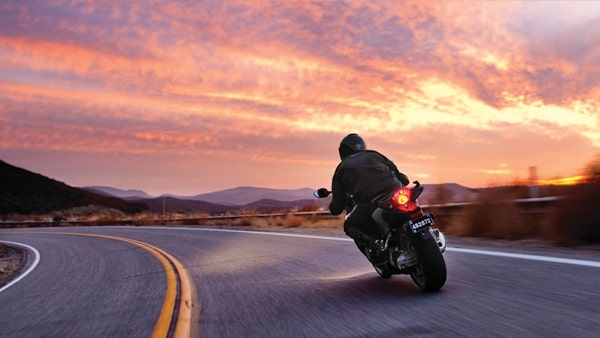
How must you treat a traffic lane occupied by a motorcycle?

If you are driving behind a motorcycle, you must:
  1. A Allow the motorcycle full use of the lane
  2. B Drive beside it on the shoulder
  3. C Require the motorcycle to remain in half the lane
  4. D Pass it while remaining in the same lane

Correct answer: A – Allow the motorcycle full use of the lane

Alaska prohibits driving a motor vehicle in a way that deprives a motorcycle of full use of its lane. Do not move beside or pass a motorcycle within the same lane, even if the lane appears wide. Motorcyclists may change lane position to improve visibility or avoid pavement hazards.

Source: 13 AAC 02.427(a), (b) – Driving motorcycles and motor-driven cycles on roadways laned for traffic, Alaska Driver Manual (Rev. 10/2025) — “Motorcycles”

Question 4

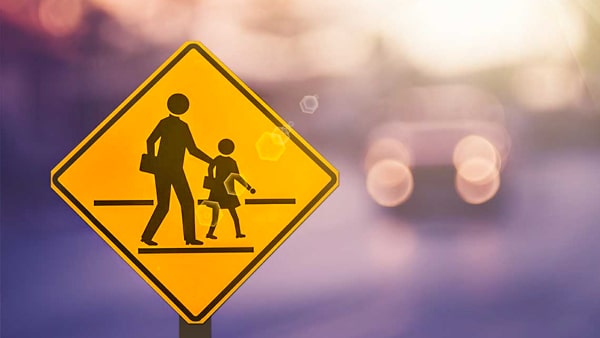
A yellow warning sign showing a person walking means:

This sign means:
  1. A A playground is ahead
  2. B Watch for pedestrians crossing the roadway
  3. C Pedestrians must remain on the sidewalk
  4. D A stop sign is immediately ahead

Correct answer: B – Watch for pedestrians crossing the roadway

The pedestrian-crossing warning sign alerts you that people may cross the roadway ahead. Slow as conditions require and be prepared to stop. At an unsignalized crosswalk, yield when a pedestrian is on your half of the roadway or is approaching closely enough from the opposite half to be in danger.

Source: 13 AAC 02.155(a) – Pedestrian right-of-way in safety zones, Alaska Driver Manual (Rev. 10/2025) — “Signs,” pedestrian-crossing warning sign

Question 5

Before pulling away from a curb and entering traffic, what must be true?

  1. A You can remain below traffic speed for at least 200 feet
  2. B You have signaled and can enter with reasonable safety
  3. C The first approaching vehicle has passed
  4. D Other drivers are prepared to make room for you

Correct answer: B – You have signaled and can enter with reasonable safety

In Alaska, a stopped or parked vehicle may not move onto the roadway until the movement can be made with reasonable safety. Give the appropriate signal before starting from the parked position. Look for vehicles, pedestrians, and bicyclists, and yield until a safe opportunity to enter is available.

Source: 13 AAC 02.210(a) – Starting parked vehicle, 13 AAC 02.215(a), (d), (f) – Turning movements and required signals, Alaska Driver Manual (Rev. 10/2025) — “Leaving Parking Space”

Question 6

While approaching in a dedicated right-turn lane, a steady yellow arrow appears. What does it indicate?

  1. A The permitted turn is ending, so prepare to obey the next signal
  2. B You may turn after yielding to pedestrians
  3. C The turn is prohibited under all circumstances
  4. D You should accelerate to complete the turn

Correct answer: A – The permitted turn is ending, so prepare to obey the next signal

A steady yellow arrow warns that the movement permitted by the preceding signal is ending and a red indication will follow. Stop if you can do so safely. If you are already in the intersection or too close to stop safely, complete the indicated movement cautiously.

Source: 13 AAC 02.010(a)(2)(A) – Traffic-control signal legend, Alaska Driver Manual (Rev. 10/2025) — “Traffic Signals,” “Yellow Arrow”