


Alaska DMV Practice Test 9

5 out of 5 (40 votes)
80% Passing score
20 Questions
4 Mistakes allowed
Preparing for your Alaska DMV permit test means learning more than a few school bus rules, though yes, those matter a lot, especially when children are running to catch the bus and one bad guess can become a very real problem. This Alaska DMV practice test is the ninth installment in our practice series, and it focuses on school bus safety through 20 multiple-choice questions built to sharpen the kind of judgment you need before the written knowledge test and, later, the road test. For teen drivers, that written test is one of the first real steps in Alaska’s licensing process. You can apply for an instruction permit at age 14, but you’ll need to pass the knowledge test and vision test, submit the required application and documents, get parental consent if you’re under 18, and pay the permit fee. Once you have the permit, Alaska keeps the rules pretty clear: you may drive only with a licensed driver who is at least 21, has at least one year of experience in the type of vehicle being driven, and stays seated in the passenger seat. Not nearby. Not “technically in the vehicle.” Passenger seat. This Alaska practice drivers permit test helps you study the rules that show up in real driving, including when to stop for a school bus, how to read traffic situations around students, and why cautious driving near buses is not optional. To pass this drivers permit practice test, you’ll need to answer at least 16 of the 20 questions correctly. Hints are available when a question gives you trouble, and if you miss one, you’ll see an explanation right away so the rule actually sticks instead of just floating around in your head until test day. Alaska does not require standard Class D teen applicants to complete formal driver education, but before moving from an instruction permit to a provisional license at age 16, teen drivers must hold the permit for at least six months, complete 40 hours of supervised driving, and log 10 of those hours in progressively challenging conditions such as nighttime or bad weather. Adults 18 and older follow a more direct licensing path, without the teen provisional requirements, though they still need to pass the knowledge, vision, and road tests unless exempt. Use this Alaska driving test practice alongside the Alaska Driver Manual, road sign review, and additional DMV permit practice test material. It is not just about getting through 20 questions. It is about knowing the rules well enough to drive safely when a school bus stops, the lights come on, and everybody behind the wheel is expected to know exactly what to do.
FREE DMV Practice Test App
Study for your Alaska permit test or driver’s license with the NextDoorDriving app. 700+ DMV questions and answers, 100% free!
Download on the App Store

Sample Alaska Permit Test Questions

Question 1

A yellow diamond sign showing a truck descending a steep slope warns of:
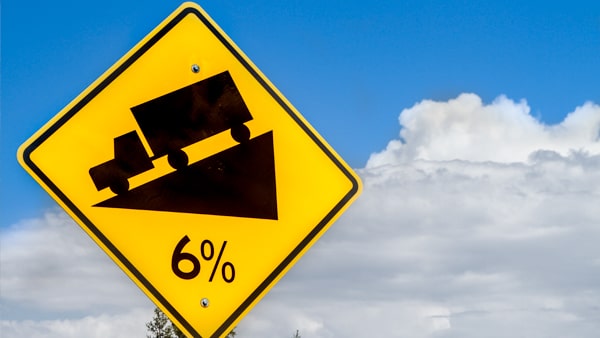
This sign means:
  1. A A truck weight restriction
  2. B A steep downgrade ahead
  3. C A truck service area
  4. D A road closed to trucks

Correct answer: B – A steep downgrade ahead

Black-on-yellow signs warn of actual or potentially dangerous conditions ahead. The truck-on-slope symbol identifies a steep downgrade. The driver manual advises truck drivers to slow and shift to a lower gear, while all drivers should adjust their driving to the grade and other conditions indicated by the warning sign.

Source: Alaska Driver Manual — “Warning Sign”
Question 2

Under Alaska law, which statement about a driver's seat belt is correct?

You must use your seat belt:
  1. A It is optional for trips shorter than 10 miles
  2. B It is required only at highway speeds
  3. C The driver must be restrained, and a violation is an infraction
  4. D It is required only on controlled-access highways

Correct answer: C – The driver must be restrained, and a violation is an infraction

AS 28.05.095 requires a driver on a highway to be restrained by a safety belt, subject to listed exceptions. AS 28.05.099 classifies a violation as an infraction, allowing a citation to be issued. One exception applies when a vehicle is not equipped with safety belts, but a person may not remove a belt solely to claim that exception.

Source: AS 28.05.095(a), (c)–(d) – Use of seat belts and child safety devices required, AS 28.05.099 – Penalty

Question 3

Which practice helps other road users anticipate what you intend to do?

  1. A Signal before turning or moving to another lane
  2. B Ignore vehicles outside your immediate lane
  3. C Use side roads whenever traffic becomes busy
  4. D Avoid driving whenever traffic is heavy

Correct answer: A – Signal before turning or moving to another lane

Turn signals alert other road users to your intended actions. A driver must signal before turning or moving right or left and must give the signal continuously during the last 100 feet before a turn. A signal communicates intention, but the driver must still verify that the planned movement can be completed safely.

Source: 13 AAC 02.215(a)–(b) – Turning movements and required signals, Alaska Driver Manual — “Signal Your Intentions”

Question 4

Which observation habit is part of defensive driving?

  1. A Keep your eyes fixed on the vehicle directly ahead
  2. B Look well ahead and keep your eyes moving for changing conditions
  3. C Expect other drivers to correct your mistakes
  4. D Wait until the last moment to respond to a hazard

Correct answer: B – Look well ahead and keep your eyes moving for changing conditions

The driver manual advises looking far ahead and moving your eyes because staring in one place can cause you to miss traffic signs and developing conditions. Drivers should also check mirrors and blind spots before changing lanes. Regularly shifting attention among the road ahead, roadside areas, mirrors, and blind spots provides more time to recognize and respond to hazards.

Source: Alaska Driver Manual — “How You Can Become a Better ‘Sign’ Driver”; “Changing Lanes”

Question 5

Black-on-orange roadway signs generally warn of:

  1. A Road work, temporary conditions, workers, or equipment ahead
  2. B Food, fuel, or lodging services
  3. C A permanent recreational area
  4. D An automatic requirement to stop

Correct answer: A – Road work, temporary conditions, workers, or equipment ahead

Black-on-orange signs identify road work and temporary conditions requiring special attention. Work zones may contain workers, barricades, cones, equipment, lane closures, or flaggers directing traffic. Drivers should adjust their speed, follow signs and flagger instructions, and prepare for changing roadway conditions.

Source: Alaska Driver Manual — “Construction & Maintenance Sign”; “Signs Within Work Areas”

Question 6

What can happen when alcohol is used together with another drug?

  1. A The effects of each substance may become stronger
  2. B Neither substance will affect driving ability
  3. C Alcohol will cancel the other drug's effects
  4. D The other drug will cancel alcohol's effects

Correct answer: A – The effects of each substance may become stronger

The driver manual states that combining alcohol with other drugs can increase the effects of each drug. The combination may be more dangerous to health and highway safety than using either substance alone. Because alcohol and drugs can impair judgment, alertness, coordination, and reaction, a person should not drive after using an impairing combination.

Source: Alaska Driver Manual — “Alcohol”; “Drugs”