Alaska DMV Test Evaluation

4.7 out of 5 (112 votes)
80% Passing score
10 Questions
2 Mistakes allowed
Getting ready for the Alaska DMV permit test is one of those things that sounds simple until you realize the test is not just asking whether you know what a Stop sign looks like. The official Alaska General Knowledge Test for a non-commercial Class D instruction permit or driver license is based on the Alaska Driver Manual, and it gets into the real working parts of driving: traffic laws, road signs and signals, pavement markings, right-of-way, speed limits, impaired driving, safe driving habits, and sharing the road with pedestrians, bikes, motorcycles, school buses, emergency vehicles, and large trucks. So, yes, there is some range here. This Alaska DMV practice test gives you a solid way to warm up before the real exam. The official knowledge test has 20 questions, a 25-minute time limit, and you need 16 correct answers to pass. That means you can miss 4, which is comforting until you realize 4 can disappear pretty quickly if you are guessing your way through lane markings or right-of-way rules. Road signs are included in the same test, not handled as a separate road-sign-only exam for a standard Class D permit or license, so you need to know them as part of the bigger driving picture. The questions in this Alaska DMV permit practice test are built around the kinds of topics you should expect on the actual DMV written test. You will see the everyday rules, the easy-to-overlook details, and the little “wait, I thought I knew that” moments that are much better to have here than during the official exam. And because Alaska driving can mean anything from city traffic in Anchorage to remote roads, winter conditions, and long stretches where paying attention is not optional, this stuff is not just test trivia. You may be able to take the official knowledge test online through KnowTo Drive or through an approved in-person or proctored testing option. Online testing requires a desktop or laptop with a webcam, and it is available in English and Spanish. After you pass, you still have to finish the DMV process, including documents, fees, vision screening, and whatever next step applies to your license path. Use this Alaska practice permit test to check your readiness, tighten up weak spots, and walk into the real test with fewer surprises.
FREE DMV Practice Test App
Study for your Alaska permit test or driver’s license with the NextDoorDriving app. 700+ DMV questions and answers, 100% free!
Download on the App Store

Sample Alaska Permit Test Questions

Question 1

What is the safest speed choice when driving at night on a poorly lighted road?

  1. A Keep the dashboard lights at maximum brightness
  2. B Look directly at approaching headlights
  3. C Drive slowly enough to stop within the area illuminated ahead
  4. D Use high beams at all times

Correct answer: C – Drive slowly enough to stop within the area illuminated ahead

At night, a driver cannot see as far, as soon, or as much as during daylight. The driver manual states that a vehicle may not be driven faster than will permit it to stop within the assured clear distance ahead. Adjusting your speed to the area illuminated by your headlights helps prevent overdriving your available view.

Source: Alaska Driver Manual — “Night Driving & Lighting”; “Speed Limitation Law”
Question 2

Heavy freeway traffic leaves no safe opening for you to enter. If necessary, what should you do?

  1. A Back up along the entrance ramp
  2. B Enter without completing a traffic check
  3. C Continue along the shoulder until an opening appears
  4. D Stop before entering and yield until an opening is available

Correct answer: D – Stop before entering and yield until an opening is available

Use the acceleration lane to approach freeway speed and yield to traffic already on the freeway. The driver manual says to stop if necessary before entering, while remaining alert to vehicles following on the ramp. It also directs drivers not to back up on an entrance ramp or use the shoulder as a waiting or travel lane.

Source: Alaska Driver Manual — “Entering the Controlled Access Highway-Freeway”, 13 AAC 02.485(b) – Limitations on backing

Question 3

Under Alaska rules, what must you check before opening a parked vehicle's door on the traffic side?

  1. A That the vehicle is at least two feet from the curb
  2. B That the front wheels point toward the curb
  3. C That no vehicle or bicyclist is approaching beside you
  4. D That the front wheels point away from the curb

Correct answer: C – That no vehicle or bicyclist is approaching beside you

A vehicle door may be opened only when doing so is reasonably safe and will not interfere with moving traffic. The driver manual specifically advises checking blind spots for bicyclists before opening a door. Look toward the traffic side, including over your shoulder when needed, and wait until approaching road users have passed.

Source: 13 AAC 02.495(d) – Riding in and on vehicles and towed objects; boarding and alighting, Alaska Driver Manual — “Bicycles”

Question 4

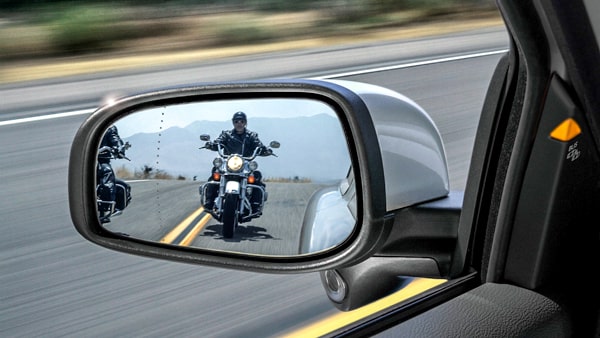
Why should you make an extra visual check for motorcycles before changing lanes?

Look carefully for motorcycles before you change lanes because:
  1. A Motorcycles must travel on the shoulder
  2. B They can be difficult to identify and judge in traffic
  3. C Motorcycles always have the right-of-way
  4. D Motorcyclists do not have to obey lane markings

Correct answer: B – They can be difficult to identify and judge in traffic

The driver manual states that motorcycles are not easily identified in traffic. Drivers may also have difficulty judging a motorcycle's distance and speed. Motorcyclists have the same roadway rights and responsibilities as other drivers, but their reduced visibility makes a deliberate second check important before turning or changing lanes.

Source: Alaska Driver Manual — “Motorcycles”

Question 5

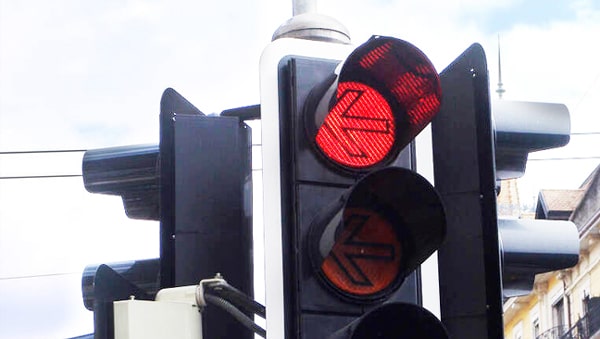
In Alaska, how does a steady red arrow differ from a steady circular red signal?

What is the difference between traffic lights with red arrows and those with solid red lights?
  1. A The movement shown by a red arrow is prohibited until another signal permits it
  2. B A red arrow applies only to protected left-turn lanes
  3. C A red arrow may be treated as a yield sign after stopping
  4. D A red arrow applies only to right turns

Correct answer: A – The movement shown by a red arrow is prohibited until another signal permits it

A driver facing a steady red arrow must stop and remain stopped from making the movement shown until a signal permits it. After stopping at a steady circular red signal, a driver may make certain lawful turns if no traffic-control device prohibits the turn and the driver yields as required. A red arrow does not provide that turning exception for the indicated movement.

Source: 13 AAC 02.010(a)(3)(B)–(C) – Traffic-control signal legend

Question 6

In Alaska, how far before a turn must a driver normally begin signaling?

When you are planning to make a turn, you should activate your turn signals:
  1. A Only when another vehicle is following
  2. B When the vehicle reaches the intersection
  3. C Continuously during the last 100 feet before the turn
  4. D Only after beginning to slow

Correct answer: C – Continuously during the last 100 feet before the turn

A turn signal must be given continuously during the final 100 feet traveled before turning. The movement must also appear reasonably safe before the driver turns or moves right or left. Signaling informs others of an intended movement, but it does not give the signaling driver the right-of-way.

Source: 13 AAC 02.215(a)–(b) – Turning movements and required signals, Alaska Driver Manual — “Signaling”