Alaska Road Signs Test

4.7 out of 5 (49 votes)
80% Passing score
10 Questions
2 Mistakes allowed
Getting ready for the Alaska DMV permit test is not just about staring at road signs until they start to look familiar, although, honestly, that is part of it. This Alaska DMV practice test is built around the kind of road sign knowledge you will need for the state’s General Knowledge Test, the exam used for a non-commercial Class D instruction permit or driver license. The real test is based on the Alaska Driver Manual, and it gives you 20 questions in 25 minutes. You need 16 correct answers to pass, which means 80%, which also means you can miss up to 4 questions and still walk away with a passing score. Now, a small but useful detail: Alaska does not have a separate road-sign-only test for a standard Class D permit or license. Road signs are folded into the General Knowledge Test, right alongside traffic laws, signals, lane markings, pavement markings, right-of-way rules, speed limits, impaired driving, and all the other material that tends to show up when you realize the DMV expects you to know more than “red means stop.” So this Alaska road signs test is focused, yes, but it is focused in the way a smart study session should be focused. It helps you get sharper on signs without pretending signs exist in some neat little box by themselves. The 20 multiple-choice questions in this Alaska DMV road sign test cover the shapes, colors, symbols, and meanings of signs you may see in Alaska and across the country. Some questions include visual aids, which is helpful because road signs are visual by nature, and there is no prize for recognizing a warning sign only after you have already driven past it. The point is to build fast, practical recognition — regulatory signs, warning signs, guide signs, lane-use signs, signals, markings, the whole not-very-glamorous but very necessary collection. This Alaska DMV permit practice test does not use actual DMV questions, since those are not publicly released, but it is written to reflect the structure and content of the official knowledge test. Whether you take the real Alaska knowledge test online through KnowTo Drive or through an approved in-person or proctored option, the basics do not change: 20 questions, 25 minutes, 16 correct answers. Use this Alaska sign test DMV practice to tighten up your sign knowledge before test day, and maybe save yourself from that unpleasant little moment when two answer choices both look annoyingly possible.

FREE DMV Practice Test App
Study for your Alaska permit test or driver’s license with the NextDoorDriving app. 700+ DMV questions and answers, 100% free!
Download on the App Store

Sample Alaska Permit Test Questions

Question 1

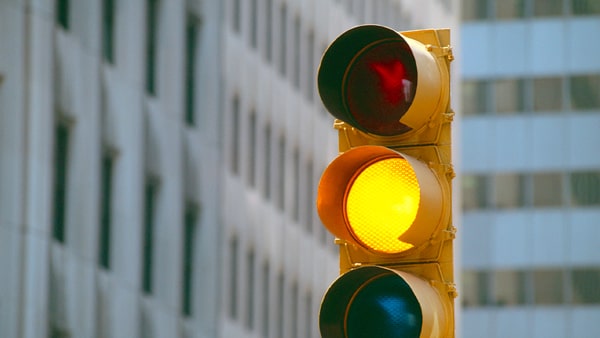
Your signal changes from green to steady yellow as you approach an intersection. What is the proper response?

As you near an intersection, the traffic light changes from green to yellow. Your best action would be to:
  1. A Accelerate to enter before the red signal
  2. B Brake sharply regardless of your distance from the intersection
  3. C Plan to stop within the intersection
  4. D Stop before the intersection if you can do so safely

Correct answer: D – Stop before the intersection if you can do so safely

A steady yellow signal warns that red will appear immediately afterward. Stop before entering the intersection when you can do so safely. If you are already in the intersection or too close to stop safely, proceed through cautiously rather than making a sudden unsafe stop.

Source: 13 AAC 02.010(a)(2) – Traffic-control signal legend, Alaska Driver Manual — “Traffic Signals,” “Yellow Ball”

Question 2

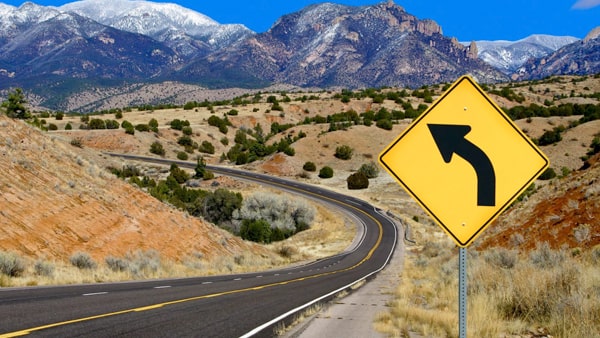
A yellow diamond sign with a single arrow bending left warns of:

This sign is used to warn drivers about:
  1. A An intersection ahead
  2. B A construction area
  3. C A left curve in the roadway
  4. D A lane-use change

Correct answer: C – A left curve in the roadway

A left-curve warning sign indicates that the roadway changes direction to the left ahead. Warning signs alert drivers to conditions that may require extra caution and a reduction in speed. Enter the curve at a speed appropriate for its alignment and current roadway conditions.

Source: Alaska Driver Manual — Signs, “Warning Sign”

Question 3

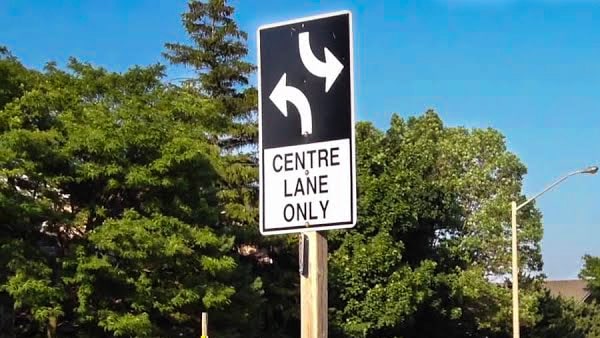
A shared two-way center turn lane is primarily intended for which action?

From the center lane, what maneuvers can you perform?
  1. A Preparing for or making a left turn
  2. B Passing a slower vehicle
  3. C Traveling several blocks before turning
  4. D Accelerating to the speed of traffic

Correct answer: A – Preparing for or making a left turn

Under Alaska regulation, a specially marked two-way left-turn lane may be entered to prepare for or make a left turn from or into the roadway. A lawful U-turn may also be prepared or made there when permitted. The lane may not be used as a through, acceleration, or passing lane.

Source: 13 AAC 02.200(b)(2) – Required position and method of turning, Alaska Driver Manual (Rev. 10/2025) — “Shared Center Lane”

Question 4

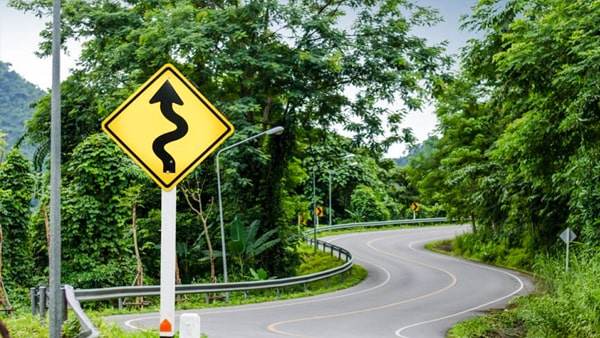
A yellow diamond sign displaying a winding arrow warns of:

This sign tells you that:
  1. A A roadway where turns are prohibited
  2. B A narrowing roadway
  3. C Several curves ahead
  4. D Pavement that is slippery when wet

Correct answer: C – Several curves ahead

The winding-road sign warns that a series of curves lies ahead. Reduce speed before entering the curves and remain alert for changes in direction. If an advisory-speed plaque is posted with the sign, adjust to that recommended speed when conditions permit.

Source: Alaska Driver Manual (Rev. 10/2025) — “Signs,” winding-road warning sign

Question 5

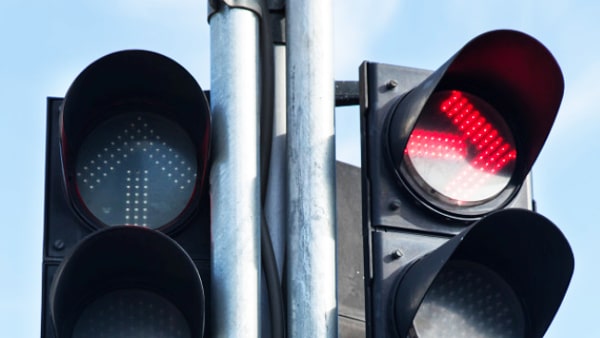
When facing a steady red arrow pointing right, when may you turn right?

A red arrow pointing to the right on a traffic light means you may:
  1. A After stopping and checking the crosswalk
  2. B Only when a signal indication permits the right turn
  3. C After slowing and yielding to other traffic
  4. D Whenever vehicles behind you are being delayed

Correct answer: B – Only when a signal indication permits the right turn

A steady red arrow requires you to stop and prohibits the movement indicated by the arrow. Remain stopped until the signal displays an indication permitting that movement. Unlike a steady circular red signal, a steady red arrow does not allow the indicated turn merely because you stopped and found the way clear.

Source: 13 AAC 02.010(a)(3)(C) – Traffic-control signal legend, Alaska Driver Manual (Rev. 10/2025) — “Traffic Signals,” “Red Arrow”

Question 6

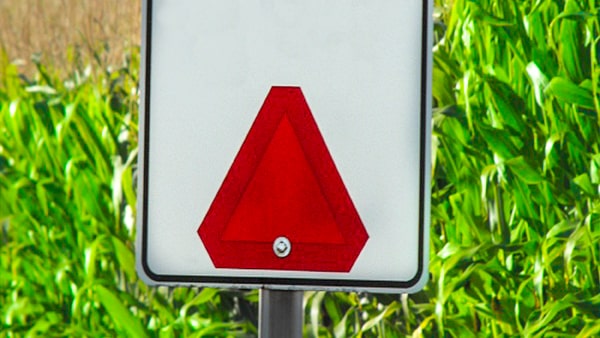
A triangular emblem with an orange center and red reflective border identifies a:

An orange and red sign of this shape always means:
  1. A Vehicle that must yield to cross traffic
  2. B Vehicle with priority over other traffic
  3. C Slow-moving vehicle
  4. D Vehicle responding to an emergency

Correct answer: C – Slow-moving vehicle

This emblem identifies a slow-moving vehicle. Alaska requires it on animal-driven vehicles and implements of husbandry designed for or driven at speeds below 25 mph, and it may not be displayed on a vehicle traveling over 25 mph. The bright orange center is visible by day, while the red reflective border helps identify the emblem at night.

Source: 13 AAC 04.252 – Slow-moving-vehicle emblem, Alaska Driver Manual (Rev. 10/2025) — “Slow Moving Vehicles,” “Slow Moving Vehicle Emblem”