Arizona Permit Practice Test

4.7 out of 5 (849 votes)
80% Passing score
20 Questions
4 Mistakes allowed
This AZ permit practice test gives you a cleaner, less painful way to work through the material Arizona actually expects you to know before you get behind the wheel legally. The real written knowledge test has 30 multiple-choice questions, and you need 24 correct answers to pass. That is 80%, which sounds manageable until you realize you can only miss six. Six. So, yes, “I skimmed the manual once” is a bold strategy, but maybe not the one to bet your permit on. This Arizona permit test practice covers the usual suspects from the Arizona Driver License Manual: traffic laws, road signs, signals, pavement markings, right-of-way rules, alcohol and drug rules, and the whole sharing-the-road situation that becomes very real the moment a bicyclist, a semi-truck, and a confused tourist all appear at the same intersection. Road signs are part of the official knowledge test too, not some cute little bonus round, so this practice permit test makes room for stop signs, yield signs, work zones, railroad crossings, lane markings, emergency vehicles, and those sign-shape questions that feel easy until they suddenly do not. Teen drivers can start the process at 15 years and 6 months with a graduated instruction permit, after passing the written test and vision screening. Then comes the six-month permit holding period, supervised driving practice, and eventually the Class G license at age 16 if all the boxes are checked. Adults 18 and older get a more direct path, thankfully, but first-time drivers still need to pass the written test before moving on to the road test. Arizona is generous in some ways, but not in the “skip the test and hope for the best” way. And because Arizona driving is, well, Arizona driving, the test is not just paperwork dressed up as safety. You are studying for Phoenix traffic, desert highways, sudden monsoon rain, flash-flood warnings, pedestrians in tourist-heavy areas, and long stretches of road where the scenery is beautiful and the driving decisions still need to be sharp. This Arizona driver permit practice test helps turn all that official information into something you can actually use, remember, and carry into test day (and beyond).
FREE DMV Practice Test App
Study for your Arizona permit test or driver’s license with the NextDoorDriving app. 700+ DMV questions and answers, 100% free!
Download on the App Store

Sample Arizona Permit Test Questions

Question 1

If your engine dies during a turn and the power steering stops assisting you, what should you do?

  1. A Grip the wheel firmly, finish the turn and move toward the right side of the road
  2. B Release the steering wheel and coast straight ahead
  3. C Accelerate repeatedly to restore steering assistance
  4. D Immediately apply the parking brake

Correct answer: A – Grip the wheel firmly, finish the turn and move toward the right side of the road

If power steering fails, firmly hold the steering wheel with both hands and complete the turn. Move the vehicle to the right side of the road and stop. If the vehicle also has power brakes, the brake pedal may require extra pressure after the engine dies.

Source: Arizona Driver License Manual and Customer Service Guide — § 6, “Power Steering Failure”
Question 2

If another driver is following too closely, how should you manage the space in front of your vehicle?

  1. A Move closer to the vehicle ahead
  2. B Gradually slow and increase your forward space cushion
  3. C Brake sharply to warn the tailgater
  4. D Speed up until the tailgater falls behind

Correct answer: B – Gradually slow and increase your forward space cushion

When someone follows too closely, gradually reduce speed and create additional space between your vehicle and the one ahead. The larger cushion allows you to brake more slowly if traffic stops. When it is safe, moving to another lane may also allow the tailgater to pass.

Source: Arizona Driver License Manual and Customer Service Guide — § 2, “Positioning Vehicle—Cushion of Space Around Your Vehicle”

Question 3

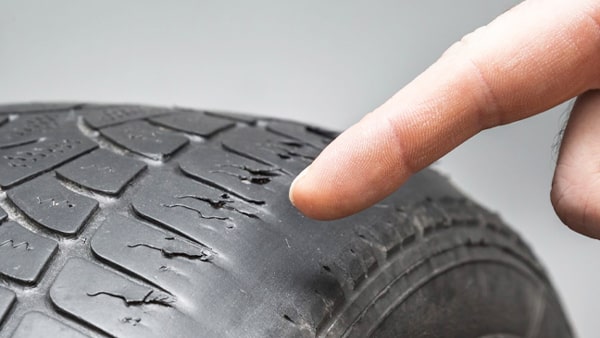
Which statement about worn or bald tires is correct?

Worn or bald tires:
  1. A They may lose contact with a wet road at lower speeds
  2. B They improve traction during heavy rain
  3. C They shorten the vehicle’s braking distance
  4. D They remove the need to check tire pressure

Correct answer: A – They may lose contact with a wet road at lower speeds

Underinflated, worn or bald tires can lose contact with the road and hydroplane at lower speeds during heavy rain. Tire condition is also one of the factors affecting how much distance a vehicle needs to stop. Arizona’s manual recommends regularly checking tread depth and replacing tires when the tread is excessively worn.

Source: Arizona Driver License Manual and Customer Service Guide — § 1, “Tire Safety—Tread Depth”, Arizona Driver License Manual and Customer Service Guide — § 5, “Weather Conditions—Hydroplaning”

Question 4

The Arizona driver manual directs you to signal before:

  1. A Changing lanes or turning
  2. B Entering or leaving a freeway
  3. C Pulling away from a curb or moving to the roadside
  4. D All of the above

Correct answer: D – All of the above

All the listed movements should be signaled. State law requires an appropriate signal before turning or moving right or left when other traffic may be affected, and a turn signal must generally continue for at least the final 100 feet before a turn. Signaling communicates your intended movement but does not give you the right-of-way.

Source: A.R.S. § 28-754(A), (B) – Turning Movements and Required Signals, Arizona Driver License Manual and Customer Service Guide — § 2, “Signaling”

Question 5

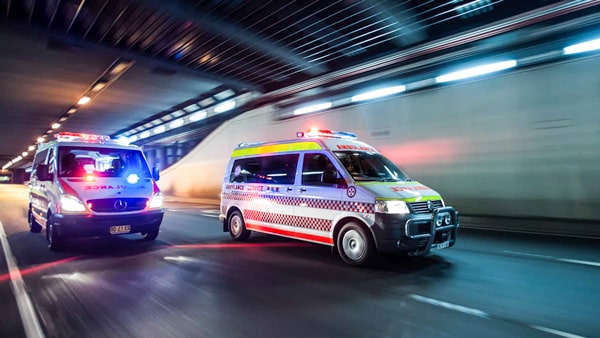
An authorized emergency vehicle approaches with its siren and red or red-and-blue lights activated. What must you do?

When you hear the sirens or see the red emergency lights of a closely approaching emergency vehicle, you must:
  1. A Accelerate to stay ahead of it
  2. B Continue slowly in your current lane
  3. C Move as close as possible to the right edge, clear of the intersection, and stop
  4. D Stop immediately within the intersection

Correct answer: C – Move as close as possible to the right edge, clear of the intersection, and stop

Arizona law requires you to yield, move parallel and as close as possible to the right curb or roadway edge, and remain clear of an intersection. Stop there until the emergency vehicle passes. These duties apply when the approaching authorized emergency vehicle is displaying the required lights and giving an audible warning.

Source: A.R.S. § 28-775(A) – Authorized Emergency Vehicles; Approaching, Arizona Driver License Manual and Customer Service Guide — § 3, “Emergency Vehicles”

Question 6

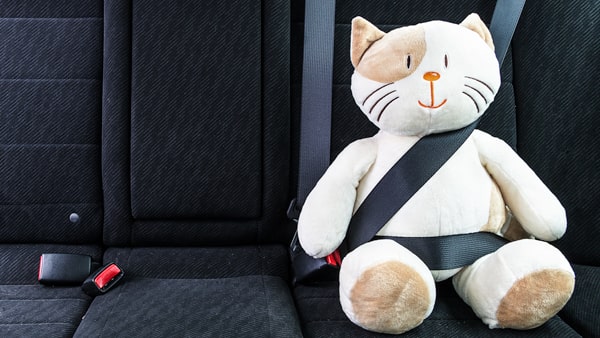
For an adult riding in the front seat of a qualifying model-year 1972 or newer vehicle, Arizona law requires the occupant to:

You must use your seat belt:
  1. A Use a seat belt only at freeway speeds
  2. B Use a seat belt only when an airbag is unavailable
  3. C Properly fasten the installed seat belt while the vehicle is moving
  4. D Use a seat belt only during nighttime travel

Correct answer: C – Properly fasten the installed seat belt while the vehicle is moving

Each front-seat occupant covered by the law must properly adjust and fasten the installed lap-and-shoulder belt or lap belt while the vehicle is moving. A person found responsible is subject to a maximum civil penalty of $10 for each violation. An officer generally may not stop or cite a driver solely for this violation without reasonable cause to believe another motor vehicle violation occurred.

Source: A.R.S. § 28-909(A), (C), (G) – Vehicle Restraints Required; Exceptions; Civil Penalty