Arizona DMV Practice Test 6

4.8 out of 5 (232 votes)
80% Passing score
20 Questions
4 Mistakes allowed
Getting ready for the Arizona DMV learners permit test is one of those things that sounds simple until you realize Arizona expects you to know more than “red means stop” and “please do not drift casually across three lanes.” This AZ permit practice test gives you 20 questions built around the stuff that actually matters on the road, including proper turn signal use, safe driving habits, and the kind of everyday rules that can sneak up on you if you only skim the manual once and call it a personality trait. And yes, turn signals get their moment here. They should. In Phoenix traffic, on Tucson streets, around Tempe intersections, or even on those prettier drives near Sedona where everyone suddenly becomes a sightseeing philosopher, other drivers need to know what you’re doing before you do it. That is sort of the whole deal. This free Arizona DMV test practice helps you build that habit before the official DMV written test starts feeling a little too real. The questions have been written and reviewed by experienced driving instructors, not tossed together in a hurry by someone who vaguely remembers driver’s ed. To pass this practice MVD permit test, you’ll need 16 correct answers out of 20, just like the real Arizona knowledge test. It is a useful little reality check, honestly. No pressure, no MVD waiting-room lighting, no tiny panic spiral when a question about lane changes suddenly looks suspiciously harder than it should. Arizona gives eligible teens a few ways to take the actual permit test. You may test at an MVD office, through some Authorized Third Party providers, or online with Permit Test @ Home, where a parent or legal guardian administers the exam. The online version has a 30-minute time limit and gives results right away, which is nice, because waiting around to find out whether you passed is nobody’s favorite little character-building exercise. But passing the test is not the final handshake. You still have to visit MVD or an Authorized Third Party afterward to finish the permit process, and there will be other requirements at the office, including a vision screening to make sure you can, you know, actually see the road. The instruction permit fee is $7, and if the first Permit Test @ Home attempt goes sideways, additional attempts are allowed without another fee. Still, better to practice here first and save the drama for merging onto I-10.
FREE DMV Practice Test App
Study for your Arizona permit test or driver’s license with the NextDoorDriving app. 700+ DMV questions and answers, 100% free!
Download on the App Store

Sample Arizona Permit Test Questions

Question 1

Before using the oncoming lane to pass on a two-lane road, which conditions must you evaluate?
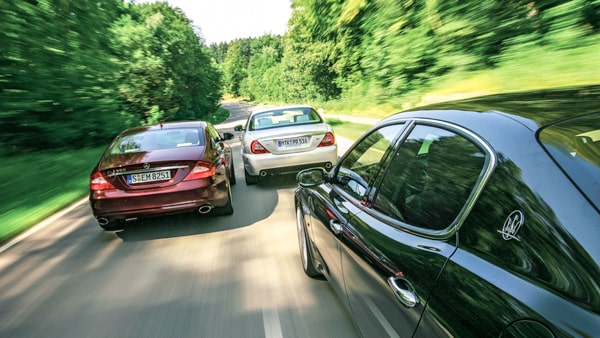
When passing in the oncoming traffic lane of a two-lane road, you should consider:
  1. A Whether the left side is visible and clear of oncoming traffic for sufficient distance
  2. B Whether a hill, curve, intersection or no-passing zone prohibits the maneuver
  3. C Whether you can return right before coming within 100 feet of an approaching vehicle
  4. D All of the above

Correct answer: D – All of the above

The passing driver must have a clearly visible and sufficiently open oncoming lane to complete the maneuver safely. Driving left of center is restricted near obstructed hills, curves, intersections, railroad crossings and marked no-passing zones. The passing vehicle must return right before coming within 100 feet of oncoming traffic.

Source: A.R.S. § 28-725 – Limitations on overtaking on the left, A.R.S. § 28-726 – Limitations on driving to left of roadway center

Question 2

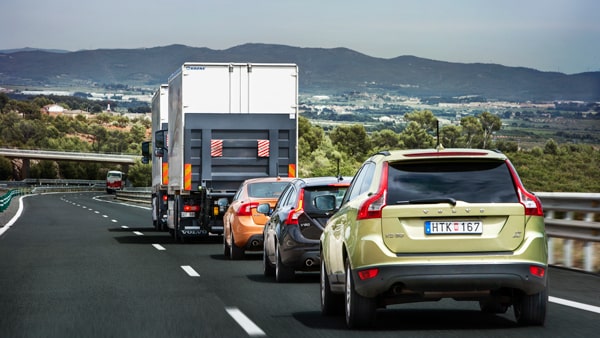
Under Arizona law, what must a slower driver do when five or more vehicles form a line behind on a two-lane highway where passing is unsafe?

  1. A Continue without changing speed or position
  2. B Use the nearest designated or otherwise safe turnout to let them proceed
  3. C Drive on the shoulder without stopping
  4. D Activate the emergency flashers and remain in the lane

Correct answer: B – Use the nearest designated or otherwise safe turnout to let them proceed

This rule applies when the driver is moving below the normal traffic flow, the highway has two lanes and passing is unsafe. If five or more vehicles form a line behind, the driver must turn off at the nearest designated turnout or another location with sufficient area for a safe turnout. The purpose is to allow the following vehicles to proceed.

Source: A.R.S. § 28-704(C) – Minimum speed limits; requirement to turn off roadway

Question 3

Your phone rings while your vehicle is moving. Which action avoids prohibited handheld use?

If you are a minor and your cell phone rings while you are driving, you should:
  1. A Pick it up and answer using speakerphone
  2. B Let the call go to voicemail and respond after safely parking
  3. C Hold it briefly if the caller is a family member
  4. D Send a text explaining that you are driving

Correct answer: B – Let the call go to voicemail and respond after safely parking

Arizona law prohibits holding or supporting a wireless device while driving and prohibits writing, sending or reading text-based communications. Hands-free operation and emergency reporting are permitted under specified conditions. A first violation carries a civil penalty of $75 to $149; a second or subsequent violation carries a penalty of $150 to $250.

Source: A.R.S. § 28-914(A)–(D) – Use of portable wireless communication device while driving; prohibition; civil penalty; state preemption; definitions, Arizona Driver License Manual and Customer Service Guide — § 2, “Distractions”

Question 4

What does a white-painted curb allow a driver to do?

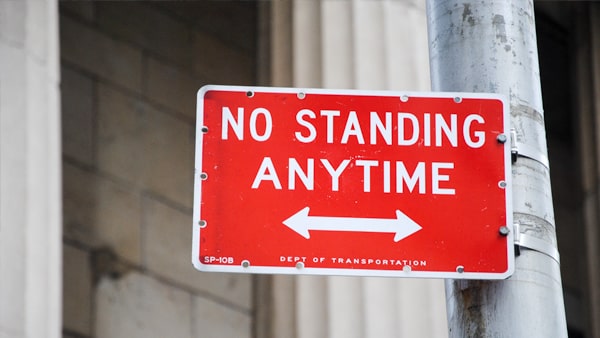
A "no standing sign" at a certain location means:
  1. A Park without a time limit
  2. B Load merchandise while leaving the vehicle unattended
  3. C Stop only long enough to pick up or drop off passengers
  4. D Stop, stand or park for any purpose

Correct answer: C – Stop only long enough to pick up or drop off passengers

A white curb permits a stop only long enough to pick up or drop off passengers. It does not authorize ordinary parking or unattended merchandise loading. A yellow curb is used for brief loading or unloading, while a red curb prohibits stopping, standing and parking.

Source: Arizona Driver License Manual and Customer Service Guide — § 3, “Pavement Markings—Painted Curbs”

Question 5

A solid yellow line and a broken yellow line divide opposing traffic. The broken line is next to your lane. When may you pass?

When the road is marked with a solid yellow line and a broken yellow line on your side you may pass:
  1. A Only during an emergency
  2. B Only when the road is an expressway
  3. C When the roadway ahead is clear and passing is otherwise permitted
  4. D Only while traveling through an intersection

Correct answer: C – When the roadway ahead is clear and passing is otherwise permitted

A broken yellow line beside a solid yellow line permits passing only for traffic next to the broken line. The roadway ahead must be clear, and the pass must not occur where another rule or sign prohibits driving left of center. Traffic next to the solid line may not pass.

Source: Arizona Driver License Manual and Customer Service Guide — § 3, “Pavement Markings—Solid and Broken Yellow Lines”

Question 6

Which statement about following another vehicle too closely is correct?

Following closely behind another vehicle:
  1. A It keeps your vehicle outside the other driver's blind spots
  2. B It is a major cause of rear-end crashes
  3. C It consistently improves fuel economy
  4. D It is required during a driving test

Correct answer: B – It is a major cause of rear-end crashes

The driver manual identifies following too closely as the cause of most rear-end crashes. Arizona law requires a following distance that is reasonable and prudent after considering vehicle speed, traffic and highway conditions. Maintaining an adequate time cushion gives you more opportunity to react if traffic ahead stops unexpectedly.

Source: A.R.S. § 28-730(A) – Following too closely, Arizona Driver License Manual and Customer Service Guide — § 2, “Positioning Vehicle—Cushion of Space Around Your Vehicle”