


Arizona Drivers Permit Practice Test 9

4.8 out of 5 (179 votes)
80% Passing score
20 Questions
4 Mistakes allowed
School bus rules are one of those Arizona permit test topics that seem easy right up until the question starts adding details. Maybe the road has two lanes. Maybe it is divided. Maybe the bus has its lights flashing and children are crossing, while traffic is moving the other way. At that point, “just stop for the bus” is not quite enough. This Arizona permit practice test gives you 20 questions focused on school bus safety, so you can work through the rules before they show up on the real AZ drivers permit test and start feeling a little less friendly. The official Arizona knowledge test has 30 questions, and you need 24 correct answers to pass. That is an 80% score, with only 6 questions you can afford to miss. If you take the Permit Test @ Home, you get 30 minutes. This AZ driving permit practice test keeps things smaller and more targeted: 20 questions, with 16 correct answers needed to pass. It is not the full official exam, obviously, but it is a useful gut check, and a pretty honest one, for whether you actually understand the school bus laws from the Arizona Driver License Manual. There is some licensing fine print worth keeping in your head, too, because Arizona does not hand out driving privileges on a handshake and a lucky guess. A graduated instruction permit is available at 15 years and 6 months. To move toward a Class G graduated driver license at 16, teen drivers must hold that permit for at least 6 months and complete supervised driving requirements. The standard route is 30 hours behind the wheel, including 10 at night. There is also an alternative after approved defensive driving or traffic survival school: 20 supervised hours, with 6 at night. And once you have that Class G license, the first 6 months still come with restrictions, including no driving from midnight to 5 a.m., no more than one passenger under 18, and limits on wireless-device use. Then there are the office-day realities. You will need a Social Security number, and drivers under 18 need parent or guardian approval. You'll need to pay the instruction permit fee ($7, so start saving). You should also expect a vision screening, because, well, being able to see the road is not exactly a bonus feature. Arizona generally requires at least 20/40 vision in one eye. Use this Arizona DMV practice test as a low-pressure way to sharpen the details before heading to the MVD. Whether you are driving in Phoenix, Tucson, Flagstaff, or somewhere quieter, the school bus rules do not bend much. Know when to stop, know why it matters, and do not treat those flashing lights like a suggestion.
FREE DMV Practice Test App
Study for your Arizona permit test or driver’s license with the NextDoorDriving app. 700+ DMV questions and answers, 100% free!
Download on the App Store

Sample Arizona Permit Test Questions

Question 1

What does a broken yellow center line indicate?
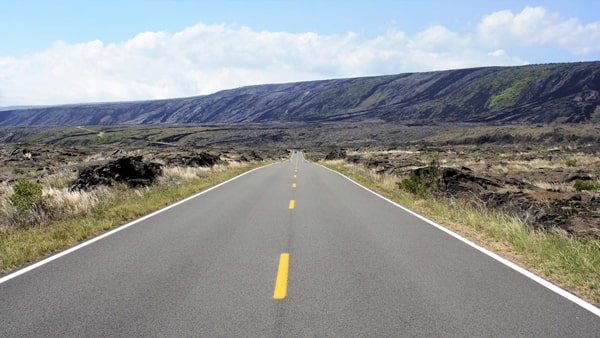
A broken yellow center line on the roadway means:
  1. A Passing is prohibited in both directions
  2. B You may pass on the left when the roadway is clear and the maneuver is safe
  3. C Traffic ahead must reduce speed
  4. D Turns are prohibited

Correct answer: B – You may pass on the left when the roadway is clear and the maneuver is safe

In Arizona, a broken yellow center line separates opposing traffic and permits passing when the roadway ahead is clear. Before moving left, the driver must have enough visible, traffic-free distance to complete the pass without interfering with approaching or overtaken vehicles. Passing must be performed cautiously because it places the vehicle in the path of opposing traffic.

Source: A.R.S. § 28-725 – Limitations on overtaking on the left, Arizona Driver License Manual and Customer Service Guide — Section 3, “Broken Yellow Lines”

Question 2

A green arrow appears beside a red circular signal. Which movement does the green indication authorize?

  1. A Proceeding straight through the intersection
  2. B Proceeding cautiously in the arrow's direction
  3. C Any movement after yielding
  4. D No movement until the circular signal turns green

Correct answer: B – Proceeding cautiously in the arrow's direction

A green arrow authorizes traffic to proceed cautiously in the direction shown. The driver must use the proper lane and yield to pedestrians in an adjacent crosswalk and to traffic lawfully using the intersection. Other movements remain governed by the signal indications that control them.

Source: A.R.S. § 28-645(A)(1)(b) – Traffic control signal legend

Question 3

Traffic ahead is stopped, and entering an intersection would leave your vehicle blocking it. What should you do?

  1. A Enter slowly and wait for traffic to move
  2. B Follow the vehicle ahead as closely as possible
  3. C Remain outside until there is room to clear the intersection
  4. D Use your horn to make traffic move

Correct answer: C – Remain outside until there is room to clear the intersection

Wait before entering until enough space is available to pass through the intersection. The Arizona manual directs drivers to proceed through an intersection only when the roadway is clear. State law also generally prohibits stopping, standing or parking within an intersection, subject to limited exceptions such as avoiding a traffic conflict or following an officer's direction.

Source: A.R.S. § 28-873(A)(4) – Stopping, standing or parking prohibitions; exceptions; definition, Arizona Driver License Manual and Customer Service Guide — Section 3, “Green — Green Means Go, if Clear!”

Question 4

Which U-turn location may be lawful when signs and traffic conditions permit?

  1. A Across a physical highway median
  2. B Near a hillcrest where the vehicle is visible for only 300 feet
  3. C Through an authorized opening or crossover in a divided highway
  4. D On a railroad grade crossing

Correct answer: C – Through an authorized opening or crossover in a divided highway

Arizona permits crossing a divided highway's median only through an authorized opening, crossover or intersection. A U-turn is prohibited on a curve or near a hillcrest when approaching drivers cannot see the turning vehicle from at least 500 feet away. Turning around on a railroad track or grade crossing is also prohibited.

Source: A.R.S. § 28-731 – Driving on divided highways, A.R.S. § 28-752 – Limitations on turning around, A.R.S. § 28-851(C) – Railroad crossing; safety

Question 5

You intend to turn left on a circular green signal, but approaching traffic presents an immediate hazard. What must you do?

  1. A Drive to the next intersection
  2. B Turn before the approaching vehicles arrive
  3. C Yield and turn only after the hazardous traffic has cleared
  4. D Turn immediately because the signal is green

Correct answer: C – Yield and turn only after the hazardous traffic has cleared

A circular green signal permits a left turn unless a sign prohibits it, but the turn is not automatically protected. A driver intending to turn left must yield to opposing traffic that is within the intersection or close enough to create an immediate hazard. The turn may be completed after the required right-of-way has been yielded.

Source: A.R.S. § 28-645(A)(1)(a) – Traffic control signal legend, A.R.S. § 28-772 – Vehicle turning left at intersection

Question 6

Which sequence properly prepares you for a lane change?

  1. A Signal, check the mirrors and immediately move over
  2. B Signal, check the mirrors and look over your shoulder before moving
  3. C Signal and move quickly before another vehicle enters the lane
  4. D Accelerate, signal and then check the mirrors

Correct answer: B – Signal, check the mirrors and look over your shoulder before moving

Before changing lanes, signal, check the mirrors and look over your shoulder for traffic in the blind spot. Arizona law requires a driver to determine that movement from a lane can be made safely, and a signal is required when other traffic may be affected. A turn signal communicates your intention but does not make the lane clear.

Source: A.R.S. § 28-729(1) – Driving on roadways laned for traffic, A.R.S. § 28-754(A) – Turning movements and required signals, Arizona Driver License Manual and Customer Service Guide — Section 2, “Blind Spots”