


Arkansas Drivers Ed Practice Test 8

5 out of 5 (38 votes)
80% Passing score
20 Questions
4 Mistakes allowed
Getting ready for the drivers ed test in Arkansas is mostly about learning how Arkansas wants you to think behind the wheel, especially at intersections, where small misunderstandings turn into horn-honking, awkward hesitation, or worse. This Arkansas drivers practice test leans into that exact area: right-of-way rules, four-way stops, intersection etiquette, and those slightly annoying situations where everybody seems to arrive at the same time and, somehow, nobody wants to be first. The online test includes 20 multiple-choice questions, all built to help you practice the kind of judgment the real Arkansas knowledge exam expects. And no, it is not just a quick skim-and-click exercise. The point is to slow down a little, notice the pattern behind the rule, and then check the explanations afterward when you miss something. That review section is where a lot of the learning actually happens, even if it feels less exciting than getting everything right on the first try. For teen drivers, this practice fits neatly into Arkansas’s licensing process. You can apply for an instruction permit at 14 after passing the knowledge exam and vision test, then practice with a licensed driver age 21 or older seated beside you. The permit is valid for 2 years, which sounds generous until you realize the skills test and license purchase still have to happen before it expires. After that, Arkansas moves young drivers through the learner’s license and intermediate license stages before the regular Class D license, with the usual not-so-optional extras: seat belts for passengers, no cell phone use for ages 14–17 except in emergencies, passenger limits, and nighttime restrictions for intermediate drivers. So, yes, this Arkansas drivers ed practice permit test is about intersections. But it is also a useful checkpoint in the bigger process, the part where you find out whether the rules are actually sticking. You can take it from a phone or computer in Little Rock, Fayetteville, Fort Smith, Hot Springs, or wherever you happen to be studying. Not very dramatic, maybe. Still, when test day shows up, knowing who has the right-of-way without quietly panicking is a pretty solid advantage.
FREE DMV Practice Test App
Study for your Arkansas permit test or driver’s license with the NextDoorDriving app. 700+ DMV questions and answers, 100% free!
Download on the App Store

Sample Arkansas Permit Test Questions

Question 1

In Arkansas, how far in advance must you signal before changing lanes on a freeway?
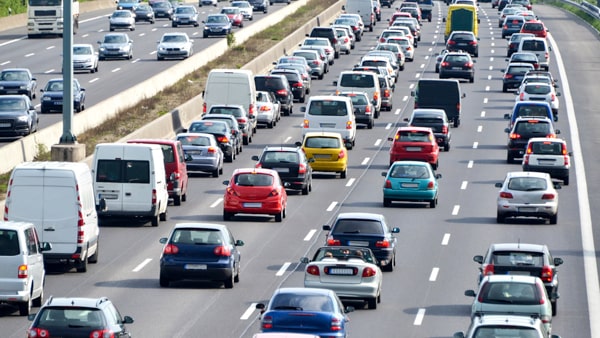
When changing lanes on a freeway, you should:
  1. A Continuously during at least the last 100 feet before the lane change
  2. B Only while crossing the lane line
  3. C After entering the new lane
  4. D Only when another driver sounds a horn

Correct answer: A – Continuously during at least the last 100 feet before the lane change

A driver must signal continuously during at least the last 100 feet traveled before changing lanes. Before moving, verify that the lane change can be completed with reasonable safety and check the mirrors and blind spot. A signal communicates your intention but does not establish that the adjacent lane is clear.

Source: Ark. Code § 27-51-403(a)–(b) – Signals for Turning, Stopping, Changing Lanes, or Decreasing Speed Required, Arkansas Driver License Test Study Guide — Ch. 4, “Changing Lanes”; Ch. 5, “Signaling to Change Directions”
Question 2

Your signal turns green, but vehicles are still clearing the intersection. What should you do?

  1. A Wait outside the intersection until those vehicles have cleared
  2. B Enter and drive around the other vehicles
  3. C Move into the intersection and wait there
  4. D Sound your horn and proceed

Correct answer: A – Wait outside the intersection until those vehicles have cleared

A green signal permits you to proceed only when the intersection is clear and it is safe to do so. Allow opposing traffic already within the intersection to finish moving through it. Waiting outside the intersection also prevents your vehicle from becoming trapped there when the signal changes.

Source: Arkansas Driver License Test Study Guide — Ch. 2, “Lighted Traffic Signals”; Ch. 5, “Intersecting Traffic”

Question 3

Another vehicle suddenly merges into the following gap ahead of you. What is the best response?

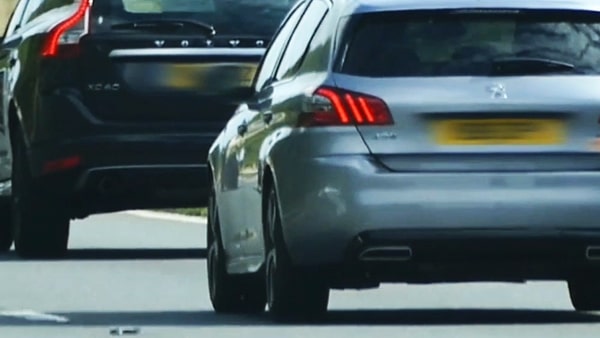
If another driver "cuts" in front of you, it would be better if you:
  1. A Gradually reduce speed to rebuild a safe following gap
  2. B Brake abruptly even when no immediate collision is likely
  3. C Accelerate to remain close behind the vehicle
  4. D Use the horn to express frustration

Correct answer: A – Gradually reduce speed to rebuild a safe following gap

Allowing more space ahead gives you additional time to react if the other vehicle stops. Reduce speed gradually and fall back until an adequate following gap has been restored. Avoid unnecessary sudden braking because an abrupt speed change can create another traffic hazard.

Source: Arkansas Driver License Test Study Guide — Ch. 5, “Following Distance”; Ch. 5, “The Safety Cushion”

Question 4

When turning left from a two-way road, which traffic must you yield to?

  1. A Pedestrians waiting on the sidewalk who are not entering your path
  2. B Vehicles stopped by a red signal on the intersecting road
  3. C Oncoming vehicles that are in the intersection or close enough to be an immediate hazard

Correct answer: C – Oncoming vehicles that are in the intersection or close enough to be an immediate hazard

Arkansas law requires a left-turning driver to yield to opposite-direction traffic that is already in the intersection or close enough to present an immediate hazard. After yielding and giving the required signal, the driver may complete the turn when it is safe. The rule does not require waiting for every distant oncoming vehicle.

Source: Ark. Code § 27-51-502 – Vehicle Turning Left at Intersection

Question 5

An oncoming driver begins turning left across your path. What should you do if a collision may occur?

  1. A Maintain speed because you have the right-of-way
  2. B Slow down or stop as needed to avoid the collision
  3. C Sound the horn but continue at the same speed
  4. D Accelerate toward the crossing vehicle

Correct answer: B – Slow down or stop as needed to avoid the collision

Right-of-way laws determine who must yield, but they do not give a driver an absolute right to continue into a collision. If another vehicle crosses your path, reduce speed or stop as necessary to avoid impact. A horn may provide a warning, but it is not a substitute for controlling your vehicle.

Source: Arkansas Driver License Test Study Guide — Ch. 3, “Right of Way”; Ch. 5, “Warning Horn”

Question 6

For a driver traveling on an Arkansas street or highway, which statement about seat belt use is correct?

  1. A A seat belt is needed only above 40 mph
  2. B A seat belt may be omitted during short, low-speed trips
  3. C A seat belt is unnecessary on city streets
  4. D The driver should buckle up for every trip, regardless of speed or location

Correct answer: D – The driver should buckle up for every trip, regardless of speed or location

State law requires drivers and front-seat passengers in covered vehicles to wear properly adjusted and fastened seat belts, subject to listed statutory exceptions. The requirement applies on streets and highways and is not limited to high-speed travel. The study guide recommends fastening the safety belt before starting the engine.

Source: Ark. Code § 27-37-702(a) – Seat Belt Use Required—Applicability of Subchapter, Arkansas Driver License Test Study Guide — Ch. 4, “Seat Belt”