Arkansas DMV Test Evaluation

4.7 out of 5 (102 votes)
80% Passing score
10 Questions
2 Mistakes allowed
This Arkansas permit practice test is a smart place to start if you want to know, fairly quickly, whether your study plan is doing its job or just making you feel productive. It is not the full exam, and it does not pretend to be. Instead, it gives you a compact 10-question checkup built around the same kind of material Arkansas expects new drivers to understand: traffic laws, road signs, right-of-way, pavement markings, work zones, seat belt rules, distracted driving, DWI laws, and those small state-specific details that somehow become very important when you are sitting in front of the real test. The official Arkansas driver license knowledge test is administered through the Arkansas State Police Driver Examination program. The real permit test has 25 multiple-choice questions, and you need 20 correct answers to pass. That is 80%, which sounds neat and simple until you realize it only gives you room to miss 5 questions. So, yes, this DMV practice test uses the same basic passing standard in a shorter format. Score 80% or better here, and you have a decent handle on the essentials. Come in under that, and it is not a disaster. It is just a very plain hint that more practice would be a good idea. You will also see road sign material woven into the test, because Arkansas does not have a special road-sign-only exam. Sign questions count right alongside everything else on the knowledge test, which is exactly why brushing them off is a bad little strategy, even if it feels efficient at the time. A few practical notes matter, too. Each official written exam costs $5, and if you fail it, Arkansas requires a 5-day wait before you can reschedule. Not tragic, obviously, but inconvenient enough. And passing the written test is just the start. You will need to assemble the proper documents and pass a vision screening before an instruction permit can be issued. In other words, use this Arkansas DMV practice test as an early checkpoint: take it, notice what you miss, clean up the weak spots, and keep going until the answers stop feeling like guesses.
FREE DMV Practice Test App
Study for your Arkansas permit test or driver’s license with the NextDoorDriving app. 700+ DMV questions and answers, 100% free!
Download on the App Store

Sample Arkansas Permit Test Questions

Question 1

When making a right turn onto a two-way road without turn-control markings, which lane should you enter?

  1. A The lane nearest the centerline
  2. B The lane farthest from the curb
  3. C The lane nearest the right curb or roadway edge
  4. D Whichever lane has the least traffic

Correct answer: C – The lane nearest the right curb or roadway edge

When signs or pavement markings do not direct otherwise, the Arkansas guide says to enter the lane closest to your direction of travel. For a right turn, this is the lane nearest the right curb or roadway edge. A properly positioned turn also avoids crossing into the opposing lane.

Source: Arkansas Driver License Study Guide — Ch. 3, “Turning—Right Turns”
Question 2

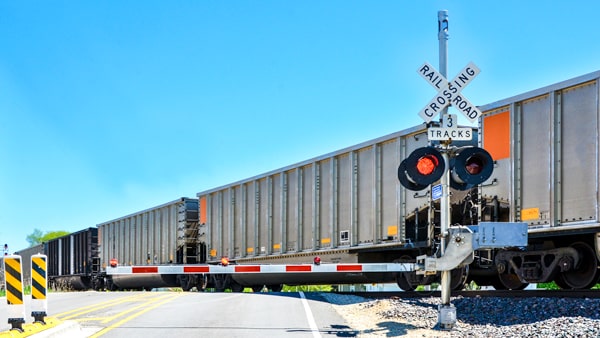
May a driver go around a lowered railroad crossing gate?

When may you legally drive around or under a railroad crossing gate?
  1. A No, never
  2. B Yes, after looking in both directions
  3. C Yes, if the gate appears defective
  4. D Yes, if there is time to cross before the train arrives

Correct answer: A – No, never

The Arkansas guide states that a driver must never attempt to go around crossing gates. A lowered gate indicates that the road is closed, and flashing red lights prohibit crossing even when no train is visible. If a gate begins lowering after you have started across the tracks, continue forward rather than stopping on the tracks.

Source: Arkansas Driver License Study Guide — Ch. 2, “Railroad Crossing Signs—Gates and Lights”

Question 3

Which driving habit best demonstrates defensive driving?

  1. A Keeping exactly one car length behind every vehicle
  2. B Watching only the vehicle directly ahead
  3. C Staying alert and scanning for developing hazards
  4. D Doing all of the above

Correct answer: C – Staying alert and scanning for developing hazards

Defensive driving requires continuous awareness of the road and surrounding traffic. The official guide advises looking well ahead, checking both directions at intersections, and monitoring traffic behind through the mirrors. Watching only the vehicle directly ahead can prevent you from noticing hazards developing elsewhere.

Source: Arkansas Driver License Study Guide — Ch. 5, “Stay Alert—Looking Ahead; Looking Behind”

Question 4

Before moving into another lane, which condition must you verify?

Before changing lanes, you must:
  1. A The lane change can be completed safely
  2. B Your signal has given you the right-of-way
  3. C You are traveling faster than surrounding traffic
  4. D All of the above

Correct answer: A – The lane change can be completed safely

Arkansas law allows a lane change only when the movement can be made with reasonable safety and requires signaling during at least the last 100 feet before the change. Check the rearview and side mirrors, then glance over your shoulder for vehicles in the blind spot. Move only after confirming that sufficient space is available.

Source: Ark. Code Ann. § 27-51-403(a)–(b) — Signals for Turning, Stopping, Changing Lanes, or Decreasing Speed Required, Arkansas Driver License Study Guide — Ch. 5, “Changing Lanes”

Question 5

After checking your mirrors before a lane change, what additional check should you make?

Before changing lanes in traffic, you need to:
  1. A Check only the rearview mirror again
  2. B Sound the horn before moving
  3. C Glance over your shoulder toward the intended lane
  4. D Signal and assume other traffic will yield

Correct answer: C – Glance over your shoulder toward the intended lane

The rear corners of a vehicle contain blind spots that cannot be seen through the mirrors. A quick shoulder glance toward the intended lane helps reveal vehicles, motorcycles, or bicycles hidden there. Keep the glance brief because traffic ahead may slow or stop while you are checking beside your vehicle.

Source: Arkansas Driver License Study Guide — Ch. 5, “Changing Lanes”

Question 6

In Arkansas, how should you treat a lane marked and signed for bicycle use only?

  1. A Use it during congestion when no bicycle is visible
  2. B Do not use it as a turning, passing, or parking lane
  3. C Enter it within 200 feet of a right turn
  4. D Use it whenever bicycle traffic is light

Correct answer: B – Do not use it as a turning, passing, or parking lane

The official study guide states that drivers must not use a lane marked and signed for bicycle use only as a turning lane, passing lane, or parking area. When preparing for a right turn near bicycle traffic, watch carefully for cyclists. Do not turn directly across a cyclist’s path.

Source: Arkansas Driver License Study Guide — Ch. 7, “Lane Positions for Bicycles”, Arkansas Driver License Study Guide — Ch. 7, “Safety Tips for Motor Vehicle Drivers”