Colorado DMV Practice Test 9

4.9 out of 5 (61 votes)
80% Passing score
20 Questions
4 Mistakes allowed
The Colorado DMV permit test is not just a little quiz you knock out between errands, even if plenty of people treat it that way until the questions start getting oddly specific. This Colorado DMV practice test zeroes in on school bus safety, which is one of those topics that seems obvious right up until you’re dealing with flashing red lights, stopped traffic, kids stepping into the road, and that small internal panic of, wait, do I stop here too? In Colorado, the answer matters. Drivers must stop in all directions on undivided roadways when a school bus has its red lights flashing. It is a firm rule, and for good reason. This practice test gives you 20 questions built around school bus interactions, right-of-way judgment, and the kind of real-life driving scenarios that do not always fit neatly into one tidy sentence in the handbook. You need 80% or higher to pass this DMV practice permit test, so it is a useful way to see whether you actually understand the rule, not just whether you vaguely remember reading it somewhere. The official Colorado Class D knowledge test is broader, of course. It covers traffic laws, road signs, signals, pavement markings, safe driving habits, sharing the road, impaired driving, mountain and winter conditions, freeway driving, night driving, and the general responsibility of not turning your vehicle into everyone else’s problem. The real test has 25 multiple-choice questions, and you need 20 correct answers to pass. You can take it online through Colorado’s @Home testing platform or in person at a driver license office; the online version gives you 60 minutes and is available in English and Spanish. And then, because getting licensed is never just one thing, there is the vision screening. Colorado applicants should be prepared for a basic eye exam, and if you wear glasses or contacts, bring them. The general vision standard is 20/40 or better in at least one eye. Obviously drivers need to be able to see a school bus. If you need glasses or contacts to see it, fine, but you'll need to wear them when you drive. No excuses.   Use this Colorado permit test practice while you study the Colorado Driver Handbook and start getting the other licensing pieces together. It is not a replacement for drivers ed, but it is a practical, no-nonsense way to sharpen the rules before the real test starts asking its little gotcha-adjacent questions.
FREE DMV Practice Test App
Study for your Colorado permit test or driver’s license with the NextDoorDriving app. 700+ DMV questions and answers, 100% free!
Download on the App Store

Sample Colorado Permit Test Questions

Question 1

What does a red-and-white WRONG WAY sign tell you?
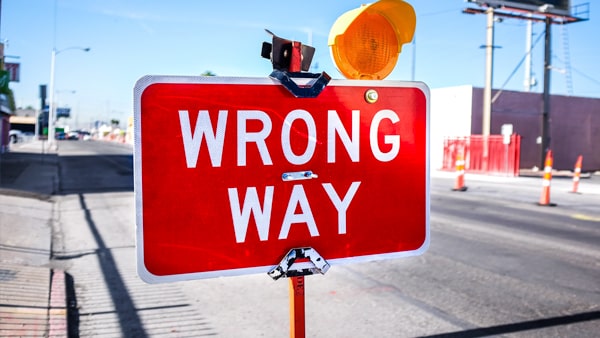
This red and white sign means:
  1. A You may enter if no traffic is approaching
  2. B The roadway is closed to traffic traveling in every direction
  3. C U-turns are the only prohibited movement
  4. D You are traveling against the permitted direction of traffic

Correct answer: D – You are traveling against the permitted direction of traffic

WRONG WAY and DO NOT ENTER signs warn drivers who are entering or traveling against the authorized traffic direction. Do not continue past such a sign. Stop safely and correct your direction only when you can do so without creating another hazard or entering moving traffic.

Source: Colorado Driver Handbook — Traffic Signs and Signals, “Do Not Enter/Wrong Way signs”
Question 2

A single solid white line separating lanes moving in the same direction generally instructs drivers to:

  1. A Change lanes whenever there is an opening
  2. B Remain within their current lane
  3. C Cross it only when entering a driveway
  4. D Use the line as the boundary of a passing lane

Correct answer: B – Remain within their current lane

White lines separate traffic traveling in the same direction. A broken white line permits a lane change when it is safe, while the handbook states that a solid white line requires drivers to stay within the lane. Solid white lines may also mark the roadway’s shoulder.

Source: Colorado Driver Handbook — “Pavement Markings: White lines”

Question 3

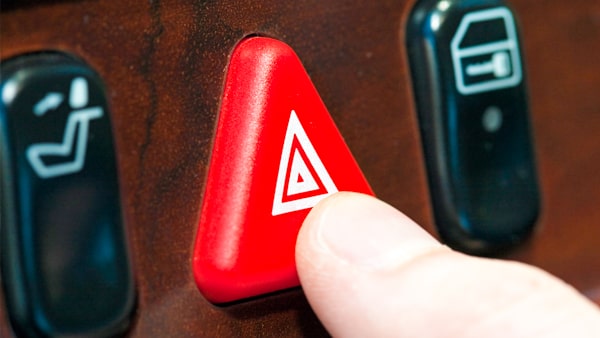
Which situation is an appropriate use of your emergency flashers?

You should always use your emergency flashers when:
  1. A You have double-parked in a traffic lane
  2. B You are driving normally through heavy fog
  3. C Your headlights have failed and you are pulling off the roadway
  4. D You are tired but intend to continue driving

Correct answer: C – Your headlights have failed and you are pulling off the roadway

If your headlights fail, pull off the road as soon as possible. After checking the headlight switch, use emergency flashers or other available signal lights to make the vehicle more visible. Flashers do not make double parking lawful and are not a substitute for functioning headlights during normal travel.

Source: Colorado Driver Handbook — Vehicle Emergencies, “Headlight failure”

Question 4

To recognize hazards early and avoid abrupt braking or turning, how far ahead should you scan?

  1. A Two to four seconds
  2. B Five to eight seconds
  3. C At least 10 seconds
  4. D Only as far as the vehicle directly ahead

Correct answer: C – At least 10 seconds

The handbook recommends looking at least 10 seconds down the road—about one city block or one-half mile on an open road. This wider view helps you identify signs, traffic changes, pedestrians, and other hazards early. Keep scanning rather than fixing your attention on one vehicle or object.

Source: Colorado Driver Handbook — Safe Driving Tips, “Scanning: Look ahead”

Question 5

Under Colorado law, what must you do before opening a parked vehicle’s door on the side exposed to moving traffic?

  1. A Check that opening the door is safe and will not interfere with traffic
  2. B Open the door first to make approaching traffic stop
  3. C Give a left-turn hand signal
  4. D Sound the horn

Correct answer: A – Check that opening the door is safe and will not interfere with traffic

A door on the traffic side may not be opened until doing so is reasonably safe and will not interfere with moving traffic. Check mirrors and look behind for motorists, bicyclists, and motorcyclists before opening it. The law also prohibits leaving the door open longer than necessary to load or unload passengers.

Source: C.R.S. § 42-4-1207 — Opening and closing vehicle doors

Question 6

Why should you regularly check traffic behind your vehicle?

Checking traffic behind you:
  1. A Looking behind is unnecessary while moving forward
  2. B It helps you detect someone following too closely or approaching rapidly
  3. C It is useful only while slowing down
  4. D It should be done only before backing

Correct answer: B – It helps you detect someone following too closely or approaching rapidly

The handbook recommends checking the rearview mirror every five to eight seconds, and more often in heavy traffic. These checks help you recognize a tailgater or a vehicle approaching too quickly and give you time to respond. Looking behind is especially important before slowing, changing lanes, backing, or descending a long hill.

Source: Colorado Driver Handbook — Safe Driving Tips, “Scanning: Look behind”