Colorado Road Signs Test

4.7 out of 5 (105 votes)
80% Passing score
10 Questions
2 Mistakes allowed
A solid score on the Colorado DMV permit test starts with knowing the signs, not just sort of recognizing them in a “yeah, I’ve seen that one before” way. This Colorado road signs practice test gives you 20 multiple-choice questions built around the traffic-control details that matter on the real road: regulatory signs, warning signs, guide signs, traffic signals, pavement markings, lane controls, and those color-and-shape clues that seem simple until the test asks about them in a slightly annoying way. Colorado does not treat road signs as a side quest. They are part of the regular Class D driver license knowledge test, the written permit test for a standard passenger-vehicle instruction permit. The official test is based on the Colorado Driver Handbook and covers more than signs. Think traffic laws, rules of the road, safe driving practices, sharing the road, impaired driving, and the kinds of Colorado-specific driving situations people underestimate, like winter roads, mountain driving, rural highways, freeway traffic, and night driving. So yes, this signs test is focused, but it is not narrow in the useless way. It helps with a piece of the real exam that can quietly cost you points. The official Colorado knowledge test has 25 multiple-choice questions. You need 20 correct answers to pass, which means an 80% score, and you can miss no more than 5 questions total. There is no special missed-question allowance for road signs; they count right along with everything else. That is why practicing them separately makes sense, not because signs are mysterious, exactly, but because the test expects you to know what they mean without hesitating. You can take the official Class D knowledge test at a Colorado driver license office or online through the state’s @Home testing platform, where the test has a 60-minute limit and is offered in English and Spanish. While you are getting the rest of your licensing steps pulled together, this Colorado DMV practice test gives you a useful way to keep studying without making the whole process feel heavier than it already is. After you finish, you will see which questions you missed and the correct answers, so the review actually gives you something to work with. Use it to tighten up your road sign knowledge, build confidence, and walk into the Colorado permit test with fewer surprises.
FREE DMV Practice Test App
Study for your Colorado permit test or driver’s license with the NextDoorDriving app. 700+ DMV questions and answers, 100% free!
Download on the App Store

Sample Colorado Permit Test Questions

Question 1

A yellow diamond sign displaying a right-angle arrow pointing right warns of:

When you see this black and yellow sign, it means:
  1. A A one-way street beginning on the right
  2. B A construction detour to the right
  3. C A sharp right turn ahead
  4. D A side road entering from the right

Correct answer: C – A sharp right turn ahead

Yellow diamond signs warn of hazards or changing road conditions. A right-angle arrow indicates that the road makes a sharp right turn rather than a gradual curve. Reduce speed before reaching the turn and remain within your lane as the road changes direction.

Source: Colorado Driver Handbook — “Traffic Controls,” “Warning Signs”; “Hills and Curves”
Question 2

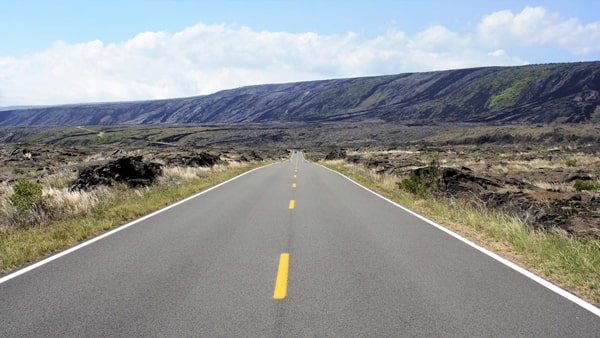
When a broken yellow centerline is on your side of a two-way road, you may:

A broken yellow center line on the roadway means:
  1. A Cross it to pass when the maneuver is legal and safe
  2. B Never cross it for any reason
  3. C Use the opposing lane for regular travel
  4. D Stop before crossing every intersection

Correct answer: A – Cross it to pass when the maneuver is legal and safe

A yellow centerline separates traffic moving in opposite directions. A broken yellow line permits a driver to cross temporarily for a lawful pass when there is sufficient visibility and no conflicting traffic. Remain to the right at other times and return safely to your lane after passing.

Source: Colorado Driver Handbook — “Pavement Markings,” “Yellow Lines”

Question 3

In Colorado, how should you respond to a flashing yellow traffic signal?

  1. A Stop and wait for a green signal
  2. B Slow down and proceed cautiously
  3. C Yield only to vehicles on your right
  4. D Treat it as a pedestrian-only signal

Correct answer: B – Slow down and proceed cautiously

A flashing yellow signal permits traffic to proceed only with caution. The driver should slow down, observe the intersection or hazardous location, and continue carefully. Unlike a flashing red signal, it does not impose an automatic stop requirement.

Source: C.R.S. § 42-4-605(1)(b) – Flashing Signals, Colorado Driver Handbook — “Traffic Signals,” “Flashing Yellow Light”

Question 4

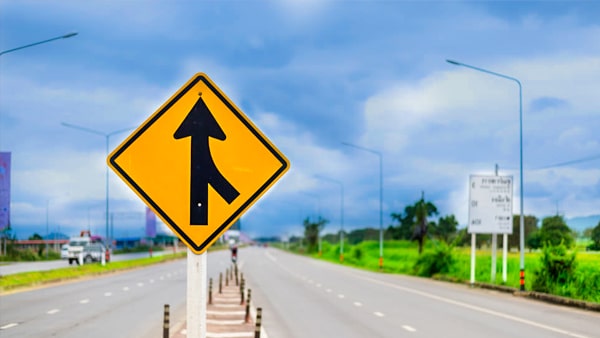
A yellow warning sign showing a branch joining a straight line from the right means:

This sign means:
  1. A Two-way traffic begins ahead
  2. B The right lane ends immediately
  3. C Traffic may merge into your roadway from the right
  4. D A divided highway begins

Correct answer: C – Traffic may merge into your roadway from the right

A merge warning sign alerts you that vehicles may enter your roadway from the side. Scan ahead and monitor the entering traffic as you approach the merging area. Adjust your speed or lane position only when doing so is safe.

Source: Colorado Driver Handbook — “Traffic Controls,” “Warning Signs”

Question 5

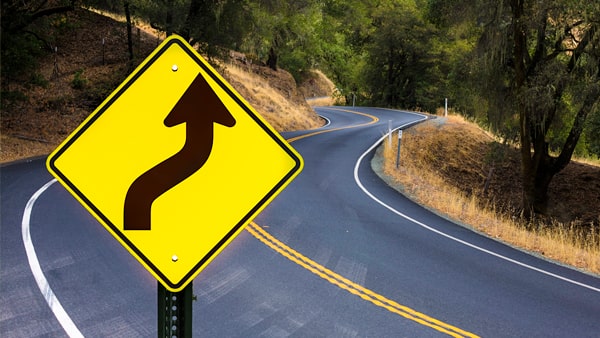
A yellow warning sign whose roadway symbol curves right and then left indicates:

This sign means:
  1. A One sharp right turn
  2. B Successive curves, beginning to the right
  3. C Successive curves, beginning to the left
  4. D The paved roadway ends

Correct answer: B – Successive curves, beginning to the right

This warning sign shows that the roadway first curves right and then curves left. Slow to an appropriate speed before entering the first curve. Remain alert for an advisory-speed plaque that may be posted with the warning sign.

Source: Colorado Driver Handbook — “Traffic Controls,” “Warning Signs”; “Hills and Curves”
Question 6

What does a double solid yellow centerline generally indicate?

  1. A Passing is permitted in both directions
  2. B Passing is prohibited in both directions, subject to the lawful bicycle-passing exception
  3. C Traffic on both sides moves in the same direction
  4. D Drivers may use the center area as a turn lane

Correct answer: B – Passing is prohibited in both directions, subject to the lawful bicycle-passing exception

In Colorado, double solid yellow lines generally prohibit passing by traffic in either direction. A driver may briefly cross a solid yellow line to pass a bicyclist when the required clearance can be provided, the opposing lane is clear, and there is a clear view ahead. That exception does not make the opposing lane available for ordinary passing or travel.

Source: Colorado Driver Handbook — “Pavement Markings,” “Yellow Lines”; “Passing”