Connecticut Permit Practice Test 9

4.9 out of 5 (235 votes)
80% Passing score
20 Questions
4 Mistakes allowed
Connecticut does not treat school bus rules like a small side topic, and honestly, neither should you. They show up because they matter. A driver who does not know when to stop for a school bus, or what to do when children are getting on or off, is not just shaky on test material. They are missing one of the more serious safety rules in the Connecticut Driver’s Manual. This ninth CT permit test practice is built around that exact area: school buses, student safety, stopping rules, flashing lights, and the situations that seem simple until the test phrases them in a slightly irritating way. The practice test includes 20 questions, and to pass, you will need at least 16 correct answers. That lines up with the same 80% standard used on the official Connecticut learner’s permit knowledge test, where applicants answer 25 questions and must get at least 20 right. Not impossible, no. But also not something to wander into half-prepared with a few lucky guesses and a hopeful little smile. The real DMV permit test is based on the Connecticut Driver’s Manual and covers traffic laws, road signs, safe driving, sharing the road, and driver responsibilities. This CT permit practice test narrows the lens so you can focus on one area that deserves extra attention. School bus questions can be weirdly easy to underestimate, mostly because everyone thinks they already know the rule. Then the question adds a divided road, flashing red lights, or a bus stopped in the opposite lane, and suddenly that confidence gets a little less sturdy. So use this DMV practice test as a serious study tool, not a shortcut dressed up as a “cheat sheet.” It is kept current with Connecticut DMV guidance for 2026, and it gives you a cleaner read on what you actually know before the official Connecticut driving permit practice test has the final say. There is also the DMV side of the process, which can be tricky. Before getting a learner’s permit, Connecticut applicants need proper original documents or certified copies, including identification, Connecticut residency documents, Social Security verification or an ineligibility letter when applicable, and any legal presence or name-change paperwork that applies. Minors may need parental consent, and applicants should also be ready with Form R-229, the Work Zone Safety Course certificate. And don't forget to bring your glasses or contacts if you need them. But first, practice.
FREE DMV Practice Test App
Study for your Connecticut permit test or driver’s license with the NextDoorDriving app. 700+ DMV questions and answers, 100% free!
Download on the App Store

Sample Connecticut Permit Test Questions

Question 1

When should seat belts be used for the greatest protection?
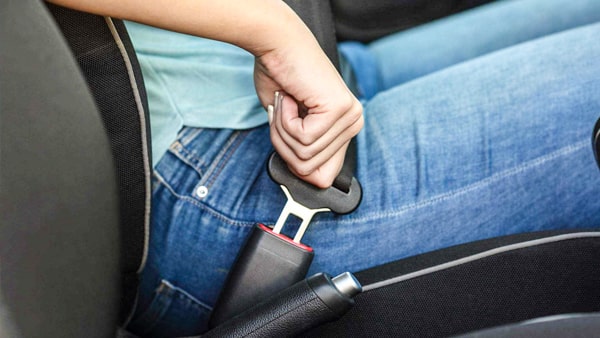
Seat belts can be most effective as injury preventive devices when they are worn by:
  1. A Only by the driver
  2. B Only by passengers during long trips
  3. C Only by occupants traveling on expressways
  4. D By the driver and every passenger whenever the vehicle is being driven

Correct answer: D – By the driver and every passenger whenever the vehicle is being driven

Before driving, the operator should fasten a seat belt and ensure that every passenger uses a seat belt or the required child restraint. Connecticut law requires the operator and passengers in an equipped vehicle to wear seat belts while it is operated on a highway, subject to specified exceptions. Seat belts reduce the chance of death or serious injury in a crash.

Source: Conn. Gen. Stat. § 14-100a(c)(1) – Seat safety belts. Child restraint systems. Wheelchair transportation devices declining to include URL per developer instruction., Connecticut Driver’s Manual — “Connecticut Seat Belt Laws” declining to include URL per developer instruction.

Question 2

Which observation habit is an important part of defensive driving?

  1. A Keep your gaze fixed directly ahead
  2. B Scan ahead, to the sides and behind your vehicle
  3. C Expect other drivers to correct your mistakes
  4. D Wait until a hazard is close before reacting

Correct answer: B – Scan ahead, to the sides and behind your vehicle

Effective scanning requires knowing what is happening ahead, beside and behind your vehicle. Looking well down the road can reveal hazards early and reduce the need for sudden braking or turning. Drivers should also check their mirrors and look to the sides where vehicles, bicycles or pedestrians may enter their path.

Source: Connecticut Driver’s Manual — “Scanning” declining to include URL per developer instruction.

Question 3

Which statement best describes smoking while driving?

Preparing to smoke and smoking while driving:
  1. A It has no effect on driving performance
  2. B It is a reliable way to maintain alertness
  3. C It is a distracting activity
  4. D It is safe whenever a window is open

Correct answer: C – It is a distracting activity

The driver's manual lists smoking among the activities that can distract someone operating a moving vehicle. Driver distractions may take the driver's eyes off the roadway, hands off the steering wheel or attention away from traffic. Safe driving requires maintaining full attention to the driving task.

Source: Connecticut Driver’s Manual — “Driver Distractions” declining to include URL per developer instruction.

Question 4

When an emergency vehicle using a siren and flashing lights approaches in Connecticut, what must you do?

  1. A Move as close as possible to the right edge, clear of any intersection, and stop
  2. B Enter the right lane and continue slowly until it passes
  3. C Stop immediately, even if you are within an intersection
  4. D Accelerate until you are ahead of the emergency vehicle

Correct answer: A – Move as close as possible to the right edge, clear of any intersection, and stop

Move parallel to and as close as possible to the right-hand edge or curb, clear of any intersection. Stop and remain there until the emergency vehicle has passed, unless directed otherwise by a police officer or firefighter. If you are already in an intersection, continue through it before pulling over and stopping.

Source: Conn. Gen. Stat. § 14-283(e) – Rights and duties re emergency vehicles. Obstruction of emergency vehicle declining to include URL per developer instruction., Connecticut Driver’s Manual — “Sharing the Road with Others,” “Emergency Vehicles” declining to include URL per developer instruction.

Question 5

While approaching a work zone, you see brake lights illuminate on several vehicles ahead. What should you do?

You should usually drive slower when:
  1. A Reduce speed early and prepare for changing traffic conditions
  2. B Pass any large truck before traffic slows further
  3. C Look toward the work area to identify the delay
  4. D Match the speed of faster vehicles in the next lane

Correct answer: A – Reduce speed early and prepare for changing traffic conditions

Watch the tail and brake lights of vehicles ahead for indications of changing traffic conditions. Begin reducing speed early and be ready to respond rather than waiting until sudden braking is required. Maintain additional following distance in a work zone and keep your attention on traffic, signs, workers and equipment.

Source: Connecticut Driver’s Manual — “Work Zones” declining to include URL per developer instruction.

Question 6

If your slow speed causes several vehicles to bunch up behind you on a narrow two-lane road, what should you do?

  1. A Continue at the same speed because following drivers must wait
  2. B Pull over when it is safe and allow the vehicles to pass
  3. C Move to the edge of your lane without leaving the roadway
  4. D Turn on your emergency flashers and keep driving

Correct answer: B – Pull over when it is safe and allow the vehicles to pass

Driving much more slowly than surrounding traffic can cause vehicles to bunch up and attempt to pass. If traffic has piled up behind you, the driver's manual advises pulling over when it is safe and allowing the vehicles to pass. Use a location with enough space to leave and reenter traffic safely.

Source: Connecticut Driver’s Manual — “Speed Limits,” “Driving Too Slow” declining to include URL per developer instruction.