Washington DC DMV Practice Test

4.8 out of 5 (359 votes)
80% Passing score
20 Questions
4 Mistakes allowed
The DC DMV permit test is not something to casually wander into after skimming a few signs and hoping common sense carries the rest. It might, in spots. Then it absolutely will not, usually right around a right-of-way question that looks harmless until every answer seems half-correct. This free DC learners permit practice test gives you a steadier way to prepare, with 20 multiple-choice questions built around the rules DC expects you to know: traffic signals, safe driving habits, licensing requirements, permit restrictions, and those small legal details that are easy to overlook when you are just flipping through the manual. The practice format matters more than people like to admit. Reading the DC driver manual is useful, of course, but answering questions forces the material to sit differently in your brain. You see how the wording works. You notice where you hesitate. You get feedback before the real DC DMV knowledge test is the thing recording your mistakes. Aim for at least 16 correct answers out of 20, since that is the passing mark this test is built around, and treat anything lower as a sign to slow down and review, not as a disaster. There are a few DC-specific details worth having in your head before test day. Applicants ages 16 through 20 fall under DC DMV’s GRAD program, which moves drivers from learner permit to provisional license and then to a full license. For those applicants, the learner permit process includes the knowledge test, vision screening, required documents, and a 75-minute time limit on the GRAD knowledge test. A learner permit also limits driving to 6:00 a.m. through 9:00 p.m., which is one of those facts that sounds minor until it shows up in a question. Adults age 21 and older are not in the GRAD program, but they still need the knowledge test, vision screening, and road skills test if they do not already have a valid license. Out-of-state learner permit holders have to start DC’s process by taking the DC knowledge test too. Testing may be available at a DC DMV service center, virtually, or through a Test Proctoring Center for eligible applicants. And if you pass virtually, do not let that result sit around: DC requires the in-person document step within 14 business days. Use this Washington DC DMV practice test online from your phone, tablet, or computer, take it more than once, and pair it with the official manual. That is the sensible route. A little repetitive, maybe, but it works.
FREE DMV Practice Test App
Study for your Washington DC permit test or driver’s license with the NextDoorDriving app. 700+ DMV questions and answers, 100% free!
Download on the App Store

Sample Washington DC Permit Test Questions

Question 1

Unless a statutory exception applies, when must a driver and passengers wear safety belts?

  1. A Only when the vehicle lacks airbags
  2. B Only while traveling on high-speed roads
  3. C Whenever the driver is in control of the vehicle
  4. D Only when seated in the front row

Correct answer: C – Whenever the driver is in control of the vehicle

District of Columbia law requires the driver and all passengers to wear properly adjusted and fastened safety belts while the driver is in control of the vehicle. The statute contains limited exceptions, including specified medical and vehicle-related circumstances. The presence of airbags is not an exception to the belt requirement.

Source: D.C. Code § 50-1802 – Use of Safety Belts Required; Exceptions
Question 2

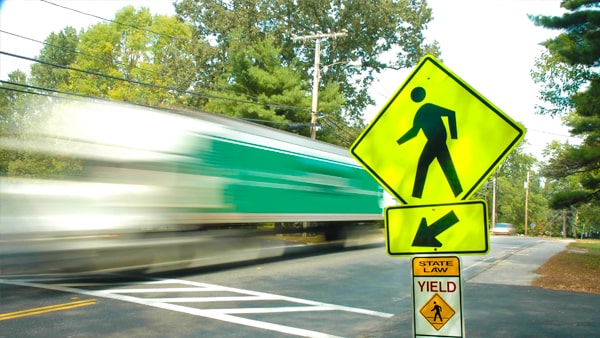
At a marked midblock crosswalk, a pedestrian is in your lane or within one lane of it. What must you do?

If a pedestrian is in a crosswalk in the middle of a block:
  1. A Stop and remain stopped to allow the pedestrian to cross
  2. B Proceed because pedestrians must yield between intersections
  3. C Continue if the pedestrian is not directly in front of you
  4. D Honk to encourage the pedestrian to move faster

Correct answer: A – Stop and remain stopped to allow the pedestrian to cross

In the District of Columbia, a driver must stop and remain stopped for a pedestrian in a marked crosswalk when the pedestrian is in the vehicle’s lane or within one lane approaching it. The same rule applies to an unmarked crosswalk at an intersection. Proceed only after the pedestrian has safely cleared the affected portion of the roadway.

Source: D.C. Code § 50-2201.28(a) – Right-of-Way at Crosswalks

Question 3

Before beginning a pass on a two-way road, which condition must the passing driver verify?

  1. A The vehicle ahead will maintain exactly the same speed
  2. B The other driver has signaled permission to pass
  3. C There is enough clear distance to pass and return safely
  4. D The vehicle ahead will brake during the maneuver

Correct answer: C – There is enough clear distance to pass and return safely

In the District of Columbia, the passing driver must have sufficient clear roadway to complete the pass without interfering with oncoming or overtaken traffic and must return before coming within 100 feet of an approaching vehicle. The overtaken driver also has duties, including not increasing speed while being passed. Those duties do not remove the passing driver’s obligation to verify adequate space.

Source: 18 DCMR § 2202.2, .4, .7–.8 – Overtaking and Passing

Question 4

If proceeding under a right-of-way rule would create an immediate collision risk, what should you do?

  1. A Accelerate to establish your position
  2. B Proceed because the other road user must stop
  3. C Wait or yield as needed to avoid the collision
  4. D Honk continuously while proceeding

Correct answer: C – Wait or yield as needed to avoid the collision

District regulations require drivers to travel at a reasonable and prudent speed and to control speed as necessary to avoid collisions. A driver should wait or yield when proceeding would create an immediate danger, even if a right-of-way rule would otherwise favor that driver. Continue only when the conflict has cleared.

Source: 18 DCMR § 2200.3–.4 – Speed Restrictions, DC DMV Automobile Driver Manual — Traffic Rules, “Right-of-Way”

Question 5

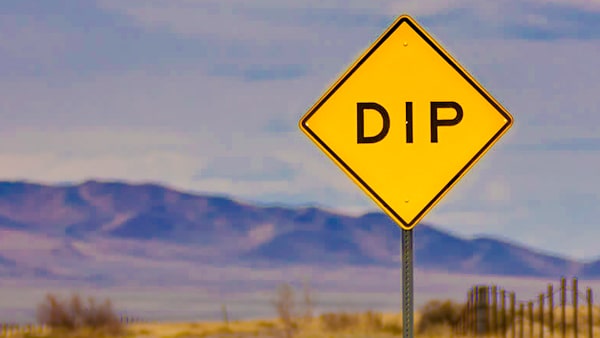
What does a yellow diamond-shaped sign displaying the word “DIP” warn about?

This sign means:
  1. A A low section of roadway ahead
  2. B A soft shoulder ahead
  3. C A pedestrian crossing ahead
  4. D A required stop ahead

Correct answer: A – A low section of roadway ahead

A DIP sign warns that there is a low section in the roadway ahead. Entering the dip too quickly can make the vehicle harder to control and may produce a strong jolt. Adjust your speed before reaching the low area.

Source: DC DMV Automobile Driver Manual — Signals, Signs and Markings, “Warning Signs”

Question 6

Before opening a parked vehicle’s door on the traffic side, what must you do?

  1. A Confirm that the vehicle is two feet from the curb
  2. B Turn the front wheels toward the curb
  3. C Check for approaching vehicles, bicyclists, and pedestrians
  4. D Turn the front wheels away from the curb

Correct answer: C – Check for approaching vehicles, bicyclists, and pedestrians

In the District of Columbia, a vehicle door may be opened only when it is reasonably safe and will not interfere with moving traffic, bicyclists, or pedestrians. Check mirrors and the area beside and behind the vehicle before opening the door. A door facing moving traffic must not remain open longer than necessary.

Source: 18 DCMR § 2214.4 – Entering and Leaving a Vehicle: Vehicle Doors