Washington DC Permit Practice Test 5

4.9 out of 5 (165 votes)
80% Passing score
20 Questions
4 Mistakes allowed
Getting a learner permit in DC starts early enough, at 16, but the process is not quite as simple as passing one test and being done with it. If you are under 21, DC automatically places you in the GRAD program, which means your permit is the first step in a longer licensing path. You hold the permit, build experience, follow the restrictions, and only then move toward a provisional license. In practical terms, that provisional license cannot happen before 16½, because you must be at least 16 and hold the learner permit for at least 6 months. A full license with conditions can begin at 17, and full unrestricted privileges generally come at 18, or later depending on where you are in the GRAD process. That is why the Washington DC learners permit practice test is more than a quick warm-up before the DMV. It helps you get comfortable with the rules before they start affecting your actual driving life. This DC permit practice test includes 20 multiple-choice questions covering District traffic laws, road signs, and safe-driving decisions, with a special focus on DUI regulations, blood alcohol content (BAC) limits, and the penalties tied to impaired driving. Not the most cheerful corner of the manual, admittedly, but it is one DC drivers need to know cold. The District is a compact place, and driving here can shift from ordinary to fussy in about half a block. One moment you are dealing with a normal lane change, the next you are reading a sign, watching a pedestrian, checking a cyclist, and trying not to make a weird choice in a traffic circle. Add in the nightlife around U Street or Navy Yard, and the rules about alcohol and driving stop feeling like abstract DMV material. They become the kind of thing you really do want clear in your head. As you move through the practice permit test, each answer comes with immediate feedback and an explanation, so you are not just collecting right and wrong marks and hoping for the best. You can see why an answer works, where your thinking slipped, and which questions are worth reviewing before the official DMV test. Driver education is encouraged for DC residents who have never held a license, especially before the road test, but solid permit test practice is still a smart first layer of preparation. Use this DC practice test for permit prep to check what you know, tighten up what you do not, and walk into the DMV with fewer surprises waiting for you.
FREE DMV Practice Test App
Study for your Washington DC permit test or driver’s license with the NextDoorDriving app. 700+ DMV questions and answers, 100% free!
Download on the App Store

Sample Washington DC Permit Test Questions

Question 1

Which consequence may follow a District DUI conviction?

  1. A A monetary fine
  2. B Possible incarceration
  3. C Suspension of driving privileges
  4. D All of these choices

Correct answer: D – All of these choices

All three consequences may result. For a first DUI offense, the law provides a $1,000 fine, incarceration for up to 180 days, or both; specified alcohol or drug findings can require minimum jail terms. DMV must also suspend the license and registration of a person convicted of DUI in accordance with applicable reinstatement requirements.

Source: D.C. Code § 50-2206.13(a) — Penalties for Driving Under the Influence of Alcohol or a Drug, D.C. Code § 50-1301.37(a)(1) — Suspension of License and Registration Upon Conviction of Certain Offenses; Exceptions; Transmission of Judgments
Question 2

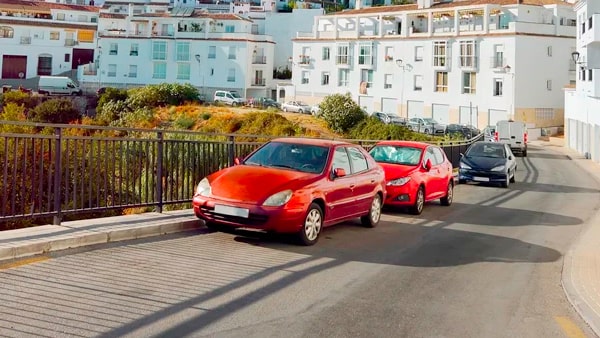
How should the front wheels be positioned when parking uphill next to a curb?

When parking your vehicle facing uphill with a curb, you should point your front wheels:
  1. A Turned toward the curb
  2. B Turned away from the curb
  3. C Pointed straight ahead
  4. D Turned in either direction

Correct answer: B – Turned away from the curb

Turn the front wheels away from the curb. If the vehicle begins rolling backward, a front wheel can contact the curb and help keep the vehicle from entering traffic. In the District, an unattended vehicle must also have its engine stopped, ignition locked, key removed, parking brake set, and wheels turned toward the curb or side of the highway when on a grade.

Source: 18 DCMR § 2418.1–.2 — Miscellaneous Non-Moving Violations, DC DMV Automobile Driver Manual — “Parking on Hills”

Question 3

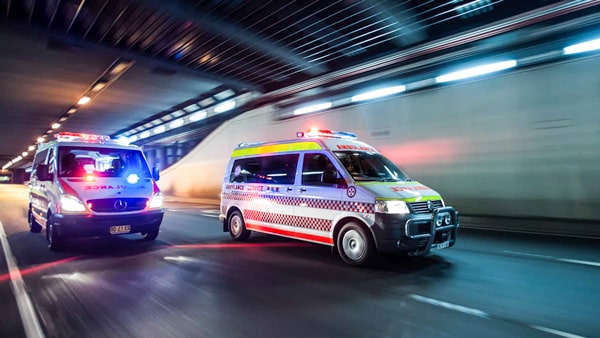
What must you do when an authorized emergency vehicle approaches using the required siren and warning lights?

When you hear the sirens or see the red emergency lights of a closely approaching emergency vehicle, you must:
  1. A Accelerate until you reach the next intersection
  2. B Continue slowly in your present lane
  3. C Move to the right edge, clear the intersection, and stop
  4. D Stop immediately within the intersection

Correct answer: C – Move to the right edge, clear the intersection, and stop

District rules require you to yield, move parallel and as close as possible to the right-hand edge or curb, and stop clear of an intersection. Remain there until the emergency vehicle passes unless a police officer directs otherwise. If you are already in an intersection, clear it before pulling right and stopping.

Source: 18 DCMR § 2210.1 — Emergency Vehicles and Apparatus, 18 DCMR § 712.1–.2 — Audible and Visual Signals

Question 4

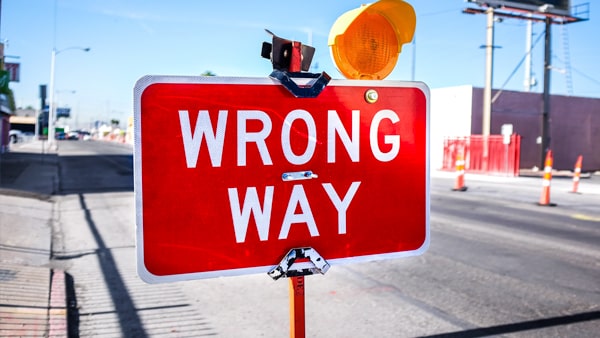
What does a red-and-white WRONG WAY sign tell a driver?

This red and white sign means:
  1. A Entry is allowed after yielding
  2. B The roadway is closed in every direction
  3. C U-turns alone are prohibited
  4. D The vehicle is traveling against the permitted direction

Correct answer: D – The vehicle is traveling against the permitted direction

A WRONG WAY sign identifies travel against the lawful direction of traffic. Do not continue along the roadway in that direction. Stop at a safe place and correct your direction without creating another hazard or disobeying traffic controls.

Source: DC DMV Automobile Driver Manual — “Traffic Signs”, 18 DCMR § 2000.4 — Obedience to Traffic Regulations

Question 5

When making a left turn, which traffic must you yield to?

  1. A Only vehicles approaching from behind
  2. B Only vehicles waiting on the cross street
  3. C Vehicles already stopped at the opposite curb
  4. D Oncoming vehicles close enough to be an immediate hazard

Correct answer: D – Oncoming vehicles close enough to be an immediate hazard

A driver turning left must yield to an oncoming vehicle that is close enough to create an immediate hazard. The District rule applies at intersections, and a comparable duty applies when turning left between intersections. Begin the turn only when the available gap permits the maneuver to be completed safely.

Source: 18 DCMR § 2208.2 — Right-of-Way: Intersections, 18 DCMR § 2207.4 — Right-of-Way: Between Intersections

Question 6

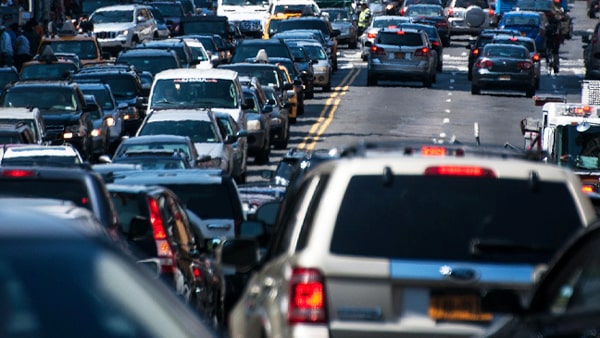
Which travel choice can reduce congestion by replacing individual car trips?

Choose the situation that would have the best impact on reducing traffic congestion:
  1. A Using public transportation
  2. B Following other vehicles more closely
  3. C Driving during the busiest travel period
  4. D Circling while waiting for curbside parking

Correct answer: A – Using public transportation

Buses and rail services can carry many people without requiring a separate automobile for every traveler. Choosing public transportation can reduce the number of individual vehicles competing for roadway space. Following closely is unsafe, while peak-period driving and circling for parking can add to congestion.

Source: DC DMV Automobile Driver Manual — “Traffic Congestion”