


Washington DC Road Signs Test Simulator

5 out of 5 (103 votes)
80% Passing score
25 Questions
5 Mistakes allowed
DC road signs do not care that a bus is blocking your view, that a delivery driver has decided the curb lane is now a private loading dock, or that the intersection ahead has too many arrows doing too many things at once. You are still expected to know what the sign means, react correctly, and keep moving like a calm, licensed adult. That is the slightly unfair but very real spirit behind this DC learners permit practice test. This road signs simulator focuses on the part of the Washington DC DMV knowledge test that can feel deceptively easy until the answers start looking a little too similar. The official DC DMV knowledge exam is based on the Automobile Driver Manual and covers traffic laws, road signs, rules of the road, driving safety, parking rules, signals, pavement markings, and general driver responsibility. Road signs are not a separate passenger-vehicle test in DC; they are folded into the full knowledge test, which means you cannot treat them like decorative roadside suggestions and hope for the best. For GRAD applicants ages 16 through 20, the real test has 30 questions, and you need 24 correct to pass. Adults age 21 and older get 25 questions and need 20 correct. Either way, that is an 80% passing score, which leaves some room for error, but not enough room for “I think that triangle one means something important.” This practice test gives you 20 road-sign-focused questions, with 16 correct answers needed to pass, so the math stays familiar while the focus stays tight. Each round pulls from a larger question pool and leans into sign meanings, shapes, colors, regulatory signs, warning signs, traffic signals, and pavement markings. It is narrower than the actual DMV test on purpose. You are not bouncing between licensing paperwork and safe-following-distance rules here; you are drilling the visual stuff that drivers are supposed to recognize quickly, even when DC traffic is being, well, DC traffic. You also get feedback after each answer, which is helpful in the mildly humbling way good practice usually is. Miss something, and you will see why. Finish the test, and the summary shows what went wrong and what the correct answers were. Use it before the DC DMV knowledge test, before a retake, or just before you convince yourself you already know every sign because you have seen them around town. Seeing a sign and knowing it are, unfortunately, not always the same thing.
FREE DMV Practice Test App
Study for your Washington DC permit test or driver’s license with the NextDoorDriving app. 700+ DMV questions and answers, 100% free!
Download on the App Store

Sample Washington DC Permit Test Questions

Question 1

Which of these is normally displayed on a vertical rectangular regulatory sign?

  1. A School crossing warning
  2. B Railroad crossing warning
  3. C Stop requirement
  4. D Speed limit

Correct answer: D – Speed limit

Most regulatory signs are rectangular, usually with the longer dimension vertical. A posted speed limit is a standard example of a regulatory message displayed on a vertical rectangle. The other choices use distinctive sign shapes that help drivers recognize their meanings before reading the sign.

Source: 18 DCMR § 2100.2 – Standards for Placement of Traffic Control Devices, Signs, and Pavement Markings, Manual on Uniform Traffic Control Devices, 11th ed. — § 2B.02, “Design of Regulatory Signs”, DC DMV Automobile Driver Manual — “Traffic Sign Shapes”
Question 2

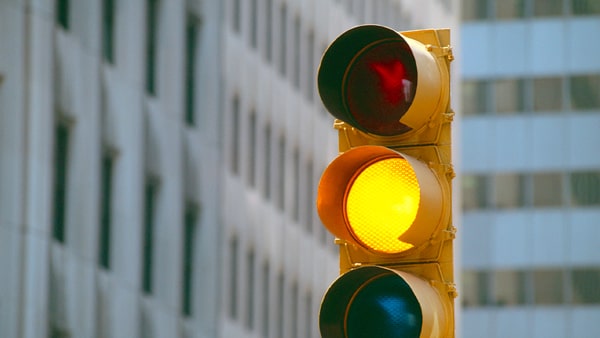
A steady yellow traffic signal warns that which signal will follow?

  1. A Flashing yellow
  2. B Steady green
  3. C Steady red
  4. D Flashing red

Correct answer: C – Steady red

A steady yellow signal warns that the related green phase is ending and that a red signal will follow. Traffic must stop before entering the nearest crosswalk unless the vehicle is already so close that stopping cannot be done safely. The yellow signal is not an instruction to accelerate through the intersection.

Source: 18 DCMR § 2103.5 – Traffic Control Signals: Vehicles

Question 3

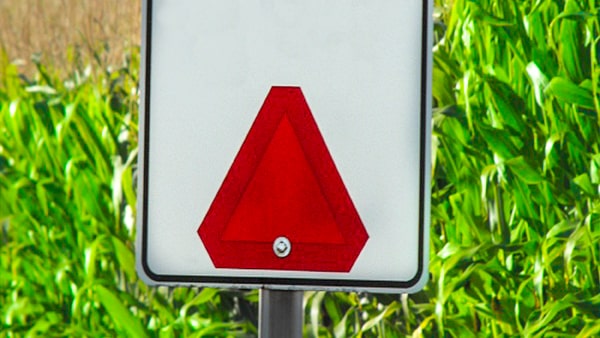
An orange triangle with a red border mounted on the rear of a vehicle identifies:

An orange and red sign of this shape always means:
  1. A A vehicle that must yield to all cross traffic
  2. B A vehicle with unrestricted right-of-way
  3. C A slow-moving vehicle
  4. D An emergency vehicle

Correct answer: C – A slow-moving vehicle

The orange-and-red triangular emblem identifies a slow-moving vehicle. It is mounted on the rear so approaching drivers can recognize that they may be closing the distance more quickly than expected. Reduce speed as necessary and wait for a lawful, safe opportunity before attempting to pass.

Source: DC DMV Automobile Driver Manual — “Traffic Signs,” “Slow-Moving Vehicle Emblem”

Question 4

A red-painted curbside bus lane, accompanied by bus-lane signs, is reserved primarily for:

  1. A Public transit buses and other specifically authorized users
  2. B Commercial vehicle parking
  3. C Parking by persons with disabilities

Correct answer: A – Public transit buses and other specifically authorized users

In the District, a bus lane is designated for public transit buses and other authorized users. An unauthorized vehicle may not use or park in the lane unless an applicable rule or traffic-control device permits the movement. Red pavement helps make a curbside bus lane more visible, but drivers must also follow the posted signs.

Source: 18 DCMR § 2217.5 – Closed Streets, Local Access Streets, Play Streets, Bus Lanes, and Bus Restricted Streets, 18 DCMR § 2405.1(j) – Stopping, Standing, or Parking Prohibited: No Sign Required, DC DMV Automobile Driver Manual — “Bus Lanes”

Question 5

You have a green signal and want to turn left, but an oncoming vehicle is close enough to be a hazard. What must you do?

  1. A Turn immediately because the signal is green
  2. B Sound the horn and begin turning
  3. C Yield and complete the turn only when the hazard has cleared
  4. D Move into the right lane and turn from there

Correct answer: C – Yield and complete the turn only when the hazard has cleared

In the District, a driver turning left must yield to an oncoming vehicle that is close enough to constitute an immediate hazard. A green signal permits movement but still requires turning traffic to yield to vehicles and pedestrians lawfully within the intersection or crosswalk. Complete the turn only when the required right-of-way has been given.

Source: 18 DCMR § 2208.2 – Right-of-Way: Intersections, 18 DCMR § 2103.3(b) – Traffic Control Signals: Vehicles

Question 6

If a signal changes from green to steady yellow as you approach, you should:

As you near an intersection, the traffic light changes from green to yellow. Your best action would be to:
  1. A Accelerate to enter before the red signal
  2. B Brake sharply regardless of following traffic
  3. C Plan to stop inside the intersection
  4. D Stop before the crosswalk unless you are too close to stop safely

Correct answer: D – Stop before the crosswalk unless you are too close to stop safely

A steady yellow signal warns that the related green signal is ending and a red signal will follow. Drivers must stop before entering the nearest crosswalk unless they are already so close that a safe stop cannot be made. Avoid accelerating merely to enter the intersection before the signal turns red.

Source: 18 DCMR § 2103.5 – Traffic Control Signals: Vehicles