


Florida Practice Permit Test 4

4.8 out of 5 (1841 votes)
80% Passing score
20 Questions
4 Mistakes allowed
A Florida permit test can cover more than signs, signals, and who goes first at a four-way stop. Child passenger safety belongs in that same serious category, because Florida expects drivers to know how young passengers should be protected before they are trusted on the road. This Florida drivers permit practice test keeps that responsibility front and center while still helping you review the broader rules that can appear on the real exam. The test includes 20 multiple-choice questions, and a score of 16 correct answers is the goal. There is no time limit, which is worth taking advantage of. Read the question, notice the wording, think through what the rule is actually asking. A rushed guess might feel fine in a practice setting, but the whole point of Florida DMV practice test prep is to make the real test feel less like a scramble and more like something you have already worked through carefully. The child safety seat questions are especially useful because they connect the exam material to real driving decisions. It is one thing to know a rule in a study guide. It is another to understand how that rule applies when you are responsible for a child in the back seat. That is where this Florida permit test practice earns its keep. It gives first-time drivers, renewing adults, seniors, and drivers using it alongside a drivers ed course a steady way to review without pretending to replace formal instruction. There is also the licensing paperwork, which deserves attention before test day gets close. First-time in-office applicants in Florida must bring original REAL ID documents proving identity, date of birth, Social Security number, and Florida residential address. Two different address documents are required, and a current driver license or ID card cannot be used for that purpose. If your current name does not match your identity document, bring the legal record that connects the two, such as a marriage certificate, divorce decree, or court order. Non-U.S. citizens must also provide legal presence documents. Drivers under 18 have additional requirements and a pile of forms to take into account, including parent or guardian consent. So yes, study the road rules and pass the permit test, but do not treat the documents as an afterthought. The practice test helps with the knowledge part. The paperwork gets you through the door to a license.
FREE DMV Practice Test App
Study for your Florida permit test or driver’s license with the NextDoorDriving app. 700+ DMV questions and answers, 100% free!
Download on the App Store

Sample Florida Permit Test Questions

Question 1

Before moving into another lane, what must you do?
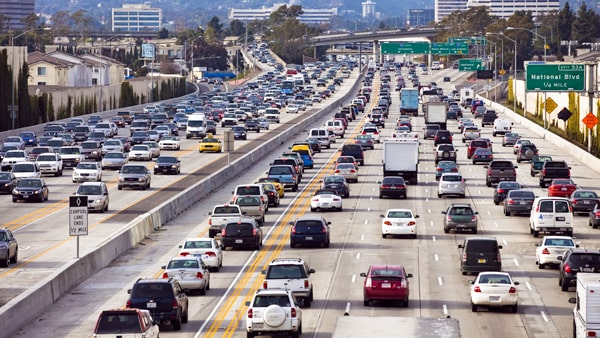
Before changing lanes in traffic, you need to:
  1. A Check only the rearview mirror
  2. B Use a hand signal instead of checking traffic
  3. C Check mirrors and turn your head to inspect the blind spot
  4. D Signal and expect other drivers to yield

Correct answer: C – Check mirrors and turn your head to inspect the blind spot

Blind spots near the rear corners of a vehicle may hide another vehicle, motorcycle, or bicyclist. Check the mirrors and turn your head to verify that the area is clear before changing lanes. A vehicle must not leave its lane until the driver has determined that the movement can be made safely.

Source: Fla. Stat. § 316.089(1) – Driving on roadways laned for traffic, The Official Florida Driver License Handbook — Ch. 7, “Blind Spots”

Question 2

Another driver enters your path instead of yielding as required. What is the safest response?

  1. A Continue because you have the legal right-of-way
  2. B Yield if necessary to prevent a collision
  3. C Accelerate before the other vehicle blocks your path

Correct answer: B – Yield if necessary to prevent a collision

Florida’s right-of-way rules identify who must yield in particular situations, but they do not make a collision acceptable. The handbook instructs every road user to do everything possible to avoid a crash. If another driver fails to yield, slowing or yielding may be necessary to prevent the collision.

Source: The Official Florida Driver License Handbook — Ch. 7, “Right-of-Way”

Question 3

If your vehicle becomes disabled on a Florida roadway, which response is appropriate?

  1. A Move all wheels out of traffic if possible, activate hazard lights, exit away from traffic, and call for help
  2. B Remain in a travel lane until a tow truck arrives
  3. C Leave part of the vehicle in the lane so other drivers will notice it
  4. D Turn off all exterior lights to preserve the battery

Correct answer: A – Move all wheels out of traffic if possible, activate hazard lights, exit away from traffic, and call for help

A disabled vehicle must be moved so it does not obstruct the regular flow of traffic. The handbook directs drivers to get all four wheels out of traffic lanes as soon as possible and activate the hazard lights. Passengers should leave on the side away from traffic, and the driver should contact law enforcement or other assistance.

Source: Fla. Stat. § 316.071 – Disabled vehicles obstructing traffic, The Official Florida Driver License Handbook — Ch. 9, “Breakdowns/Disabled Vehicles”

Question 4

In Florida, a driver has no qualifying disabled permit or plate and is not transporting or loading a person with a disability. In a reserved accessible space, that driver:

  1. A May park during an emergency
  2. B May stop but may not leave the vehicle
  3. C May stand temporarily with hazard lights on
  4. D May not stop, stand, or park

Correct answer: D – May not stop, stand, or park

An unauthorized driver may not stop, stand, park, or obstruct a designated accessible parking space. A displayed permit or qualifying plate must be used while transporting the person to whom it was issued. A chauffeur may stand temporarily without a permit solely to load or unload a person with a disability. An illegal-parking violation carries a $100 base fine or a county-designated amount, plus court costs; a local fine may not exceed $250.

Source: Fla. Stat. § 316.1955(1), (3) – Enforcement of parking requirements for persons who have disabilities, Fla. Stat. § 318.18(6) – Amount of penalties, Fla. Stat. § 316.008(4) – Powers of local authorities

Question 5

Before making an unprotected left turn, which approaching traffic must you yield to?

  1. A Only the nearest oncoming vehicle
  2. B Only vehicles less than 500 feet away
  3. C Only vehicles continuing straight
  4. D Vehicles in the intersection or close enough to be an immediate hazard

Correct answer: D – Vehicles in the intersection or close enough to be an immediate hazard

In Florida, a driver turning left must yield to opposite-direction traffic that is already in the intersection or close enough to create an immediate hazard. The rule also covers a vehicle lawfully passing to the left of the turning vehicle. Begin the turn only after the traffic requiring you to yield has cleared.

Source: Fla. Stat. § 316.122 – Vehicle turning left

Question 6

A steady yellow arrow appears as you approach a left turn. What should you do?

  1. A Accelerate before the arrow changes
  2. B Turn without checking the intersection
  3. C Stop if you can do so safely because the protected movement is ending
  4. D Remain stopped until another green arrow appears, even if you are already in the intersection

Correct answer: C – Stop if you can do so safely because the protected movement is ending

A steady yellow arrow warns that the protected green movement is ending or that a red indication is about to appear. Florida’s handbook directs drivers to stop if they can safely do so. Do not accelerate merely to enter the intersection before the signal changes.

Source: Fla. Stat. § 316.075(1)(b) – Traffic control signal devices, The Official Florida Driver License Handbook — Ch. 4, “Traffic Signal Lights”