


Georgia Driving Test Practice 7

4.9 out of 5 (94 votes)
80% Passing score
20 Questions
4 Mistakes allowed
Before Georgia lets you graduate from passenger-seat commentary to actual driving, DDS makes you prove you know more than where the gas pedal is. The DDS exam is split into two separate 20-question sections: Road Rules and Road Signs. You have to pass both, and Georgia gives you only so much room to wobble. The passing score is 15 correct answers on each section, which means 5 misses per part before the whole thing becomes a return trip. This Georgia permit practice test gives you a cleaner way to work through that material before you are dealing with the actual DDS computer. It includes 20 multiple-choice questions covering the kind of information pulled from the Georgia Drivers Manual: traffic laws, road signs, signals, pavement markings, safe driving habits, and the general responsibilities that come with being allowed behind the wheel. Some of it feels obvious when you are reading. Then the answer choices appear, and suddenly two options look annoyingly close. That is where practice helps. Use this Georgia DDS practice test as a serious study checkpoint, not just a quick confidence booster. The real test is based on the official manual, so the handbook still matters. A lot, actually. But working through a practice permit test helps you catch the rules that are easy to skim past, like Georgia’s financial responsibility requirements, carrying proper proof of insurance, and the Hands-Free Georgia Act, which bars drivers from physically holding or supporting a wireless device while operating a vehicle. Small rule on paper, bigger deal in real traffic.   One thing to note, you do not need an appointment for the non-commercial knowledge exam, but DDS customers must be on the testing computer at least 30 minutes before the Customer Service Center closes. If you fail, the wait is 1 day after the first failure and 7 days after the second, with the permit fee due again for retesting. So, use the Georgia drivers ed practice test now, review what you miss, and let the awkward mistakes happen here instead of at the counter.
FREE DMV Practice Test App
Study for your Georgia permit test or driver’s license with the NextDoorDriving app. 700+ DMV questions and answers, 100% free!
Download on the App Store

Sample Georgia Permit Test Questions

Question 1

At a Georgia intersection where traffic signals are coordinated with a nearby railroad crossing, which statement is true?
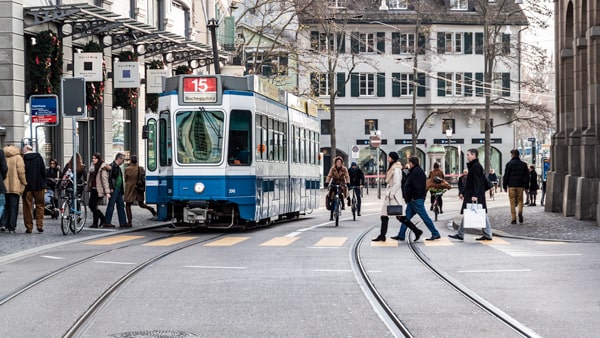
Which of these statements is true about light rail vehicles?
  1. A. An approaching train can preempt the normal traffic-signal sequence
  2. B. Motorists must always pass a rail vehicle on its right
  3. C. Highway traffic always has priority over an approaching train
  4. D. Railroad warning signals apply only to train operators

Correct answer: A. – An approaching train can preempt the normal traffic-signal sequence

Traffic signals near a railroad grade crossing may use rail preemption, allowing an approaching train to interrupt the normal signal sequence. Drivers must follow the signals displayed and must not enter a crossing when warning lights are flashing or gates are lowered. A train's size and limited stopping ability make attempts to beat it across especially dangerous.

Source: Georgia Department of Transportation Traffic Signal Design Guidelines — “Railroad Preemption”, Georgia Department of Driver Services Drivers' Manual — Section 5, “Railroad Crossings”
Question 2

A vehicle suddenly enters your already-short following gap. What is the best response if a collision is not immediately unavoidable?

When you follow too closely and another driver cuts suddenly in front of you, what is the best thing to do?
  1. A. Make an abrupt move into the next lane
  2. B. Brake as hard as possible
  3. C. Steer onto the shoulder
  4. D. Reduce speed smoothly to restore a safe gap

Correct answer: D. – Reduce speed smoothly to restore a safe gap

Smoothly reduce speed until you again have enough room to stop if the vehicle ahead brakes. Sudden hard braking or a quick lane change is more likely to produce a crash, especially when surrounding traffic has not been checked. Maintaining adequate following distance gives you more time to respond to abrupt traffic changes.

Source: Georgia Department of Driver Services Drivers' Manual — Section 8, “Following Too Closely”, Georgia Commercial Driver's Study Guide — § 2.8.1, “Importance of Seeing Hazards”

Question 3

At a Georgia stop sign, there is a marked crosswalk but no stop line. Where must you stop?

  1. A. Beside the stop sign
  2. B. Before entering the crosswalk
  3. C. After entering the intersection
  4. D. At least 15 feet from the corner

Correct answer: B. – Before entering the crosswalk

When no stop line is present, stop before entering the crosswalk on the near side of the intersection. If there is neither a stop line nor a crosswalk, stop at the point nearest the intersecting roadway where approaching traffic can be seen. Proceed only after yielding as required.

Source: O.C.G.A. § 40-6-72 – Stop Signs and Yield Signs, Georgia Department of Driver Services Drivers' Manual — Section 7, “Octagon signs”

Question 4

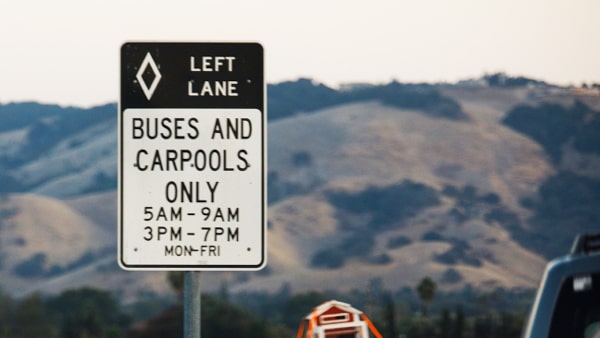
During posted HOV restrictions in Georgia, an ordinary passenger car without a qualifying alternative-fuel plate may use the lane when:

You can drive in a carpool lane if:
  1. A. It carries more than one occupant
  2. B. It is an empty passenger van
  3. C. The driver wants to pass slower traffic
  4. D. The driver is running late

Correct answer: A. – It carries more than one occupant

High Occupancy Vehicle lanes are restricted during the posted hours to qualifying vehicles. An ordinary passenger car qualifies by carrying more than one occupant. The driver's manual also identifies buses, motorcycles, and vehicles displaying qualifying Alternative Fuel Vehicle license plates as eligible users.

Source: O.C.G.A. § 40-6-54 – Designation of Travel Lanes for Exclusive or Preferential Use by Buses and Other Vehicles; Use of Such Lanes, Georgia Department of Driver Services Drivers' Manual — Section 8, “HOV Lanes”

Question 5

When turning left from a two-way street, which approaching traffic must you yield to?

  1. A. Only pedestrians waiting on the sidewalk
  2. B. Only vehicles stopped at a red signal
  3. C. Oncoming vehicles in the intersection or close enough to create an immediate hazard

Correct answer: C. – Oncoming vehicles in the intersection or close enough to create an immediate hazard

Georgia requires a driver turning left to yield to opposing vehicles that are within the intersection or close enough to constitute an immediate hazard. Complete the turn only after there is an adequate opening. Drivers must also account for pedestrians crossing the roadway into which they are turning.

Source: O.C.G.A. § 40-6-71 – Yield When Turning Left, Georgia Department of Driver Services Drivers' Manual — Section 5, “How To Make A Left Turn”

Question 6

What colors are commonly used for Georgia expressway destination and exit guide signs?

  1. A. Orange with black markings
  2. B. Green with white markings
  3. C. Yellow with black markings
  4. D. Red with white markings

Correct answer: B. – Green with white markings

Destination, distance, and exit guide signs commonly use white lettering or symbols on a green background. These signs help drivers identify routes and prepare for upcoming exits. Orange signs generally concern construction, while yellow signs usually warn of roadway hazards.

Source: Georgia Department of Driver Services Drivers' Manual — Section 7, “Guide Signs” and “Construction and Maintenance Warning Signs”