Hawaii DMV Permit Test Simulator

4.9 out of 5 (40 votes)
80% Passing score
40 Questions
8 Mistakes allowed
Hawaii’s Class 3 permit test is not something to wander into with a half-read handbook and a good mood. It is a 30-question written knowledge exam based on the official Hawaii Driver’s Manual, and you need 24 correct answers to pass. That leaves room for only six misses, which sounds manageable until the questions start mixing road signs, lane markings, right-of-way rules, impaired driving laws, and those small wording details that make you reread the same sentence twice. This Hawaii DMV practice test is built around that reality. It gives you a cleaner way to work through the material without turning study time into a long, sleepy scroll through the manual. You will see questions tied to traffic laws, signs and signals, pavement markings, defensive driving, sharing the road, vehicle operation basics, and the legal responsibilities that come with driving in Hawaii. And because a decent permit test practice session should not feel like memorizing one fixed answer key, the simulator format helps keep the review active. A little less cozy, maybe, but much more useful. There is also the Hawaii part of all this, which matters more than people expect. Licensing is handled through the counties, so appointments, fees, testing locations, and a few process details can change depending on where you apply. Honolulu is not always going to read exactly like Hawaii County, and Maui and Kauai have their own county systems too. Hawaii also offers an online learner permit test through KnowTo Drive for eligible applicants, but passing online is only one step. You still have to finish the county licensing process, bring the right documents, complete vision screening, and actually get the instruction permit issued. Teen drivers have a few more pieces to keep straight. Hawaii lets applicants seek a learner’s instructional permit at 15 years and 6 months, but drivers under 18 move through the graduated driver licensing process before a full license is on the table. That means supervised driving, driver education, permit holding periods, and provisional-license restrictions are not side notes. They are part of the path. Use this Hawaii permit practice test like a rehearsal with consequences, just without the county counter, the appointment slot, and the quiet pressure of the real exam. Review the misses. Check the manual when something feels fuzzy. Then take it again, because the second pass is usually where the obvious stuff stops being quite so obvious.
FREE DMV Practice Test App
Study for your Hawaii permit test or driver’s license with the NextDoorDriving app. 700+ DMV questions and answers, 100% free!
Download on the App Store

Sample Hawaii Permit Test Questions

Question 1

What movement may you make when facing a green arrow pointing left?
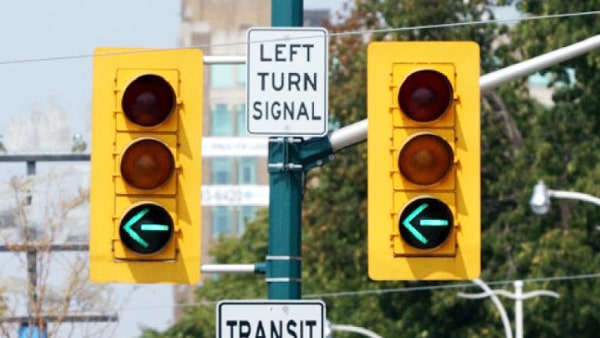
On the intersection, if you see a green arrow pointing to the left, you can:
  1. A Proceed in any direction
  2. B Cautiously make the movement indicated by the left arrow
  3. C Turn left or continue straight without regard to other signals
  4. D Remain stopped until a circular green light appears

Correct answer: B – Cautiously make the movement indicated by the left arrow

A green arrow allows traffic to enter the intersection only for the movement shown by that arrow, unless another displayed signal permits an additional movement. In Hawaii, the driver must enter cautiously. Vehicles and pedestrians lawfully within the intersection or an adjacent crosswalk must be allowed to clear.

Source: HRS § 291C-32 – Traffic-control signal legend, Hawaii Driver’s Manual — Ch. VI, “Lighted Arrows”

Question 2

On an undivided two-lane road, a school bus ahead is stopped with its red signals flashing. What must an oncoming driver do?

If a school bus stops to unload children on a two-lane highway, vehicles traveling in the opposite direction are:
  1. A Continue without stopping
  2. B Signal and pass at reduced speed
  3. C Stop briefly, then pass cautiously
  4. D Stop before reaching the bus and wait until it moves or turns off the red signals

Correct answer: D – Stop before reaching the bus and wait until it moves or turns off the red signals

On a two-lane undivided roadway, the oncoming lane is adjacent to the lane occupied by the school bus. Hawaii law requires drivers in those lanes to stop before reaching a bus displaying its required visual signals. Remain stopped until the bus resumes motion and the signals are turned off.

Source: HRS § 291C-95 – Overtaking and passing school bus, Hawaii Driver’s Manual — Ch. XII, “Stopping for a School Bus”

Question 3

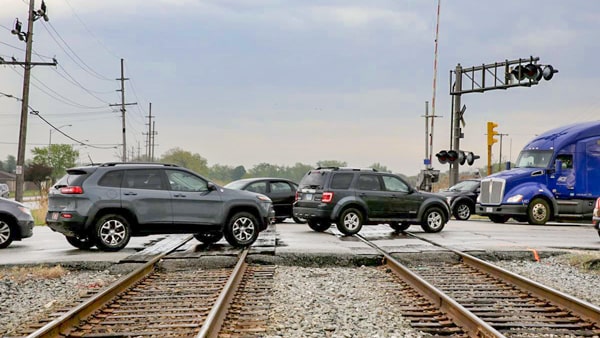
Traffic is backed up beyond a railroad crossing. When may you start across the tracks?

When traffic is slow and heavy and you must cross railroad tracks before reaching the upcoming intersection, you should:
  1. A When there is room to stop between the gates
  2. B When the vehicle ahead begins moving, even if space is limited
  3. C Only when enough space exists to clear the tracks completely
  4. D After sounding your horn several times

Correct answer: C – Only when enough space exists to clear the tracks completely

Do not enter a railroad crossing unless enough space is available to drive completely across without stopping. Heavy or slow traffic can leave a vehicle trapped on the tracks even when no train was visible at first. Wait before the crossing until sufficient room opens on the far side.

Source: Hawaii CDL Driver’s Manual — § 2.15, “Railroad-Highway Crossings”

Question 4

What is the safest choice when dense fog severely limits roadway visibility?

  1. A Avoid or delay driving until visibility improves
  2. B Maintain speed to prevent another driver from catching you
  3. C Alternate continuously between high and low beams

Correct answer: A – Avoid or delay driving until visibility improves

The Hawaii manual states that it is best to avoid driving in fog. If driving is necessary, sharply reduce speed and use low-beam headlights because high beams reflect from the fog and reduce visibility. If you cannot see at least two car lengths, pull completely off the pavement, stop, and activate the hazard signals.

Source: Hawaii Driver’s Manual — Ch. X, “Driving in Inclement Weather—Fog”

Question 5

A yellow diamond sign showing a person walking warns of:

This sign means:
  1. A A children’s play area
  2. B A pedestrian crossing area ahead
  3. C A sidewalk that pedestrians must use
  4. D A required stop ahead

Correct answer: B – A pedestrian crossing area ahead

The pedestrian-crossing sign is a warning that pedestrians may be present on or near the roadway ahead. Warning signs call for drivers to recognize the potential hazard and be prepared to take safe action. At a crosswalk, drivers must comply with Hawaii’s rules for stopping and yielding to pedestrians.

Source: HRS § 291C-72 – Pedestrians’ right-of-way in crosswalks, Hawaii Driver’s Manual — Ch. VI, “Warning Signs”

Question 6

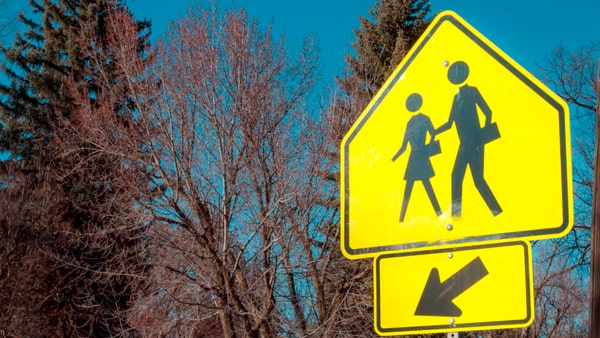
A pentagon-shaped sign displaying two people is used to identify:

This road sign means:
  1. A A school area or school crossing
  2. B A business district
  3. C A sidewalk-only route
  4. D An area where crossing is prohibited

Correct answer: A – A school area or school crossing

The Hawaii manual identifies this pentagon-shaped sign as a school crossing or school zone sign. Drivers should watch carefully for children near schools and be prepared to reduce speed as conditions require. A driver must also stop when directed by a school crossing guard.

Source: Hawaii Driver’s Manual — Ch. VI, “Warning Signs”; Ch. XII, “Your Responsibility as a Driver”