


Hawaii DMV Test Evaluation

4.8 out of 5 (59 votes)
80% Passing score
10 Questions
2 Mistakes allowed
A Hawaii permit practice test should do more than toss a few road signs at you and call it preparation. The real Class 3 written knowledge test pulls from the Hawaii Driver’s Manual, and it reaches into the things new drivers sometimes study lightly because they seem obvious: traffic laws, pavement markings, signals, right-of-way, safe driving habits, alcohol and drug rules, and the everyday judgment calls that are much easier to answer when you have seen them before. This Hawaii permit practice test gives you 10 multiple-choice questions drawn from those core topics. You’ll need 8 correct answers to pass this practice round, which makes it a useful first check, not a full dress rehearsal. Small distinction, but it matters. The official Hawaii permit test is generally listed by county licensing offices as a 30-question Class 3 written exam, with 24 correct answers required to pass. So yes, the practice test is shorter. That is the point, really. It lets you find the weak spots before the official test has a chance to do it for you. The review at the end is where the work gets more useful. You’ll see what you missed, what the correct answer was, and where your understanding needs tightening up. Maybe it is signs. Maybe it is lane markings. Maybe it is one of those right-of-way situations that feels simple until three vehicles and one awkward intersection get involved. Either way, repeated permit test practice helps turn guesses into actual recognition, which is what you want before sitting for the real exam. Hawaii licensing also has a few details worth keeping straight because the process is county-administered. Applicants generally need the right identity and residency documents, a vision screening, and a passing written test before an instruction permit can be issued. Minors can apply at 15 years and 6 months with parental consent, then move through Hawaii’s graduated licensing steps, including driver education before a provisional license. Adults have a more direct path, although first-time applicants still typically need an instruction permit before the road test unless they already hold a valid license from another U.S. jurisdiction. Use this Hawaii DMV practice test as a steady first pass through the material, then take it again until the misses stop looking random. That is usually the moment the manual starts feeling less like a pile of rules and more like something you can actually use.
FREE DMV Practice Test App
Study for your Hawaii permit test or driver’s license with the NextDoorDriving app. 700+ DMV questions and answers, 100% free!
Download on the App Store

Sample Hawaii Permit Test Questions

Question 1

Driving faster than surrounding traffic while repeatedly changing lanes to pass other vehicles:

  1. A Usually provides a much safer and faster trip
  2. B Creates additional traffic conflicts and increases crash risk
  3. C Helps traffic flow without affecting safety
  4. D Is permitted whenever the road has multiple lanes

Correct answer: B – Creates additional traffic conflicts and increases crash risk

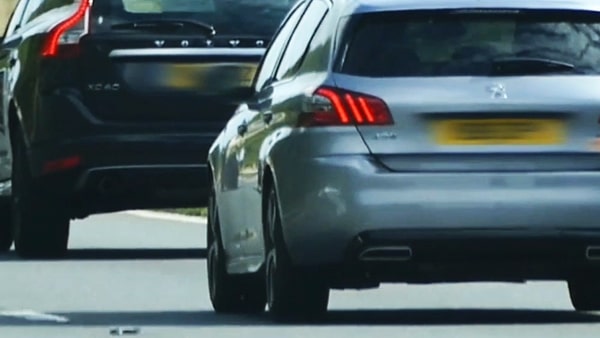
The Hawaii driver’s manual recommends maintaining a steady speed with traffic and keeping lane changes to a minimum. Passing is hazardous, especially when used merely to gain a few vehicle lengths in moderate or heavy traffic. Speed must also remain reasonable and prudent for the traffic, roadway, and other existing conditions.

Source: HRS § 291C-101 – Basic rule, State of Hawaii Driver’s Manual — Ch. X, “Traffic Lanes” and “Overtaking and Passing”

Question 2

According to the Hawaii driver’s manual, what minimum following interval should you normally keep behind a motorcycle?

When traveling behind a motorcycle:
  1. A Two car lengths
  2. B At least two seconds
  3. C At least four seconds in every situation
  4. D Four motorcycle lengths

Correct answer: B – At least two seconds

The manual directs drivers to allow at least a two-second following interval behind a motorcycle. This provides additional room for the rider to maneuver or stop and helps the following driver avoid sudden braking. Increase the interval whenever speed, traffic, visibility, weather, or roadway conditions require more space.

Source: HRS § 291C-50(a) – Following too closely, State of Hawaii Driver’s Manual — Ch. XI, “Following Distance”

Question 3

What does a steady yellow arrow tell a driver in a turn lane?

  1. A The turn is prohibited under every circumstance
  2. B The driver should accelerate through the intersection
  3. C The green movement is ending, and the driver must respond to the signal that follows
  4. D The driver has an unconditional right-of-way over vehicles and pedestrians

Correct answer: C – The green movement is ending, and the driver must respond to the signal that follows

A yellow arrow has the same meaning for its lane as a steady yellow circular signal. It warns that the related green movement is ending or that a red indication will appear immediately afterward. Do not accelerate to beat the changing signal; avoid entering the intersection when it can be done safely.

Source: HRS § 291C-32(a)(2)(A) – Traffic-control signal legend, State of Hawaii Driver’s Manual — Ch. VI, “Lighted Arrows”

Question 4

A vehicle suddenly enters your lane ahead and reduces your following interval. Which response best restores a safety margin?

If another driver "cuts" in front of you, it would be better if you:
  1. A Reduce speed smoothly until a proper interval is restored
  2. B Brake abruptly even if traffic behind is close
  3. C Accelerate to prevent the vehicle from entering fully
  4. D Sound the horn while continuing at the same speed

Correct answer: A – Reduce speed smoothly until a proper interval is restored

When another vehicle enters the space ahead, smoothly reduce speed and restore an adequate following interval. Following too closely limits your view and leaves less time to respond to changing conditions. Abrupt braking, acceleration, or steering can create another hazard instead of rebuilding a safe cushion.

Source: State of Hawaii Driver’s Manual — Ch. X, “Following Interval” and “Skids”

Question 5

In Hawaii, which action helps following drivers anticipate that you will slow for a turn?

  1. A Signal continuously for at least the last 100 feet before turning
  2. B Follow the vehicle ahead more closely
  3. C Begin braking before activating the turn signal
  4. D Drive slower than surrounding traffic at all times

Correct answer: A – Signal continuously for at least the last 100 feet before turning

State law requires a turn signal to be given continuously during at least the final 100 feet before a turn. The driver’s manual also advises signaling before slowing when a reduction in speed is needed for the turn. Advance signaling alerts traffic behind you to your intended movement and possible change in speed.

Source: HRS § 291C-84(b), (c) – Turning movements and required signals, State of Hawaii Driver’s Manual — Ch. X, “Use of Turn Signals”

Question 6

Which trailer-loading practice helps prevent fishtailing while towing?

  1. A Placing nearly all cargo behind the trailer axle
  2. B Balancing the load with about 10% to 15% of the trailer’s weight on the hitch
  3. C Keeping all trailer weight off the hitch
  4. D Overloading the trailer as long as the cargo is evenly distributed

Correct answer: B – Balancing the load with about 10% to 15% of the trailer’s weight on the hitch

A trailer load should be properly balanced, with about 10% to 15% of the trailer’s weight resting on the towing vehicle’s hitch. Too little hitch weight can cause the trailer to fishtail, while excessive hitch weight can make steering difficult. The load must also be secured, and the trailer should not be overloaded.

Source: State of Hawaii Driver’s Manual — Ch. XI, “Towing Trailers—Trailer Load”