Hawaii Practice Permit Test

4.8 out of 5 (46 votes)
80% Passing score
20 Questions
4 Mistakes allowed
Hawaii’s Class 3 learner permit test is built from the official Hawaii Driver’s Manual, which sounds simple enough until you notice how much that manual actually covers. The written knowledge test pulls from traffic laws, signs, signals, pavement markings, alcohol and drug rules, safe driving habits, sharing the road, and the basic mechanics of operating a vehicle without becoming everyone else’s problem. It is a practical test, really, but practical does not mean light. The official Hawaii permit test is a 30-question multiple-choice exam. You need 24 correct answers to pass, so the margin is not huge. Six misses are allowed. Seven is where the day gets longer than it needed to be. That is why this Hawaii drivers permit practice test is built around the same kind of material you will see on the real exam, with questions that help you get comfortable with the wording, the rule categories, and the little details that tend to slip past people when they are “basically ready.” This Hawaii permit test practice covers the familiar stuff, yes: road signs, traffic signals, right-of-way rules, pavement markings, and safe driving decisions. But it also pushes into the everyday responsibilities that matter once you are actually driving, including carrying a valid driver’s license when required and knowing what an instruction permit does and does not allow. Not exciting, exactly. But important in the way locked doors and working brakes are important. The driving situations are meant to feel grounded in Hawaii, not copied from some generic mainland traffic booklet and sprinkled with island names afterward. Driving through Honolulu traffic is not the same experience as easing along coastal roads near Kailua-Kona, and neither one feels much like a wet, narrow stretch on Kauai or Maui where patience suddenly becomes a driving skill. The rules are still the rules, but the way you meet them on the road can feel different. You can take this Hawaii practice permit test online from a phone, desktop, or app, which makes it easier to study in normal little pockets of time instead of staging a whole dramatic study session. Hints are there when you need a nudge, and explanations after missed questions help the rule settle in a bit better. Also worth keeping in mind: if you fail Hawaii County’s online test, you may have to wait 7 days before retesting. Better to sort out the shaky answers here first.
FREE DMV Practice Test App
Study for your Hawaii permit test or driver’s license with the NextDoorDriving app. 700+ DMV questions and answers, 100% free!
Download on the App Store

Sample Hawaii Permit Test Questions

Question 1

Driving so slowly that you hold back surrounding traffic can:

  1. A Disrupt traffic flow; if you cannot keep up, you should let other traffic pass
  2. B Always reduce the risk of a collision
  3. C Have no effect on other road users
  4. D Allow you to disregard a posted minimum speed

Correct answer: A – Disrupt traffic flow; if you cannot keep up, you should let other traffic pass

The Hawaii manual says drivers must not travel so slowly that they hold back other traffic. If you cannot keep up, pull off the roadway to let traffic pass or choose another route. Driving below an officially established minimum speed limit also violates state law.

Source: HRS § 291C-102 – Noncompliance with speed limit prohibited., Hawaii Driver’s Manual — Ch. V, “Speed Restrictions”
Question 2

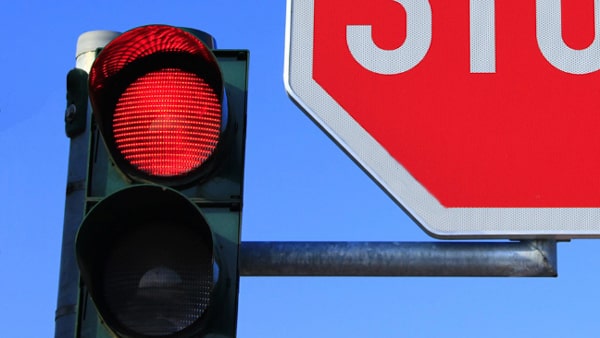
What must you do when facing a flashing red traffic signal?

If you are approaching an intersection with a red flashing light, what should you do?
  1. A Continue through without reducing speed
  2. B Slow down and yield without stopping
  3. C Remain stopped until the signal turns green
  4. D Stop, then proceed when the applicable right-of-way rules allow

Correct answer: D – Stop, then proceed when the applicable right-of-way rules allow

Under Hawaii law, a flashing red signal requires a complete stop at the stop line. If there is no line, stop before the near crosswalk or at the nearest point where approaching traffic can be seen. After stopping, proceed only under the rules that apply at a stop sign.

Source: HRS § 291C-34 – Flashing signals, Hawaii Driver’s Manual — Ch. VI, “Flashing Signals”

Question 3

Which condition behind your vehicle is especially important to recognize as traffic changes?

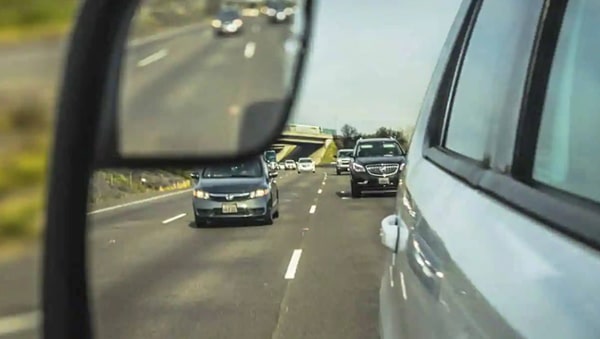
You should check traffic behind you:
  1. A Whether you are traveling on a state highway
  2. B Whether another driver is following too closely
  3. C Whether your passengers are watching traffic
  4. D Whether the roadway has streetlights

Correct answer: B – Whether another driver is following too closely

Defensive driving includes recognizing developing traffic situations around your vehicle, not only those ahead. The Hawaii manual identifies tailgating as dangerous conduct that disrupts traffic and increases the tailgating driver’s chance of a crash. A driver should remain aware when another vehicle is following too closely.

Source: Hawaii Driver’s Manual — Ch. X, “Driving Habits—Impatience”; “Defensive Driving”

Question 4

Red raised pavement reflectors facing your vehicle warn that you may be:

  1. A Approaching a traffic signal
  2. B Entering a no-parking area
  3. C Traveling in the wrong direction
  4. D Entering a passing zone

Correct answer: C – Traveling in the wrong direction

Traffic-control standards permit the red side of a raised pavement marker to be visible to traffic proceeding in the wrong direction. Red reflectors facing you are therefore a warning that your vehicle may be traveling against the intended traffic flow. Check the roadway signs and correct your direction safely.

Source: HRS § 291C-39 – Traffic control devices; uniform standards and specifications, Manual on Uniform Traffic Control Devices for Streets and Highways — § 3B.11, “Raised Pavement Markers—General”

Question 5

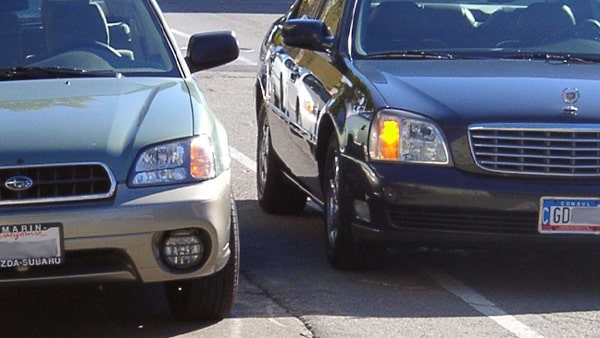
May you park alongside the roadway side of a vehicle already stopped at the curb?

Which of the following is true about double parking?
  1. A No, even if you remain inside your vehicle
  2. B Yes, if you leave the engine running
  3. C Yes, while loading or delivering items
  4. D Yes, if the parked vehicle can still leave

Correct answer: A – No, even if you remain inside your vehicle

The Hawaii manual lists parking on the roadway side of a vehicle stopped at the edge of the road as prohibited double parking. The prohibition applies whether or not you remain inside your vehicle. Choose a lawful parking or loading space instead of stopping beside a parked vehicle.

Source: Hawaii Driver’s Manual — Ch. V, “Parking”

Question 6

When watching the roadway ahead, where should you direct your attention?

  1. A Beyond the vehicle directly ahead toward developing conditions
  2. B Only at the rear of the vehicle ahead
  3. C Only along the right edge of your lane
  4. D Only along the centerline

Correct answer: A – Beyond the vehicle directly ahead toward developing conditions

The manual advises defensive drivers to look well ahead and anticipate developing traffic situations. Focusing only on the nearest vehicle can prevent you from noticing stopped traffic, changing signals, or other conditions farther ahead. Keeping your eyes moving and maintaining awareness gives you more time to respond appropriately.

Source: Hawaii Driver’s Manual — Ch. X, “Defensive Driving”; “Attentiveness”