


Hawaii DMV Practice Test 2

4.9 out of 5 (44 votes)
80% Passing score
20 Questions
4 Mistakes allowed
Hawaii’s permit test is where “I’ve ridden in cars my whole life” stops being a study plan. The real Class 3 knowledge test is based on the Hawaii Driver’s Manual, and it gets into the rules you are expected to know before anyone hands you an instruction permit: traffic laws, signs, signals, pavement markings, safe driving habits, alcohol and drug rules, and all the little right-of-way situations that seem obvious until four drivers arrive at the same intersection and everyone suddenly becomes very polite, or very wrong. This Hawaii permit test practice gives you a cleaner way to get used to that material before test day. The official written exam is multiple choice, and county licensing information describes it as a 30-question test. You need 24 correct answers to pass, which is 80%, so yes, you can miss a few, but not enough to wander through it guessing whenever a question gets fussy. And some of them do get fussy. That is sort of the point. This practice version includes 20 carefully written questions covering road rules, seat belt use, local driving laws, safety basics, and signs you will actually need to recognize when you are not sitting calmly at a desk. Some questions include images, which helps because road signs and traffic situations are not always best learned as plain text. The multiple-choice setup also gets you into the rhythm of reading every answer, catching the almost-right one, and not letting a familiar-sounding option boss you around. The immediate feedback is the part that does the heavy lifting. After each answer, you get an explanation, not just a little “correct” or “try again” pat on the head. That matters because the goal is not to memorize a pile of answers and hope the real Hawaii DMV permit test asks them in the same order. It will not be that generous. You want to understand why the rule works the way it does. For licensing, the basics matter too. Minors can apply for a learner’s instructional permit at 15 years and 6 months, with the written test, vision screening, documents, and parental consent. Adult first-time applicants generally need an instruction permit before the road test unless they already hold a valid U.S. license. Out-of-state transfers have their own paperwork, appointment, vision, fingerprinting, and fee requirements, with the road test sometimes waived. Use this Hawaii DMV permit test practice with the official manual, and you will be studying like someone who actually plans to pass, not someone hoping island breezes improve multiple-choice accuracy.
FREE DMV Practice Test App
Study for your Hawaii permit test or driver’s license with the NextDoorDriving app. 700+ DMV questions and answers, 100% free!
Download on the App Store

Sample Hawaii Permit Test Questions

Question 1

After a train clears a railroad crossing, when should you begin crossing the tracks?
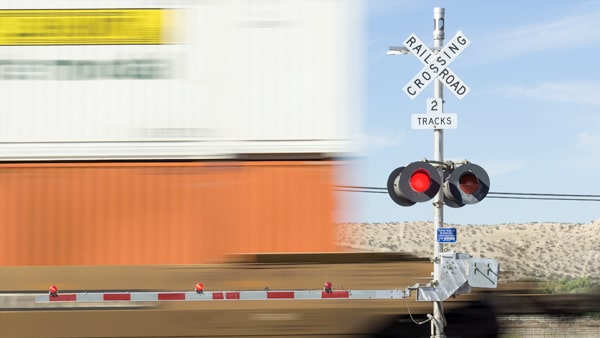
After a train has passed, you should:
  1. A As soon as the last railcar passes
  2. B Only after a green traffic light appears
  3. C After sounding your horn
  4. D After checking for another train and determining that you can cross safely

Correct answer: D – After checking for another train and determining that you can cross safely

Hawaii law prohibits proceeding at a railroad crossing until the movement can be made safely. After one train passes, look and listen again for another train, especially where multiple tracks are present. Do not enter while a warning signal or lowered gate continues to indicate an approaching train, and make sure there is room beyond the tracks.

Source: HRS § 291C-91 – Obedience to signal indicating approach of train, Hawaii Driver’s Manual — Ch. V, “Railroad Crossings”

Question 2

Should you drive well below the normal speed of lawful traffic when no safety condition requires it?

  1. A Yes, because it forces everyone else to slow down
  2. B No, because unnecessarily slow driving can impede normal traffic
  3. C Yes, because any slower speed is automatically safer
  4. D Yes, as long as you avoid the far-left lane

Correct answer: B – No, because unnecessarily slow driving can impede normal traffic

Hawaii law prohibits driving so slowly that you impede the normal and reasonable movement of traffic. An exception applies when reduced speed is necessary for safe operation or compliance with the law. On a multilane road, a vehicle moving more slowly than traffic should generally use the right-hand lane so others can pass.

Source: HRS § 291C-101(b) – Basic rule, Hawaii Driver’s Manual — Ch. V, “Parking Restrictions”

Question 3

What does a flashing yellow traffic signal direct you to do?

  1. A Merge with traffic
  2. B Proceed with caution
  3. C Stop for pedestrians before continuing
  4. D Come to a complete stop

Correct answer: B – Proceed with caution

A flashing yellow signal permits drivers to proceed through the intersection or past the signal only with caution. Reduce speed when conditions require it and watch for conflicting traffic, pedestrians, or roadway hazards. Unlike a flashing red signal, a flashing yellow signal does not require a full stop by itself.

Source: HRS § 291C-34 – Flashing signals, Hawaii Driver’s Manual — Ch. VI, “Flashing Signals”

Question 4

On a two-way road with one lane in each direction, a curve blocks your view of approaching traffic. What must you do?

  1. A Remain behind the vehicle and do not pass
  2. B Signal for at least five seconds before passing
  3. C Accelerate sharply to shorten the passing time
  4. D Sound the horn and enter the opposing lane

Correct answer: A – Remain behind the vehicle and do not pass

Hawaii’s no-passing rules prohibit driving left of center when approaching or traveling through a curve where the driver’s view is obstructed within a distance that creates a hazard. The driver’s manual likewise instructs motorists not to pass near a hill or curve without sufficient clear distance ahead. Wait until visibility and other conditions permit a lawful pass.

Source: HRS § 291C-46 – Further limitation on driving on left of center of roadway, Hawaii Driver’s Manual — Ch. V, “No Passing Rules”

Question 5

Before opening a parked vehicle’s door on the side next to moving traffic, what must you do?

Before getting out of your parked car on the traffic side of the street, you should:
  1. A Give a hand signal
  2. B Activate the left turn signal
  3. C Activate the right turn signal
  4. D Check behind you and confirm that opening the door is safe

Correct answer: D – Check behind you and confirm that opening the door is safe

Hawaii law prohibits opening a vehicle door on the side available to moving traffic until it is reasonably safe. Opening the door must not interfere with or create an immediate hazard for other traffic. Look for approaching vehicles, bicycles, and motorcycles, and do not leave the door open longer than necessary to load or unload passengers.

Source: HRS § 291C-125 – Opening and closing vehicle doors

Question 6

When traffic ahead requires you to slow or stop, which action helps warn the driver behind you?

  1. A Turn and look over your shoulder
  2. B Watch only the inside rearview mirror
  3. C Begin slowing when the need becomes apparent and apply the brakes smoothly
  4. D Keep your foot resting on the brake pedal while driving

Correct answer: C – Begin slowing when the need becomes apparent and apply the brakes smoothly

Brake lamps warn other drivers that your vehicle is slowing or stopping. The driver’s manual advises beginning to slow as soon as it becomes apparent that braking will be required and making smooth, steady brake applications. Do not rest your foot on the brake pedal because that can display a false stop-lamp signal and partially apply the brakes.

Source: Hawaii Driver’s Manual — Ch. II, “Vehicle Condition and Maintenance—Brake Lamps”, Hawaii Driver’s Manual — Ch. X, “Brakes”