Hawaii DMV Practice Permit Test 6

5 out of 5 (37 votes)
80% Passing score
20 Questions
4 Mistakes allowed
Before you get anywhere near a Hawaii licensing counter, it helps to know what the permit test is actually checking. Not in a vague “study the rules” way, but in the practical sense: can you read traffic situations, use turn signals before the last possible second, understand right-of-way, and make decisions that do not surprise everyone around you? This Hawaii permit practice test gives you 20 multiple-choice questions built around those everyday driving moments, with special attention on signaling, safe communication, and the kind of road behavior that matters on island streets. The official Hawaii Class 3 knowledge test is a little bigger than this practice round. It has 30 questions, and you need 24 correct answers to pass, so an 80% score. That is worth knowing upfront because it keeps the whole thing in perspective. A DMV permit test online like this one is not a shortcut around the manual; it is a cleaner way to see which rules you actually understand and which ones you only sort of recognize because the wording looked familiar. There is a difference, and the real test is fairly good at finding it. Hawaii licensing also comes with a county-by-county wrinkle that people forget about until they are trying to book something. Driver licensing is administered by county, so fees, appointments, testing offices, and some procedures can vary depending on where you apply. Honolulu is not automatically the same as Hawaii County, and that small administrative detail can become a whole errand if you assume too much. For the road test, the vehicle and paperwork matter too: valid permit, licensed adult driver, current registration, safety inspection, insurance card, working lights and turn signals, seat belts, clean plates, and a vehicle that is not falling apart in some obvious, test-ending way. Teen drivers have their own timeline. A learner’s instructional permit starts at 15 years and 6 months, a provisional license starts at 16, and the full license stage can begin at 17 after the graduated licensing requirements. The permit must usually be held for 180 days before the provisional step. Then come the nighttime limits, passenger rules, driver education requirements, supervised practice hours, and Hawaii’s stricter mobile-device rule for drivers under 18, which even bars hands-free device use except for a 911 emergency. So, yes, this Hawaii DMV permit practice test is about questions and answers. But more importantly, it is about getting fluent in the rules before the DMV turns them into a score. Study the patterns, pay attention to the small details, and treat the “Aloha spirit” on the road as more than a slogan. Courtesy, predictability, and clear signaling are not decorative extras here; they are part of driving well in Hawaii.

FREE DMV Practice Test App
Study for your Hawaii permit test or driver’s license with the NextDoorDriving app. 700+ DMV questions and answers, 100% free!
Download on the App Store

Sample Hawaii Permit Test Questions

Question 1

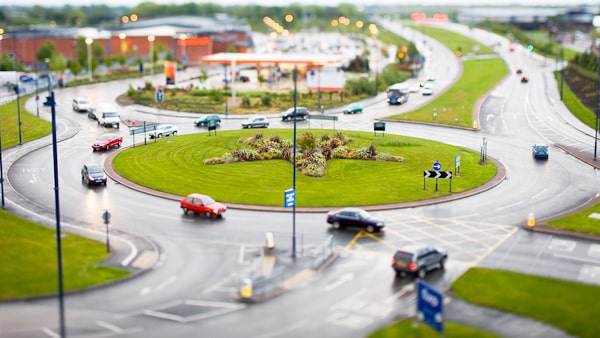
At a roundabout, which vehicle has priority?

You have the right-of-way when you are:
  1. A A vehicle entering the roundabout
  2. B A vehicle backing from a driveway
  3. C A vehicle leaving a parking space
  4. D A vehicle already circulating in the roundabout

Correct answer: D – A vehicle already circulating in the roundabout

The Hawaii Driver’s Manual describes a roundabout as a one-way circular intersection where entering traffic yields to circulating traffic. Slow as you approach and look to the left for vehicles and bicyclists already in the roundabout. Drivers must also yield to pedestrians and bicyclists when entering or exiting.

Source: Hawaii Driver’s Manual — Ch. X, “Roundabout”

Question 2

Your signal turns green, but another vehicle is still lawfully within the intersection. What must you do?

  1. A Yield until the vehicle clears your path
  2. B Proceed first if the vehicle is on your right
  3. C Enter the intersection and sound your horn
  4. D Proceed because green gives you an absolute right-of-way

Correct answer: A – Yield until the vehicle clears your path

In Hawaii, traffic facing a circular green signal may proceed, but it must yield to vehicles and pedestrians lawfully within the intersection or an adjacent crosswalk. Wait until the existing conflict has cleared before moving into its path. A green indication permits movement; it does not provide an unrestricted right-of-way.

Source: HRS § 291C-32(a)(1)(A) – Traffic-control signal legend

Question 3

What must you do before entering a highway from a private road or driveway?

  1. A Sound your horn and enter immediately
  2. B Place part of your vehicle in the highway to claim space
  3. C Accelerate quickly ahead of approaching traffic
  4. D Yield to highway traffic and pedestrians crossing the driveway

Correct answer: D – Yield to highway traffic and pedestrians crossing the driveway

Hawaii law requires a driver entering from private property to yield to vehicles and bicycles approaching on the highway, including a bicycle lane or path. The driver must also yield to pedestrians approaching on a sidewalk that crosses the driveway or private-road entrance. Enter only after these road users have been given the right-of-way.

Source: HRS § 291C-64 – Vehicle entering highway from private road or driveway, HRS § 291C-79 – Pedestrians’ right-of-way on sidewalks

Question 4

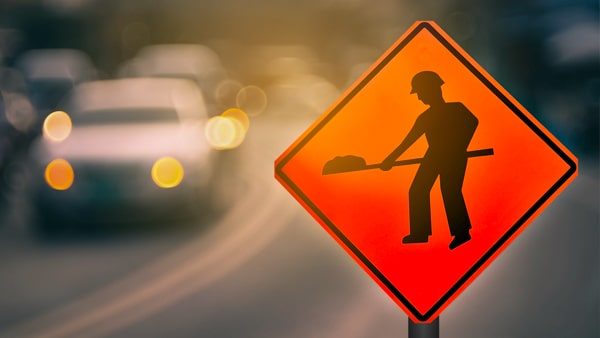
What does the pictured orange warning sign indicate?

This sign means that:
  1. A A volunteer roadside cleanup group is ahead
  2. B Highway workers are on or near the roadway ahead
  3. C A children’s play area is ahead
  4. D A pedestrian crosswalk is ahead

Correct answer: B – Highway workers are on or near the roadway ahead

This work-zone sign warns that workers may be on or close to the roadway. Construction and maintenance signs identify unusual or potentially dangerous conditions in or near work areas. Watch for additional signs, channelizing devices, flagpersons, and changing traffic patterns as you travel through the area.

Source: Hawaii Driver’s Manual — Ch. VI, “Construction and Maintenance Devices—Construction and Maintenance Signs”

Question 5

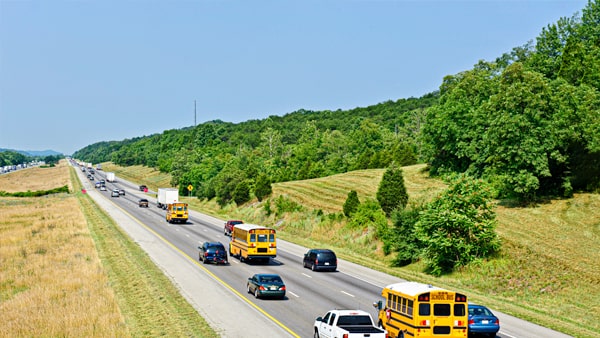
A school bus has stopped with red signals flashing on a four-lane highway divided into separate roadways by a four-foot paved median not used for travel. Drivers approaching from the opposite direction are:

If a school bus stops to unload children on a four-lane highway, divided by a four-foot paved strip, vehicles traveling in the opposite direction are:
  1. A Required to stop until the bus moves and its signals turn off
  2. B Required to stop, then proceed slowly
  3. C Required to use the shoulder to pass cautiously
  4. D Not required to stop

Correct answer: D – Not required to stop

Hawaii requires traffic in the bus’s lane and adjacent lanes to stop while its required visual signals are operating. The requirement does not apply when the bus and the approaching vehicle are on different roadways. The official manual describes a divided highway as two roadways separated by land or another space not intended for vehicle travel.

Source: HRS § 291C-95 – Overtaking and passing school bus, Hawaii Driver’s Manual — Ch. XII, “Stopping for a School Bus”

Question 6

If anger or another strong emotion is affecting you before a trip, what should you do?

  1. A Try to control the emotion while driving
  2. B Take time to calm down before driving
  3. C Drive faster to finish the trip sooner
  4. D Choose any of these actions

Correct answer: B – Take time to calm down before driving

Strong emotions can interfere with the judgment and attention required for safe driving. The driver’s manual advises people who are angry, grieving, or recovering from a serious argument to allow time to cool off before driving. If the emotion remains distracting, let someone else drive.

Source: Hawaii Driver’s Manual — Ch. IV, “Emotions”