


Indiana Permit Practice Test

4.6 out of 5 (819 votes)
80% Passing score
20 Questions
4 Mistakes allowed
The Indiana permit test rewards people who study the right material, not people who skim a few signs and call it preparation. The official BMV knowledge exam is based on the Indiana Driver’s Manual, and it covers the things new drivers are actually expected to know before they are allowed onto the road with a learner’s permit: traffic laws, safe driving habits, road signs, traffic signals, right-of-way rules, and the everyday driving decisions that sound simple until they are worded like a test question. This Indiana permit practice test gives you a clear way to check that knowledge before the real exam. It uses 20 multiple-choice questions focused on the same general territory as the BMV test, including signs, signals, legal responsibilities, and basic driving rules. It is not a driver education course, and it should not be treated like one. Think of it more as the part where you stop passively reading and start proving, to yourself mostly, that the information is actually landing. Indiana’s knowledge exam is scored in two parts: traffic rules and maneuvers, and traffic signs. Applicants need at least 80% on each section, not just a good overall score. The official test is commonly described as 50 total questions, with 34 on traffic laws and 16 on road signs, which means you should be comfortable in both areas before you walk in. Getting signs perfect while being shaky on right-of-way rules is still a risky plan, and the reverse is not much better. The review after the learners permit practice test is where the studying gets a little more useful, and honestly, a little less flattering. You can see what you missed, read why the correct answer is correct, and figure out whether you made a small slip or simply did not know the rule. That distinction matters. A missed question on a practice test is just feedback; a missed question at the BMV may mean waiting until the next business day to try again. The licensing requirements also depend on age and situation. A 15-year-old must be enrolled in an approved behind-the-wheel driver training course and show a valid Certificate of Driver Education. Applicants 16 and older can apply for a learner’s permit without driver education, though they still need the required documents, vision screening, and knowledge exam. Some out-of-state license holders may not need the Indiana knowledge test, but certain expired-license, out-of-country, endorsement, or renewal situations can change that. Use this Indiana BMV practice test as a practical checkpoint before the real permit test. Work through it, review the explanations, clean up the weak spots, and go in knowing what Indiana expects.
FREE DMV Practice Test App
Study for your Indiana permit test or driver’s license with the NextDoorDriving app. 700+ DMV questions and answers, 100% free!
Download on the App Store

Sample Indiana Permit Test Questions

Question 1

How should a driver position the vehicle when making a right turn at an intersection?

  1. A. Begin on the right and finish in the far-left lane
  2. B. Approach and complete the turn close to the right curb or roadway edge
  3. C. Enter whichever lane has the least traffic
  4. D. Begin the turn from the center of the roadway

Correct answer: B. – Approach and complete the turn close to the right curb or roadway edge

Indiana law requires a right turn to be approached and made as close as practicable to the right-hand curb or roadway edge. The driver should move into the proper lane before turning and signal the intended movement. Turning directly into a distant lane creates an unnecessary lane change within the intersection.

Source: IC 9-21-8-21 – Intersections; Right and Left Turns, Indiana Driver’s Manual — Ch. 7, “Rules for Safe and Legal Turning”
Question 2

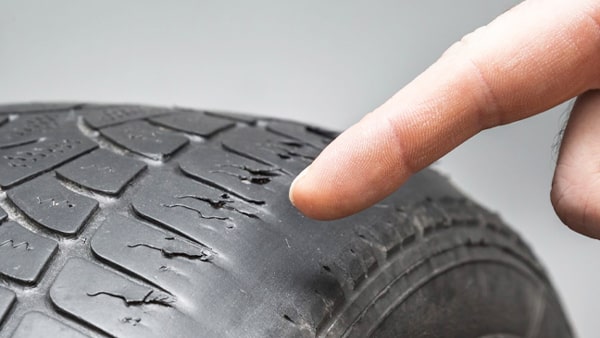
Badly worn tire tread can:

Worn or bald tires:
  1. A. Reduce the vehicle’s grip in adverse conditions
  2. B. Increase the danger of hydroplaning on wet pavement
  3. C. Make it harder to maintain vehicle control
  4. D. Cause all of these problems

Correct answer: D. – Cause all of these problems

Worn tires reduce the vehicle’s ability to grip the road, particularly during adverse conditions. The driver’s manual warns against using bald or badly worn tires on wet roads where hydroplaning can occur. Worn tires also inhibit the driver’s ability to maintain control, making all three listed effects valid concerns.

Source: Indiana Driver’s Manual — Ch. 7, “Tread Depth”, Indiana Driver’s Manual — Ch. 7, “Rain”, Indiana Driver’s Manual — Ch. 7, “Rollover”

Question 3

When a reduced speed is not needed for safety or required by law, may an Indiana driver travel so slowly that normal traffic is impeded?

  1. A. Yes, because it forces other drivers to slow down
  2. B. No, unnecessarily impeding normal traffic is prohibited
  3. C. Yes, because any speed below the limit is automatically safe
  4. D. Yes, as long as the vehicle remains in the right lane

Correct answer: B. – No, unnecessarily impeding normal traffic is prohibited

A driver may not travel at a slow speed that impedes or blocks the normal and reasonable movement of traffic. The rule includes exceptions when reduced speed is necessary for safe operation or compliance with the law. Road, weather, traffic, and vehicle conditions may require a driver to slow down.

Source: IC 9-21-5-7 – Reduction of Speed; Impeding Normal and Reasonable Movement; Right-of-Way to Other Vehicles; Violation

Question 4

Which item is not identified as a primary factor in determining a driver’s blood alcohol concentration?

  1. A. The amount of alcohol consumed
  2. B. How quickly the alcohol is consumed
  3. C. Drinking coffee afterward
  4. D. The person’s body weight

Correct answer: C. – Drinking coffee afterward

The driver’s manual identifies three primary factors affecting BAC: the amount of alcohol consumed, how quickly it is consumed, and body weight. Drinking coffee afterward is not one of those determining factors. Feeling more awake should not be confused with having a lower alcohol concentration or being fit to drive.

Source: Indiana Driver’s Manual — Ch. 8, “Impaired Driving”, Indiana Driver’s Manual — Ch. 5, “Operating a Vehicle While Intoxicated”

Question 5

A driver who strikes the rear of the vehicle ahead most likely failed to:

  1. A. Check the rearview mirror frequently
  2. B. Change lanes often enough
  3. C. Maintain a safe following distance
  4. D. Keep pace with faster traffic

Correct answer: C. – Maintain a safe following distance

Following too closely leaves insufficient time and distance to react if the vehicle ahead brakes suddenly. A useful guideline is to remain at least two to three seconds behind the vehicle in front. More following distance may be necessary when visibility, traction, weather, or traffic conditions are poor.

Source: IC 9-21-8-14 – Following Other Vehicles; Distance Restrictions, Indiana Driver’s Manual — Ch. 7, “Braking and Following Distances”

Question 6

Before stopping or suddenly reducing speed when another vehicle is immediately behind you, what must you do when there is an opportunity?

  1. A. Look over your shoulder
  2. B. Move to the left side of the lane
  3. C. Give an appropriate stop or slowing signal
  4. D. Turn on the high-beam headlights

Correct answer: C. – Give an appropriate stop or slowing signal

Indiana requires an appropriate signal before a driver stops or suddenly decreases speed when there is an opportunity to warn the driver immediately behind. A vehicle’s stop lamps normally provide this warning. An authorized hand-and-arm signal may be used when appropriate signaling equipment is unavailable or malfunctioning.

Source: IC 9-21-8-26 – Stopping or Sudden Decrease in Speed; Signal, IC 9-21-8-27 – Stop or Turn Signals; Hand or Arm Signals; Signal Lamps; Exception for Farm Equipment; Highway Travel