Indiana BMV Practice Test 5

4.7 out of 5 (302 votes)
80% Passing score
20 Questions
4 Mistakes allowed
DUI material is where a lot of permit prep suddenly gets less theoretical. Everyone knows “don’t drink and drive,” obviously, but the Indiana BMV test is not asking whether you agree with that sentence. It wants to know whether you understand impairment, reaction time, judgment, legal consequences, and the way alcohol changes driving long before someone thinks they are “too drunk” to drive. That is the uncomfortable little gap this fifth Indiana BMV practice test is built around. The official learner’s permit knowledge exam comes from the Indiana Driver’s Manual and is administered by the Indiana Bureau of Motor Vehicles. It covers traffic laws, safe driving habits, traffic maneuvers, and road signs, with separate scored sections for rules and signs. You need 80% or better on each part, not just a decent overall score that looks acceptable from a distance. The commonly reported format is 50 multiple-choice questions: 34 on traffic laws and maneuvers, 16 on road signs. Put less neatly, you should be prepared to answer at least 28 rules questions and 13 sign questions correctly. That split matters more than people expect. This Indiana permit practice test gives you 20 focused questions, with visual support worked in where it actually helps instead of just decorating the page. Signs, driving situations, and those weirdly close answer choices become easier to sort through when you are not relying on a half-remembered sentence from the manual. Still, this should sit next to the Indiana Driver’s Manual or a drivers ed course, not replace them. A practice test can expose the soft spots in your understanding, which is useful, even if it is slightly rude about it. And the written exam is only part of the licensing picture. Indiana also takes the driving skills test seriously, whether it is handled through the BMV or an approved driver training provider. The vehicle has to be insured, registered, legally equipped, safe, clean, and ready for inspection before the test starts. Broken brake lights, bad turn signals, a spare tire, doors that do not work properly, a windshield crack in your line of sight, or active driver-assist technology can all cause trouble right away. Once the test is moving, the margin for major mistakes gets very small. Speeding, ignoring signs or signals, failing to yield, passing a stopped school bus, backing over a curb, disobeying railroad crossing laws, or causing a crash can end the exam fast. So use this Indiana DMV practice test for the permit test, yes. But study it like the rules are eventually going to leave the screen and sit in the passenger seat.
FREE DMV Practice Test App
Study for your Indiana permit test or driver’s license with the NextDoorDriving app. 700+ DMV questions and answers, 100% free!
Download on the App Store

Sample Indiana Permit Test Questions

Question 1

What does a driver signal by extending the left arm downward?

  1. A A left turn
  2. B A right turn
  3. C Slowing down or stopping
  4. D Beginning to move

Correct answer: C – Slowing down or stopping

In Indiana, a downward-pointing left arm is the hand signal for decreasing speed. The driver may be slowing or preparing to stop. A horizontally extended arm signals a left turn, while an upward-bent arm signals a right turn.

Source: IC 9-21-8-28 – Hand and Arm Signals; Left Turn; Right Turn; Decrease in Speed, Indiana Driver’s Manual — Ch. 7, “Signaling Intention to Turn”
Question 2

Which color pavement line separates traffic moving in opposite directions?

  1. A White
  2. B Red
  3. C Black
  4. D Yellow

Correct answer: D – Yellow

Yellow pavement markings separate lanes carrying traffic in opposite directions. A broken yellow line may be crossed to pass when the maneuver is permitted and safe. White lines generally separate lanes of traffic traveling in the same direction.

Source: Indiana Driver’s Manual — Ch. 7, “Lane Markings”

Question 3

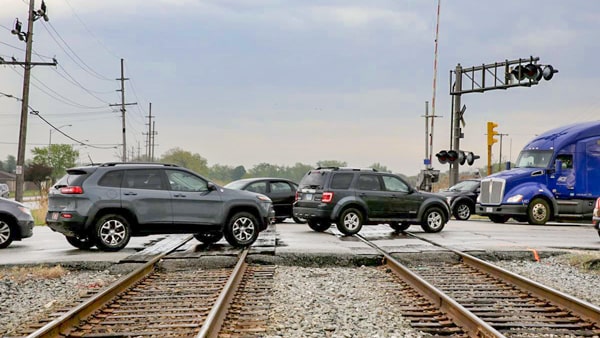
Traffic is backed up beyond a railroad crossing. When should you enter the crossing?

When traffic is slow and heavy and you must cross railroad tracks before reaching the upcoming intersection, you should:
  1. A When the crossing gates are fully raised
  2. B When the vehicle ahead begins moving
  3. C Only when you can clear all the tracks without stopping
  4. D After sounding your horn

Correct answer: C – Only when you can clear all the tracks without stopping

Do not begin crossing railroad tracks unless enough space is available to clear them without stopping. If traffic is backed up on the far side, wait before the tracks even when no train is visible. Enter only after your entire vehicle can safely move beyond the crossing.

Source: Indiana Driver’s Manual — Ch. 7, “Railroad Crossing Safety”

Question 4

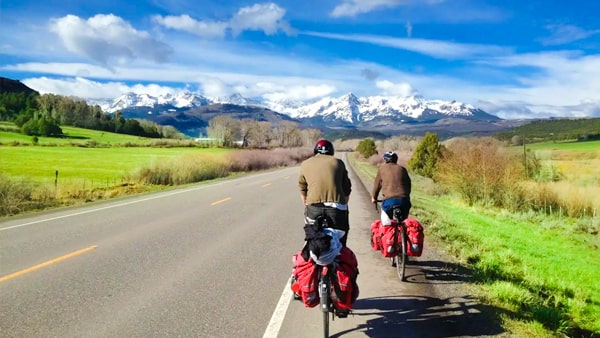
What is required when you overtake a bicyclist on the roadway?

When passing a bicyclist, you should:
  1. A Sound the horn continuously while passing
  2. B Leave at least three feet of clearance
  3. C Stay centered in your lane regardless of clearance
  4. D Activate the vehicle’s hazard lights

Correct answer: B – Leave at least three feet of clearance

Indiana requires a motorist passing a bicycle to leave at least three feet between the vehicle and the bicycle. Remain to the left until safely clear of the bicyclist. The pass should be attempted only when adequate clearance is available and oncoming traffic does not create a danger.

Source: IC 9-21-8-5 – Overtaking and Passing; Limitations; Exceptions, Indiana Driver’s Manual — Ch. 7, “Bicycles”

Question 5

In an Indiana impaired-driving investigation, a chemical test may be used to determine:

  1. A The driver’s eyesight
  2. B The amount of alcohol in the driver’s system
  3. C The driver’s normal reaction time
  4. D The driver’s overall driving skill

Correct answer: B – The amount of alcohol in the driver’s system

When an officer has the required probable cause, the driver may be offered a chemical test. The test is used to determine the amount of alcohol in the person’s system and may involve breath, blood, urine, or another bodily substance. It does not directly measure vision, driving skill, or ordinary reaction time.

Source: IC 9-30-6-2 – Probable Cause; Offer of Test; Alternative Tests; Requirement to Submit, Indiana Driver’s Manual — Ch. 5, “Operating a Vehicle While Intoxicated”

Question 6

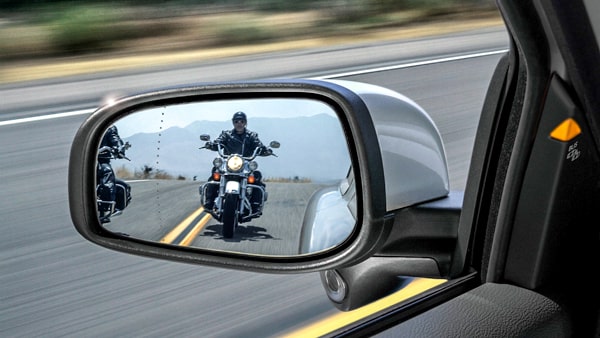
Why must you check carefully for motorcycles before moving into another lane?

Look carefully for motorcycles before you change lanes because:
  1. A Motorcycles are prohibited from using a full traffic lane
  2. B Their smaller profile makes them easier to overlook
  3. C Motorcycles always have priority at intersections
  4. D Motorcycles always have priority on highways

Correct answer: B – Their smaller profile makes them easier to overlook

A motorcycle’s smaller profile may make its speed and distance difficult to judge. It can also be hidden in a vehicle’s blind spot or missed during a quick shoulder check. Check both mirrors and blind spots before entering or leaving a lane, and signal before changing lanes.

Source: Indiana Driver’s Manual — Ch. 7, “Motorcycles and Motor Driven Cycles”