Indiana BMV Practice Test 7

4.8 out of 5 (169 votes)
80% Passing score
20 Questions
4 Mistakes allowed
Most people study for the Indiana permit test in the same slightly backwards way: they glance at a few signs, skim the easy rules, and assume the rest will somehow sound familiar at the BMV. That is not a great strategy. Indiana’s learner’s permit knowledge exam is based on the official Indiana Driver’s Manual, and it asks about more than recognizing a stop sign from across the room. You are expected to know traffic laws, safe driving habits, basic maneuvers, road signs, and the responsibilities that come with driving in Indiana, including proof of insurance and the state’s financial responsibility laws. This Indiana BMV permit practice test is the seventh test in our series, with 20 questions built around the same kinds of topics you will see on the real knowledge exam. A passing score here is 16 out of 20, which lines up with Indiana’s 80% passing standard. On the official test, though, that 80% matters in two separate areas: traffic rules and maneuvers, and road signs. So, yes, you do need to know the signs. But you also need to understand right-of-way, lane use, safe following distance, and those small rule details that are easy to skim past because they look boring until they cost you a retake. The actual Indiana knowledge exam is taken at a BMV branch. For the standard test, you typically do not need an appointment, but you do need to arrive at least 30 minutes before the branch closes. If you need the exam read aloud, or if you are deaf or hard of hearing and need testing arrangements, you will need to schedule that ahead of time. The BMV also offers the knowledge exam in multiple languages, and the electronic Indiana Driver’s Manual is available in several languages, which is one of those details people often find out later than they should. And then there is the paperwork, because of course there is. Permit applicants must pass a vision screening and bring documents proving identity, lawful status, Social Security number, and Indiana residency. Applicants under 18 also need an adult to sign the financial liability agreement. The learner’s permit fee is currently listed as $9, and if you fail the knowledge exam, Indiana makes you wait until the next business day before trying again. Use this free Indiana permit practice test online to study from your phone, tablet, or computer, at whatever pace keeps the material actually sticking. It is a practical way to check your knowledge before you walk into the BMV and discover which details you only thought you knew.
FREE DMV Practice Test App
Study for your Indiana permit test or driver’s license with the NextDoorDriving app. 700+ DMV questions and answers, 100% free!
Download on the App Store

Sample Indiana Permit Test Questions

Question 1

A nearby emergency vehicle is approaching with its siren sounding, but you cannot yet see it. What should you do?

  1. A Continue until the emergency vehicle becomes visible
  2. B Move to the right edge, clear of an intersection, and stop
  3. C Reduce speed while remaining in your travel lane
  4. D Accelerate and turn at the next intersection

Correct answer: B – Move to the right edge, clear of an intersection, and stop

Indiana law requires a driver to yield upon the immediate approach of an authorized emergency vehicle using a siren or specified flashing lights. Move parallel and as close as possible to the right edge or curb, clear of an intersection. Stop there until the emergency vehicle passes unless a law enforcement officer directs otherwise.

Source: IC 9-21-8-35(a) — Vehicles Displaying Flashing Lights; Yield Right-of-Way; Violation
Question 2

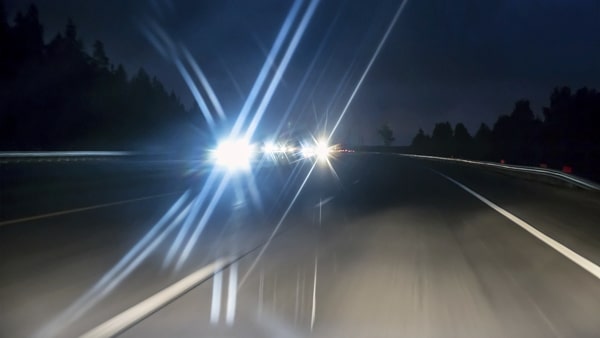
If an oncoming vehicle's high beams create glare at night, where should you direct your focus?

At night, if an oncoming vehicle fails to dim its high-beams, look:
  1. A Toward the roadway center line
  2. B Toward the right side of the road
  3. C Toward the left side of the road
  4. D Directly at the approaching headlights

Correct answer: B – Toward the right side of the road

Glare from approaching headlights can reduce your ability to see the roadway. Do not stare directly into the oncoming lights. The driver’s manual instructs motorists to focus instead on the right side of the road until the vehicle passes.

Source: Indiana Driver’s Manual — Ch. 7, “Driving at Night,” “Visibility”

Question 3

Which factors primarily determine a person's blood alcohol concentration?

  1. A The amount of alcohol consumed
  2. B The person's body weight
  3. C How quickly the alcohol is consumed
  4. D All three choices

Correct answer: D – All three choices

The Indiana manual identifies the amount of alcohol consumed, the speed at which it is consumed, and the individual’s body weight as primary factors determining BAC. Each factor listed in choices A through C can affect the resulting concentration. Alcohol also impairs clear thinking, coordination, and reaction time.

Source: Indiana Driver’s Manual — Ch. 8, “Impaired Driving”

Question 4

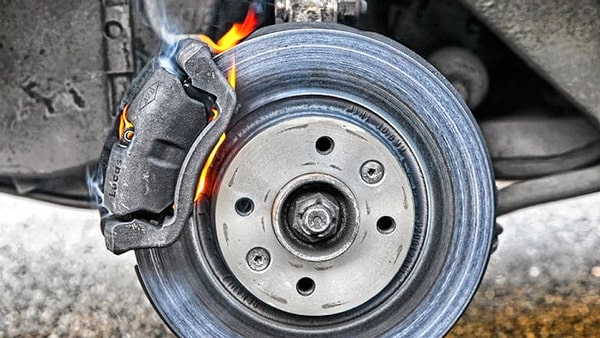
If your vehicle's conventional brakes suddenly fail, which response includes the recommended actions?

If you experience brake failure while driving, you should:
  1. A Shift to a lower gear and pump the brake pedal fast and hard
  2. B Try the parking brake while holding its release control
  3. C Find a place off the roadway to stop, then call for help
  4. D All of these actions

Correct answer: D – All of these actions

Shift to a lower gear if possible and pump the conventional brake pedal several times to try to restore pressure. If necessary, try the parking brake while holding its release so you can release it if the rear wheels lock. Look for a place to stop off the roadway. Once stopped, call for help and do not continue driving.

Source: Indiana Driver’s Manual — Ch. 8, “Vehicle Equipment Failures,” “Brake Failure”

Question 5

At an all-way stop, when is it better to yield even if you believe you should proceed first?

  1. A Whenever another driver wants to travel faster
  2. B Never, because yielding would confuse traffic
  3. C When there is uncertainty or a risk of a collision
  4. D Whenever your vehicle carries passengers

Correct answer: C – When there is uncertainty or a risk of a collision

At an all-way stop, the first vehicle to stop is generally the first to proceed. When vehicles stop simultaneously, the vehicle on the left yields to the vehicle on the right. If there is doubt about who should go or there is a chance of a crash, the manual advises yielding to the other driver.

Source: Indiana Driver’s Manual — Ch. 7, “All-Way Stops”

Question 6

Why should an Indiana teen continue supervised driving practice after completing driver education?

  1. A To reduce the need to scan carefully at intersections
  2. B To practice only on familiar daytime routes
  3. C To develop complex safe-driving skills through experience
  4. D To become comfortable driving without feedback

Correct answer: C – To develop complex safe-driving skills through experience

The driver’s manual describes developing the skills needed for safe driving as a complex task that can be learned only through practice. It recommends practice during the learner’s-permit period and first licensed year, including exposure to varied and unfamiliar conditions. Continued supervised practice helps a novice gain experience and demonstrate sound decisions.

Source: Indiana Driver’s Manual — Appendix B, “Driving Tips for Parents and Teens,” “Tips for Parents of Teens”