Indiana Drivers Ed Practice Test 8

4.7 out of 5 (153 votes)
80% Passing score
20 Questions
4 Mistakes allowed
Indiana permit prep gets a lot easier once you understand how the BMV is actually grading you. The knowledge exam is based on the Indiana Driver’s Manual, and it does not treat every question as one big pile of points. It is split into two scored sections: traffic maneuvers and rules on one side, traffic signs on the other. You need 80% or better on each section. That little detail matters, because a strong score on right-of-way questions will not rescue a weak road-sign score. This Indiana permit practice test is the eighth test in the series, and it focuses heavily on the driving situations that new drivers tend to overthink, underthink, or sort of half-remember from the manual: four-way stops, intersections, who goes first, when to yield, what to do when another driver makes things weird. The questions are multiple choice, but they are built to make you pay attention to the wording, not just recognize a familiar phrase and click through. The full Indiana BMV knowledge test is commonly reported as 50 questions, with 34 questions on traffic laws and maneuvers and 16 questions on road signs. Since Indiana requires 80% on both parts, you should plan on getting at least 28 of the traffic-law questions correct and at least 13 of the road-sign questions correct. So, yes, the sign section is smaller. No, that does not mean it is harmless. Shapes, colors, warning signs, regulatory signs, work-zone signs, school-zone signs, railroad signs, signals, and pavement markings can all show up, and they deserve more than a last-minute glance. This 2026 Indiana BMV practice test gives you 20 multiple-choice questions with answer review and explanations after you finish. That review matters more than people like to admit. Missing a question here gives you a chance to fix the misunderstanding while it is still just practice. Missing too much on the real knowledge exam means waiting until the next business day to try again, which is not a disaster, exactly, but it is a delay you can avoid with better preparation. Use this drivers ed practice test as a steady check on what you actually know, not just what feels familiar. That is the difference between casual studying and walking into the BMV with a realistic shot at passing.
FREE DMV Practice Test App
Study for your Indiana permit test or driver’s license with the NextDoorDriving app. 700+ DMV questions and answers, 100% free!
Download on the App Store

Sample Indiana Permit Test Questions

Question 1

When parking on a two-way Indiana roadway next to a curb, how close must the vehicle’s right-hand wheels be to the curb?
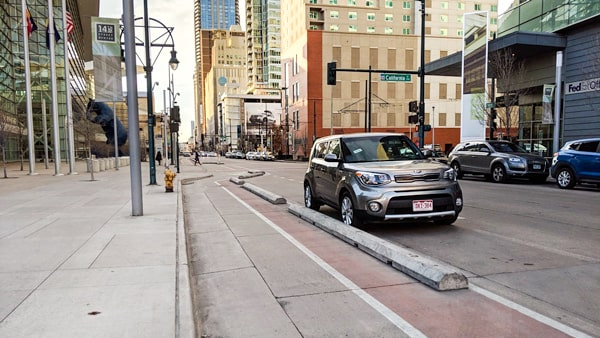
When you park on a level road next to a curb:
  1. A. Within 12 inches
  2. B. Within 18 inches
  3. C. Within 24 inches
  4. D. There is no maximum distance

Correct answer: A. – Within 12 inches

A vehicle stopped or parked on a two-way roadway must be positioned parallel to the right-hand curb or roadway edge. When there is a curb, the right-hand wheels must be within 12 inches of it. The vehicle should also face in the lawful direction of travel for that side of the roadway.

Source: IC 9-21-16-7

Question 2

Before using the oncoming lane to pass on a two-lane road, which factors must you evaluate?

When passing in the oncoming traffic lane of a two-lane road, you should consider:
  1. A. Whether another vehicle is attempting to pass you
  2. B. Whether enough clear roadway is available to complete the pass
  3. C. Oncoming traffic, hills, curves, and other hazards
  4. D. All of these factors

Correct answer: D. – All of these factors

Indiana requires the left side of the roadway to be clearly visible and free of oncoming traffic for enough distance to complete the pass safely. Check behind before moving left, and do not pass near hills, curves, or other places where visibility is restricted. You must return to the right before coming within 100 feet of an oncoming vehicle.

Source: IC 9-21-8-7 – Overtaking and Passing on the Left; Conditions, Indiana Driver’s Manual — Ch. 7, “Passing Other Vehicles”, Indiana Driver’s Manual — Ch. 7, “Prohibited Passing”

Question 3

A tractor-trailer ahead moves left while signaling a right turn. Which action is especially dangerous?

  1. A. Entering the space between the trailer and the right curb
  2. B. Slowing down and preparing to stop
  3. C. Waiting to confirm the truck's intended turn
  4. D. Remaining behind the truck until it finishes turning

Correct answer: A. – Entering the space between the trailer and the right curb

Indiana’s manual explains that a trailer’s rear wheels follow a shorter, inside path during a turn. A tractor-trailer may first move left to create room for a tight right turn. Wait behind it and check its turn signal rather than trying to pass on the right, where your vehicle could enter the truck’s turning path.

Source: Indiana Driver’s Manual — Ch. 7, “Sharing the Road with Tractor-Trailers,” “Turning”

Question 4

When following another vehicle at night, switch to low beams before coming within how many feet?

  1. A. 300 feet
  2. B. 400 feet
  3. C. 200 feet
  4. D. 100 feet

Correct answer: C. – 200 feet

In Indiana, low beams must be used when you are following within 200 feet of the rear of another vehicle. The corresponding distance for an oncoming vehicle is 500 feet. Dimming your headlights prevents high-beam glare from interfering with another driver’s vision.

Source: Indiana Driver’s Manual — Ch. 7, “Driving at Night,” “Headlights”

Question 5

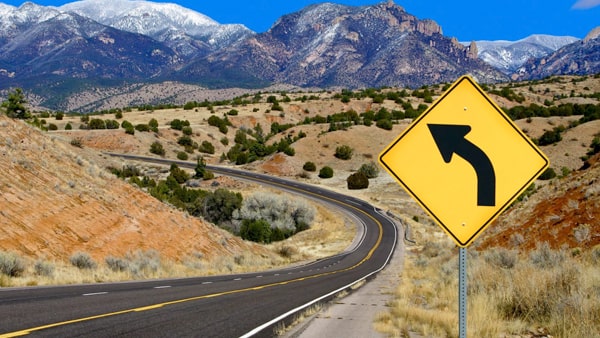
A yellow diamond sign showing a black arrow curving left warns of:

This sign is used to warn drivers about:
  1. A. An intersection ahead
  2. B. A highway work zone
  3. C. A left curve in the roadway
  4. D. A shift in the travel lanes

Correct answer: C. – A left curve in the roadway

The yellow diamond shape identifies a warning sign for a condition or hazard ahead. A left-curve symbol tells you that the roadway bends to the left, not that an intersection or work zone is approaching. A separate advisory-speed plaque may accompany the warning sign.

Source: Indiana Driver’s Manual — Ch. 6, “Warning Signs”, Indiana Driver’s Manual — Ch. 6, “Speed Advisory Signs”

Question 6

On a divided road with several lanes in your direction and no marked U-turn lane, where should you position your vehicle for a permitted U-turn?

  1. A. In the far-right lane
  2. B. In the far-left lane
  3. C. In whichever lane has the least traffic
  4. D. On the shoulder

Correct answer: B. – In the far-left lane

A U-turn changes direction through a 180-degree maneuver and should be made only where allowed. Indiana guidance says a driver preparing for a left turn should move into the far-left lane for that direction of travel. Yield to oncoming vehicles and pedestrians before completing the U-turn.

Source: Indiana Driver’s Manual — Ch. 7, “Rules for Safe and Legal Turning”, Indiana Driver’s Manual — Ch. 7, “U-Turns”