


Iowa Permit Test Simulator

4.6 out of 5 (176 votes)
80% Passing score
35 Questions
7 Mistakes allowed
Studying for the Iowa DOT written test goes better when you treat it like a real licensing step, not a quick little quiz you can bluff your way through. The material is familiar, sure—road signs, traffic signals, right-of-way, pavement markings, safe driving, alcohol and drug rules, sharing the road—but Iowa expects you to know those things in the way the Driver’s License Manual explains them. That distinction matters more than people think. This Iowa permit practice test is built around that kind of preparation. It keeps the focus on the same driving knowledge used for the Iowa operator knowledge test, so you are practicing with questions that feel connected to the real thing instead of floating around in generic permit-test land. And yes, signs are included here because Iowa does not split them off into a separate road-sign-only test for a standard Class C instruction permit. They are part of the main knowledge test, mixed in with rules of the road, lane controls, signals, and the other stuff that tends to blend together if you only skim it once. The real Iowa permit test is widely reported as 35 multiple-choice questions, with 28 correct answers needed to pass. Iowa DOT publishes the passing score as 80%, which lines up with that 28-out-of-35 mark. You can miss 7, technically. But using all 7 misses as your study plan is, well, not the strongest move. Aim higher, because the actual test day has a way of making even simple questions feel a little less simple. Each attempt at this Iowa DMV practice test gives you a fresh mix of permit-style questions, which helps keep you from memorizing one neat little sequence and mistaking that for readiness. The immediate feedback is the part to pay attention to, even when it bruises the ego slightly. When an explanation tells you why an answer was wrong, that is where the studying actually happens—slowly, sometimes irritatingly, but usefully. Whether you are 14 and working toward an instruction permit, using Iowa’s eligible Skip the Trip testing option, or applying as an adult first-time driver, this Iowa drivers license practice test gives you a practical way to prepare before you visit an Iowa DOT or county treasurer location. Take it more than once. Read the explanations. Go back to the manual when something keeps tripping you up. That is the boring-sounding method, and it is also the one that works.
FREE DMV Practice Test App
Study for your Iowa permit test or driver’s license with the NextDoorDriving app. 700+ DMV questions and answers, 100% free!
Download on the App Store

Sample Iowa Permit Test Questions

Question 1

Where may an Iowa driver without a disability parking permit not park?

  1. A. In the striped access aisle beside a reserved disability parking space
  2. B. In an ordinary space where parking signs permit it
  3. C. Along an unmarked curb where parking is otherwise lawful
  4. D. In a loading area during hours when posted signs permit parking

Correct answer: A. – In the striped access aisle beside a reserved disability parking space

The statutory definition of a persons-with-disabilities parking space includes its access aisle. A vehicle may use that space only when displaying the required permit and being used by or transporting the eligible person. Parking in the access aisle without meeting those requirements is improper use of the reserved space. The scheduled fine is $200.

Source: Iowa Code § 321L.1(7) — Definitions., Iowa Code § 321L.4(2) — Persons with disabilities parking — display and use of parking permit and persons with disabilities identification designation., Iowa Code § 805.8A(1)(c) — Motor vehicle and other violations.
Question 2

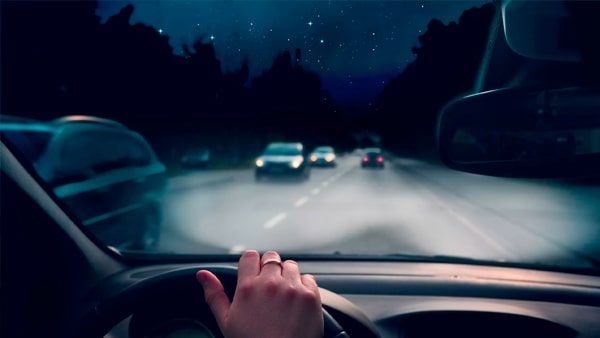
When following another vehicle at night in Iowa, you must switch from high beams within what distance?

When approaching another vehicle from the rear at night, you must dim your bright headlights within:
  1. A. 100 feet
  2. B. 200 feet
  3. C. 400 feet
  4. D. 600 feet

Correct answer: C. – 400 feet

When following another vehicle within 400 feet, a driver must use a light distribution other than the uppermost, or high-beam, setting. The rule does not apply while the driver is actively overtaking and passing. Switch to the lower-beam setting before entering the specified distance.

Source: Iowa Code § 321.415(1)(b) — Required usage of lighting devices.

Question 3

Which headlights should you use if you must drive in fog?

  1. A. Low-beam headlights
  2. B. High-beam headlights
  3. C. Parking lights only
  4. D. Emergency flashers instead of headlights

Correct answer: A. – Low-beam headlights

Use low-beam headlights or fog lights when driving in fog. High beams reflect from the fog, creating glare and reducing how far you can see. Reduce your speed until it matches your available sight distance, and find a safe place to park if visibility becomes inadequate.

Source: Iowa Driver’s License Manual — Ch. 5, § 5.13, “Fog”

Question 4

Which statement about slippery roads is correct?

  1. A. Bridges and overpasses usually freeze after other road surfaces
  2. B. Rain cannot reduce traction during the first few minutes of a storm
  3. C. Black ice is especially common on bridges and overpasses
  4. D. Only large trucks can hydroplane

Correct answer: C. – Black ice is especially common on bridges and overpasses

Black ice is difficult to see and can form wherever moisture freezes on the pavement. It is especially common on bridges and overpasses because air circulates both above and below the road surface, allowing moisture to freeze quickly. Reduce speed and avoid abrupt steering or braking when icy conditions may exist.

Source: Iowa Driver’s License Manual — Ch. 5, § 5.13, “Ice and Snow”

Question 5

At night in Iowa, a vehicle parked on a roadway or adjacent shoulder outside a business district generally must display:

  1. A. A white or amber light visible 500 feet ahead and a red light visible 500 feet behind
  2. B. Only four-way emergency flashers
  3. C. High-beam headlights directed toward traffic
  4. D. A continuously flashing left-turn signal

Correct answer: A. – A white or amber light visible 500 feet ahead and a red light visible 500 feet behind

During hours when lights are required, a vehicle parked or stopped in this location must show a white or amber light toward the front and a red light toward the rear. Each must be visible from 500 feet. Local authorities may waive the requirement where lawful parking is sufficiently illuminated. Any illuminated headlamps on the parked vehicle must be dimmed.

Source: Iowa Code § 321.395 — Lamps on parked vehicles.

Question 6

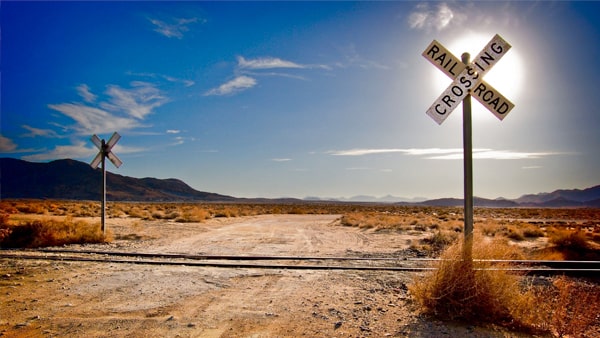
Unless an exempt sign or traffic direction applies, which vehicle must stop before crossing railroad tracks?

What vehicles must stop at all railroad crossings?
  1. A. A pickup truck carrying personal property
  2. B. A school bus or motor vehicle carrying passengers for hire
  3. C. A motorcycle without passengers
  4. D. A passenger car towing a small recreational trailer

Correct answer: B. – A school bus or motor vehicle carrying passengers for hire

Iowa requires school buses and motor vehicles carrying passengers for hire to stop between 15 and 50 feet from the nearest rail. Certain vehicles carrying hazardous materials must also stop. The driver must look and listen and may proceed only when it is safe. No stop is required where an exempt sign is posted or an officer or traffic-control device directs traffic to proceed; the scheduled fine for a violation is $260.

Source: Iowa Code § 321.343 — Certain vehicles must stop., Iowa Code § 805.8A(14)(h)(1) — Motor vehicle and other violations.