


Iowa Permit Practice Test

4.6 out of 5 (163 votes)
80% Passing score
20 Questions
4 Mistakes allowed
For Iowa permit prep, the smart move is to study the material the way it actually shows up: mixed together, a little dry in places, and sometimes more specific than people expect. The Iowa DOT knowledge test is built from the Iowa Driver’s License Manual, so the core material is not a mystery. It covers traffic laws, road signs, traffic signals, pavement markings, right-of-way rules, safe driving, alcohol and drug laws, emergency situations, vehicle equipment, and sharing the road. That sounds like a lot because, well, it is a lot — not impossibly hard, just broader than a quick skim of signs and speed limits. This Iowa permit practice test gives you 20 multiple-choice questions that stay close to those official topics. You will see the kinds of details Iowa drivers are expected to know before getting behind the wheel: what a sign is really telling you, who has the right-of-way, how signals and lane markings work, and yes, the basic legal responsibilities too, including carrying a valid Iowa driver’s license. The real Iowa operator knowledge test requires a passing score of 80%, and Iowa DOT’s official practice test uses randomly selected sample questions from a larger pool. The commonly reported real-test breakdown is 35 questions with 28 correct answers needed to pass, although Iowa DOT’s public materials are clearer about the 80% score than the exact question count. This Iowa drivers permit practice test is especially useful if you are applying for your first instruction permit, coming back to the rules after a long stretch away from testing, or renewing and wanting a proper refresher instead of guessing your way through it. Iowa lets minors apply for an instruction permit at age 14, after passing the knowledge and vision tests, getting parent or guardian consent, and bringing the required documents. Some under-18 applicants may also qualify for the DOT’s Skip the Trip testing option, though passing at home does not magically put a permit in your hand — you still have to visit a DMV or county treasurer office to be issued one. Use this Iowa DMV practice test as a clean, legal, realistic study tool, not as a shortcut pretending to know the exact test. Take it slowly. Miss a question, read why, and let that mistake do its job. If you can score 16 out of 20, you are practicing at the 80% passing level Iowa expects.
FREE DMV Practice Test App
Study for your Iowa permit test or driver’s license with the NextDoorDriving app. 700+ DMV questions and answers, 100% free!
Download on the App Store

Sample Iowa Permit Test Questions

Question 1

Which choice uses one vehicle for multiple travelers and can reduce the number of vehicles needed for their trips?

  1. A. Sharing a ride with another traveler
  2. B. Eliminating the following-distance cushion
  3. C. Driving above the posted speed limit
  4. D. Remaining in the passing lane continuously

Correct answer: A. – Sharing a ride with another traveler

Ride sharing allows two or more people to travel in one vehicle instead of using separate vehicles. The Iowa manual’s example of a high-occupancy vehicle is one carrying at least two people. Removing safe following space, speeding, or unnecessarily occupying the passing lane does not provide the same shared-vehicle benefit.

Source: Iowa Driver’s License Manual — § 2.17, “Reserved Lanes”
Question 2

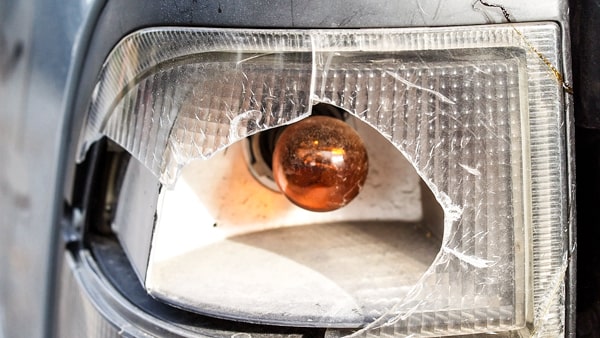
If your vehicle’s directional signal lights fail, how may you give a required turn signal?

If your turn signals fail, you should use _____ to indicate you are turning.
  1. A. Sound the horn
  2. B. Flash the headlights
  3. C. Use the proper hand-and-arm signal
  4. D. Turn on all four emergency flashers

Correct answer: C. – Use the proper hand-and-arm signal

Iowa law allows required signals to be given by a hand-and-arm signal or by a conforming mechanical or electrical device. From the left side of the vehicle, a horizontal arm indicates a left turn and an upward arm indicates a right turn. An arm extended downward signals a stop or decrease in speed.

Source: Iowa Code § 321.317(1) – Signals by hand and arm or signal device., Iowa Code § 321.318 – Method of giving hand and arm signals.

Question 3

When approaching a steep downhill grade on snow or ice, you should:

  1. A. Follow the vehicle ahead closely for traction
  2. B. Wait until the descent to brake hard
  3. C. Reduce your speed before going down the hill
  4. D. Accelerate rapidly to keep the tires gripping

Correct answer: C. – Reduce your speed before going down the hill

Snow and ice reduce tire traction and increase stopping distance. Slow down before beginning the descent, accelerate gently, and avoid sudden braking or steering. The manual also advises checking the brakes before going down a hill and beginning to slow well before an anticipated stop or turn.

Source: Iowa Driver’s License Manual — § 2.3, “Warning Signs,” “Hill”, Iowa Driver’s License Manual — § 5.13, “Inclement Weather Driving,” “Ice and Snow”

Question 4

Unless signs or lane markings direct otherwise, a right turn should be made:

  1. A. From the right lane into the left lane
  2. B. Close to the right curb and into the nearest appropriate lane
  3. C. Into whichever lane is open
  4. D. From the center lane into any lane

Correct answer: B. – Close to the right curb and into the nearest appropriate lane

Iowa law requires the approach and the right turn to be made as close as practical to the right-hand curb or roadway edge. Where markings do not provide different directions, the manual instructs drivers to turn into the lane closest to the lane they left. Complete the turn before changing to another lane.

Source: Iowa Code § 321.311(1)(a), (2) – Turning at intersections., Iowa Driver’s License Manual — § 2.18, “General Lane Use”

Question 5

On a narrow, unmarked rural road, what should you do when meeting an oncoming vehicle?

  1. A. Immediately back down the road
  2. B. Slow down and move as far right as is safely possible
  3. C. Remain near the center of the roadway
  4. D. Move right only if the other vehicle is a truck

Correct answer: B. – Slow down and move as far right as is safely possible

When meeting an oncoming vehicle on a narrow rural roadway, reduce speed and proceed cautiously while moving as far right as safety permits. Iowa law generally requires road users meeting each other to yield half of the roadway by turning right. Stay alert for soft shoulders and other conditions that could make moving farther right unsafe.

Source: Iowa Code § 321.298 – Meeting and turning to right., Iowa Driver’s License Manual — § 5.6, “Rural/Gravel Road Driving,” “Encountering Oncoming Vehicles”

Question 6

Fog becomes so dense that slowing down and using low beams no longer provide enough visibility. What should you do?

  1. A. Switch to high beams and continue
  2. B. Get off the road and find a safe place to park
  3. C. Continue driving at the same speed
  4. D. Use emergency flashers and continue in the travel lane

Correct answer: B. – Get off the road and find a safe place to park

In fog, use low-beam or fog lights because high beams reflect from the fog and create glare. Reduce speed until it matches how far ahead you can see. If visibility remains inadequate, get off the roadway and find a safe place to park rather than continuing in the travel lane.

Source: Iowa Driver’s License Manual — § 5.13, “Inclement Weather Driving,” “Fog”