Kansas Driving Test Practice 6

4.8 out of 5 (172 votes)
80% Passing score
20 Questions
4 Mistakes allowed
Kansas permit prep is not just “know the stop sign and hope for the best,” although, sure, knowing the stop sign is a decent place to begin. The Kansas Class C knowledge test is based on the Kansas Driving Handbook, formally the Kansas Driving Handbook: Non-Commercial Driver’s Manual, which is exactly as thrilling as the title suggests and also exactly where the state pulls its expectations from. It covers traffic laws, road signs, safe driving habits, right-of-way rules, distracted and impaired driving, sharing the road, rural driving, and the licensing details that nobody is excited to read twice. This Kansas DMV practice test gives you 20 questions built around those same core topics, with this sixth test leaning especially hard into turn signals. And yes, turn signals sound painfully basic until you start looking at how often they matter: turning, merging, changing lanes, pulling away from a curb, warning other drivers before you do something that would otherwise feel sudden and, frankly, rude. On Kansas roads, that can mean busy intersections in Wichita, quieter streets in smaller towns, or long open highways where “I thought they knew what I meant” is not much of a driving strategy. The official Kansas knowledge test has 25 questions covering rules of the road and road signs, including signs identified by shape, color, or symbol. A practical passing score is 20 correct answers out of 25, or 80%. This Kansas permit practice test uses a shorter 20-question format, so you will need at least 16 correct answers to pass here. Same percentage, less ceremony. Kansas applicants can take the knowledge test at a driver license office or online through KnowTo Drive. The details depend a little on who is applying, because of course they do. Applicants ages 14, 15, and 16 generally need a vision test and written test unless they have the right approved driver education paperwork, and 14- and 15-year-olds need parent or guardian approval. Applicants 17 and older can apply with a vision test and written test, or a driver education completion certificate. First-time adult drivers have the fuller checklist: identity, residency, vision, written exams, driving exam, fees, all of it. The real DMV questions are not publicly released, so this Kansas drivers test practice does not pretend to be a leaked answer key. It is meant to feel familiar in the ways that matter: topic coverage, wording style, and the steady little pressure of choosing the best answer before moving on.

FREE DMV Practice Test App
Study for your Kansas permit test or driver’s license with the NextDoorDriving app. 700+ DMV questions and answers, 100% free!
Download on the App Store

Sample Kansas Permit Test Questions

Question 1

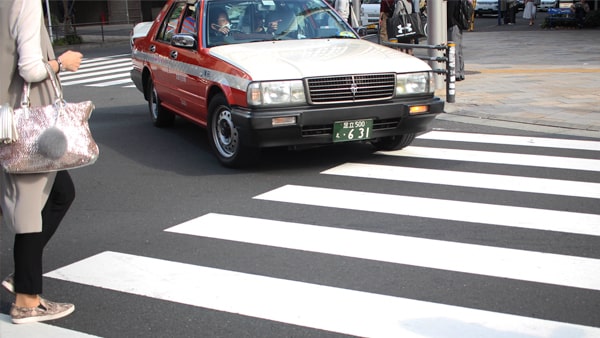
At a Kansas intersection without operating signals, a pedestrian is crossing within the crosswalk on your half of the roadway. Who must yield?

Who must yield when a driver is turning and a pedestrian is crossing without a traffic light?
  1. A Whichever person arrived second
  2. B The driver
  3. C Whichever person is moving more slowly
  4. D The pedestrian

Correct answer: B – The driver

The driver must yield, slowing or stopping as necessary, when a pedestrian is within the crosswalk on the driver’s half of the roadway. The same duty applies when the pedestrian is approaching closely enough from the opposite half to be in danger. A pedestrian may not suddenly enter the path of a vehicle that is too close to stop safely.

Source: K.S.A. § 8-1533(a)–(b) – Same; Right-of-Way at Crosswalks; Interference with Vehicular Traffic; Duties of Drivers

Question 2

At a stop sign with no marked stop line, where must you stop if a crosswalk is present?

  1. A At the center of the intersection
  2. B Before entering the crosswalk
  3. C Just beyond the crosswalk
  4. D At least 15 feet from the corner

Correct answer: B – Before entering the crosswalk

Kansas law requires a driver to stop at the marked stop line when one exists. If there is no stop line, the stop must be made before entering the crosswalk on the near side of the intersection. If neither a stop line nor a crosswalk exists, stop where you can view approaching traffic before entering the intersecting roadway.

Source: K.S.A. § 8-1528(b) – Stop Signs and Yield Signs; Duties of Drivers

Question 3

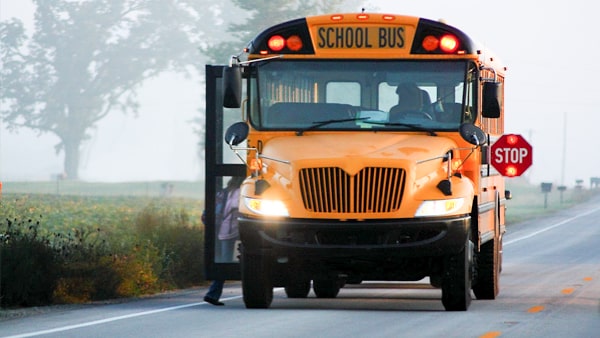
On a Kansas two-lane highway, a school bus ahead stops with flashing red lights and its stop arm extended. An approaching driver from the opposite direction must:

If a school bus stops to unload children on a two-lane highway, vehicles traveling in the opposite direction are:
  1. A Continue without stopping
  2. B Signal and pass cautiously
  3. C Stop, then pass at low speed
  4. D Remain stopped until the bus moves or its red lights and stop arm are deactivated

Correct answer: D – Remain stopped until the bus moves or its red lights and stop arm are deactivated

A driver meeting or overtaking a stopped school bus must stop when its flashing red lights are operating. The driver may not proceed until the bus resumes motion or both the red lights and stop arm are no longer actuated. The exception for opposing traffic applies when the bus is on a different, separately divided roadway.

Source: K.S.A. § 8-1556(a), (d) – Overtaking and Passing School Bus; Actuation of Visual Signals by Driver of Bus, When; Required School Bus Markings

Question 4

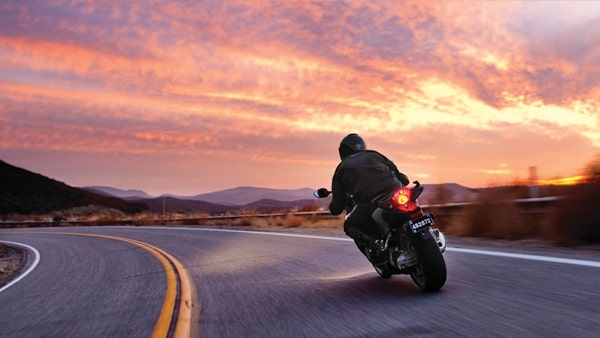
When traveling behind a motorcycle, another motorist must:

If you are driving behind a motorcycle, you must:
  1. A Allow the motorcycle full use of its lane
  2. B Drive on the shoulder beside the motorcycle
  3. C Restrict the motorcycle to half of the lane
  4. D Pass the motorcycle within the same lane

Correct answer: A – Allow the motorcycle full use of its lane

Kansas law entitles motorcycles to full use of a traffic lane. A motorist may not operate in a way that deprives a motorcycle of that full lane. Passing a motorcycle within the same lane or attempting to travel alongside it would violate this requirement.

Source: K.S.A. § 8-1595(a)–(b) – Same; Roadways Laned for Traffic

Question 5

On a Kansas highway outside city limits, you are in the far-left lane but are not passing or preparing to turn left. What should you do?

  1. A Move to a lane on the right when it is safe
  2. B Remain left until at least five vehicles collect behind you
  3. C Remain left whenever traveling at the speed limit
  4. D Turn on the hazard lights and stay in the lane

Correct answer: A – Move to a lane on the right when it is safe

On applicable highways outside city limits, vehicles must generally use the right lane. On highways with three or more lanes in the same direction, the far-left lane is reserved for passing, preparing for a proper left turn, following traffic-control directions, or another legal necessity. Move right safely when none of those exceptions applies.

Source: K.S.A. § 8-1522(c)–(d) – Driving on Roadways Laned for Traffic; Driving in Right Lane Required; Exceptions

Question 6

If your engine shuts off while you are driving, which actions should you take?

  1. A Keep a firm grip because steering may become difficult
  2. B Shift to Neutral, brake steadily, and move off the roadway
  3. C Stop, attempt a restart, and use emergency flashers if it fails
  4. D All of the above

Correct answer: D – All of the above

An engine shutdown may make the steering wheel more difficult to turn, but the vehicle can still be steered. Keep a strong grip, shift to Neutral, brake with steady pressure, and pull off the roadway. Once stopped, try restarting the engine; if it does not start, activate the emergency flashers and call for assistance.

Source: Kansas Driving Handbook — § 8, “Emergencies—Power Failure”