


Kansas DMV Sign Test 3

4.9 out of 5 (90 votes)
80% Passing score
20 Questions
4 Mistakes allowed
Kansas road signs are the part of test prep people love to treat like a warm-up, which is bold, considering the state can ask you to identify signs by shape, color, or symbol—not just by the words printed on them. So yes, the octagon matters. The triangle matters. That yellow warning sign you half-remember from riding in the back seat as a kid also matters, unfortunately. This Kansas road signs practice test is built to keep that material from turning into a last-minute guessing game. It focuses on the sign questions you can expect to see as part of the Kansas Class C knowledge test, the written exam used for a standard noncommercial driver license or instruction permit. The real test covers both Kansas traffic laws and road signs, which means road signs are not floating off in their own separate little universe. Kansas does not use a separate road-sign-only test for a standard Class C license or permit; those questions are folded into the 25-question knowledge exam. For the official Kansas knowledge test, plan around 25 questions, with a practical passing target of 20 correct answers, or 80%. That gives you room to miss up to 5, which sounds generous until you burn two misses on signs you “basically knew.” This is where a Kansas DMV practice test earns its keep. It lets you slow down, notice the patterns, and get used to how signs are tested before you are dealing with the real thing at a driver license office or online through KnowTo Drive. The practice test includes 20 questions, and the study aids are there for the moments when your brain confidently offers the wrong answer with absolutely no shame. Hints can nudge you in the right direction, and answer explanations help clean up the mess afterward. Not dramatically. Just usefully. The material stays close to the Kansas Driving Handbook, officially the Kansas Driving Handbook: Non-Commercial Driver’s Manual, so you are reviewing the signs, rules, and safe-driving ideas Kansas actually expects you to know. And if you take the official test online, remember that KnowTo Drive has its own setup requirements, including a desktop or laptop, webcam, keyboard, mouse, supported browser, and a 60-minute time limit. In other words, practice the signs—and practice answering without turning every question into a small legal hearing.
FREE DMV Practice Test App
Study for your Kansas permit test or driver’s license with the NextDoorDriving app. 700+ DMV questions and answers, 100% free!
Download on the App Store

Sample Kansas Permit Test Questions

Question 1

After stopping at a stop line, your view of cross traffic is blocked. What should you do next?

  1. A Wait five seconds and enter
  2. B Sound the horn and proceed
  3. C Listen for vehicles, then enter without looking
  4. D Edge forward slowly until you can see, then proceed when clear

Correct answer: D – Edge forward slowly until you can see, then proceed when clear

First make the required complete stop behind the stop line. If your view remains blocked, the handbook advises edging forward slowly until you can see cross traffic. Continue yielding to vehicles and pedestrians, and enter only after determining that the intersection is clear.

Source: K.S.A. 8-1528(b) – Stop signs and yield signs; duties of drivers, Kansas Driving Handbook — Section 7, “Visual Search—Intersections”
Question 2

A green arrow displayed with a red circular light permits you to:

  1. A Stop regardless of the arrow
  2. B Wait until the circular light turns green
  3. C Proceed cautiously only in the arrow's direction
  4. D Follow the arrow because the roadway is closed ahead

Correct answer: C – Proceed cautiously only in the arrow's direction

Kansas law allows a driver facing a green arrow to enter cautiously for the movement indicated by that arrow. The red circular signal continues to prohibit movements not authorized by the arrow or another displayed indication. Yield to pedestrians in adjacent crosswalks and traffic lawfully using the intersection.

Source: K.S.A. 8-1508(a)(2), (c)(1) – Traffic-control signal legend

Question 3

Why should you check left and right before entering on a newly green light?

  1. A A driver on the cross street may fail to stop for the red light
  2. B You must look only straight ahead after entering
  3. C Cross traffic always receives a green arrow
  4. D All cross-street pedestrians automatically have priority

Correct answer: A – A driver on the cross street may fail to stop for the red light

The handbook advises looking ahead, left, and right at intersections even when other traffic faces a red signal or stop sign. This check is especially important just after your light turns green because a cross-street driver may enter late or disobey the signal. Proceed after confirming that your path is clear.

Source: Kansas Driving Handbook — Section 7, “Visual Search—Intersections”

Question 4

What maneuver may be permitted across double solid yellow centerlines?

  1. A Turning left into a private driveway
  2. B Entering a one-way street from either direction
  3. C Using the markings as a shared turn lane
  4. D Passing a slow-moving motor vehicle

Correct answer: A – Turning left into a private driveway

In Kansas, double solid yellow lines prohibit passing in both directions. The no-passing restriction does not apply to a driver turning left into or from an alley, private road, or driveway. Before crossing the centerline for such a turn, wait for an adequate gap in opposing traffic.

Source: K.S.A. 8-1520(b)–(c) – No-passing zones; designation by secretary of transportation or local authorities; duties of drivers, Kansas Driving Handbook — Section 6, “Pavement Markings—Yellow Lane Markings”

Question 5

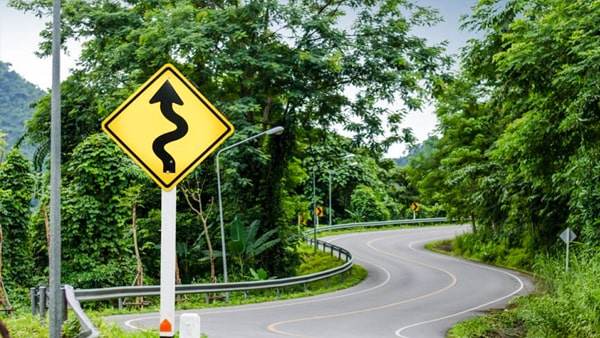
A yellow diamond sign with a winding arrow warns that:

This sign tells you that:
  1. A All turns are prohibited
  2. B The roadway becomes narrower
  3. C A winding section with multiple curves is ahead
  4. D The pavement is slippery when wet

Correct answer: C – A winding section with multiple curves is ahead

This is the Winding Road warning sign. It alerts you to a roadway section containing multiple curves in alternating directions. Warning signs identify possible hazards ahead, giving you time to adjust your speed and prepare for changing roadway conditions.

Source: Kansas Driving Handbook — Section 6, “Warning Signs—Winding Road”

Question 6

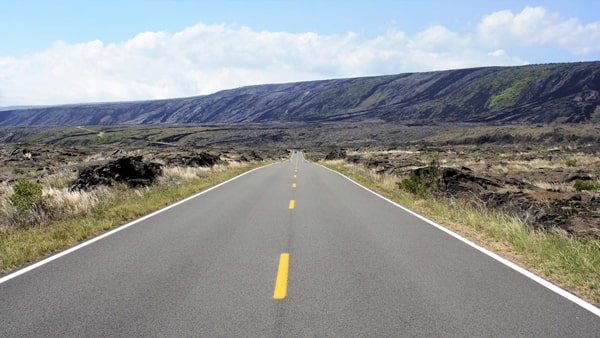
A broken yellow line between opposing lanes indicates that:

A broken yellow center line on the roadway means:
  1. A Passing is prohibited in both directions
  2. B You may cross to pass when the lane is clear and the maneuver is lawful
  3. C A mandatory speed reduction begins
  4. D Turns are prohibited

Correct answer: B – You may cross to pass when the lane is clear and the maneuver is lawful

The Kansas handbook states that dashed yellow lines separate opposing traffic and permit passing when a safe gap is available. Before moving left of center, the roadway must be clearly visible and free of oncoming traffic for enough distance to complete the pass safely. Other no-passing restrictions still apply.

Source: K.S.A. 8-1518 – Same; limitations on passing on the left, Kansas Driving Handbook — Section 6, “Pavement Markings—Yellow Lane Markings”