Kansas Road Signs Test Simulator

4.7 out of 5 (105 votes)
80% Passing score
25 Questions
5 Mistakes allowed
Kansas road signs deserve their own practice time, even though the state folds them into the regular Class C knowledge test rather than giving them a separate exam. That detail matters. On the real Kansas DMV permit test, road sign questions sit beside traffic laws, safe driving rules, impaired and distracted driving, driver responsibility, rural driving, and the other material covered in the Kansas Driving Handbook: Non-Commercial Driver’s Manual. So when a sign question asks you to identify something by shape, color, or symbol, it is not filler. It counts toward the same 25-question test everyone has to take. This Kansas permit practice test simulator keeps the focus tight. Instead of making you wade through every licensing topic at once, it gives you 20 road sign questions pulled randomly from a larger bank. One round might lean into warning signs and regulatory signs. The next may throw in work zone signs, guide signs, or those plain-looking shape questions that people skip over because they seem too obvious, which is usually where the trouble starts. A little rude, maybe, but useful. The real Kansas knowledge test has 25 questions, with a practical passing score of 20 correct answers, or 80%. This Kansas DMV practice test uses that same 80% benchmark in a road-sign-only format: get 16 of 20 correct and you pass the session. To be clear, because this is the sort of thing people mix up, Kansas does not require a separate road signs test for a standard Class C instruction permit or driver license. This simulator is narrower on purpose. It gives you concentrated practice on the sign recognition part before you walk into the full Kansas DMV test. You can retake this Kansas DMV practice test as many times as you need, and fresh questions keep it from turning into pure memorization. The goal is simple enough, although not always effortless: recognize the signs quickly, understand what they mean, and stop donating easy points to the test.   It is also good to know that licensing requirements can vary a bit depending on who is applying. Younger applicants may need a vision test, written test, parent or guardian approval, or approved driver education paperwork. Adults applying for the first time need the usual identity and residency documents, plus the required exams and fees. Out-of-state drivers may avoid the written and driving exams if their license is valid, but an expired license can change that in a hurry. So if you need to take the written knowledge exam, practice makes perfect, and that is where this test comes in.
FREE DMV Practice Test App
Study for your Kansas permit test or driver’s license with the NextDoorDriving app. 700+ DMV questions and answers, 100% free!
Download on the App Store

Sample Kansas Permit Test Questions

Question 1

Your light has just turned green. What must you verify before entering the intersection?

  1. A That you arrived before the other drivers
  2. B That crossing traffic and pedestrians have cleared your path
  3. C That everyone else has stopped moving
  4. D That you intend to travel straight

Correct answer: B – That crossing traffic and pedestrians have cleared your path

A green signal allows you to proceed, but you must yield to vehicles and pedestrians lawfully within the intersection or adjacent crosswalk. The handbook also instructs a stopped driver to allow crossing traffic to clear before moving. Check the intersection before accelerating, even when your signal has changed to green.

Source: K.S.A. 8-1508(a)(1) – Traffic-control signal legend, Kansas Driving Handbook — Section 6, “Traffic Signals—Steady Green Traffic Light”
Question 2

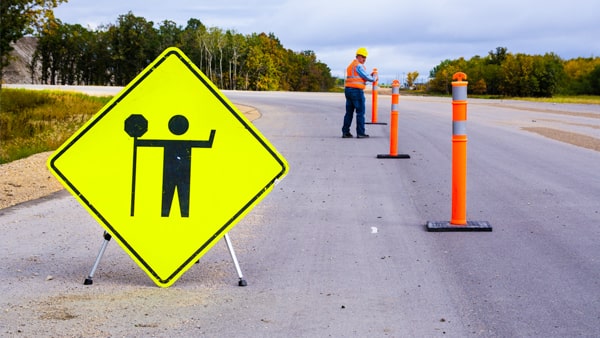
An orange diamond sign showing a person holding a flag warns of:

This sign means:
  1. A A pedestrian crossing
  2. B The end of road work
  3. C A school crossing
  4. D A flagger controlling traffic ahead

Correct answer: D – A flagger controlling traffic ahead

This is the Flagger Ahead sign. In Kansas work zones, a flagger may direct drivers to slow, stop, or travel in a particular direction, and drivers must follow those instructions. Drivers must also yield to authorized workers who are actually engaged in highway work within a marked construction zone.

Source: K.S.A. 8-1531(a) – Highway construction or maintenance operations; duty of driver, Kansas Driving Handbook — Section 6, “Work Zone Signs—Flagger Ahead”

Question 3

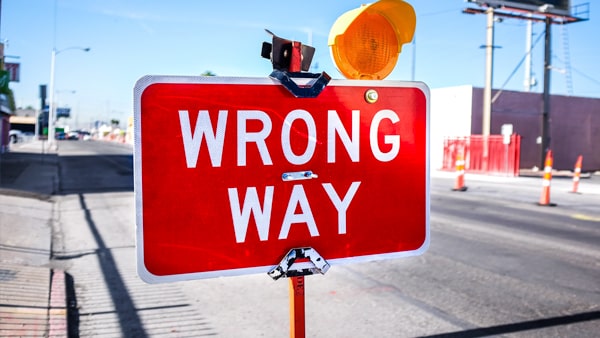
What does a red-and-white WRONG WAY sign tell you?

This red and white sign means:
  1. A You may enter after yielding
  2. B The roadway is closed in every direction
  3. C U-turns are prohibited ahead
  4. D You are traveling against the permitted direction of traffic

Correct answer: D – You are traveling against the permitted direction of traffic

A WRONG WAY sign indicates that your vehicle is moving opposite the permitted traffic direction. It may appear on an expressway ramp or where a driver has entered a one-way street, alley, or driveway incorrectly. Traffic on a designated one-way roadway must travel only in the posted direction.

Source: K.S.A. 8-1521(a)–(b) – One-way highways, roadways or traffic lanes; designation by secretary of transportation or local authorities; duties of drivers; rotary traffic islands, Kansas Driving Handbook — Section 6, “Regulatory Signs—Wrong Way”

Question 4

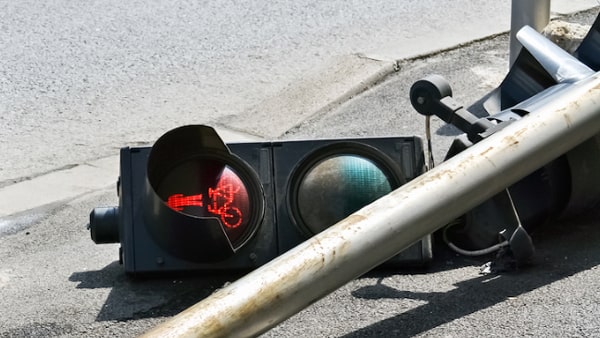
If a traffic signal is operating in flashing-red mode, you must:

When a traffic signal light is not working, you should:
  1. A Stop only when another vehicle is present
  2. B Slow down without stopping
  3. C Stop, yield as required, and proceed when safe
  4. D Drive through as though the signal were green

Correct answer: C – Stop, yield as required, and proceed when safe

Kansas law requires a complete stop at a flashing red signal. Stop at the marked line or, if none exists, at the legally designated point before entering the intersection. After stopping, proceed only under the same right-of-way rules that apply at a stop sign.

Source: K.S.A. 8-1510(a)(1) – Flashing traffic signals, K.S.A. 8-1528(b) – Stop signs and yield signs; duties of drivers

Question 5

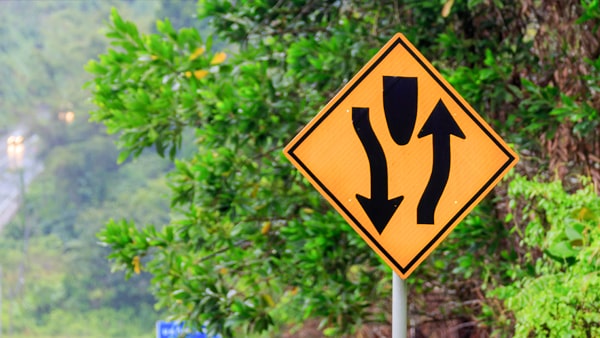
A yellow diamond sign showing two opposing arrows separated by a median means:

This sign means:
  1. A The divided highway ends
  2. B A one-way street begins
  3. C A one-way street ends
  4. D A divided highway begins

Correct answer: D – A divided highway begins

The Divided Highway Begins sign warns that the roadway ahead will separate into two roadways divided by a median or barrier. Traffic traveling in each direction uses its own roadway. Continue on the roadway to the right of the dividing area.

Source: K.S.A. 8-1524(e) – Driving limitations on divided highways and controlled-access highways; certain turns prohibited; parking prohibited, when, Kansas Driving Handbook — Section 6, “Warning Signs—Divided Highway Begins”

Question 6

When may you turn right while facing a steady circular red signal?

  1. A After stopping and yielding to traffic and pedestrians, unless a sign prohibits the turn
  2. B Whenever a red right arrow is displayed
  3. C Only from the left lane
  4. D After slowing without stopping

Correct answer: A – After stopping and yielding to traffic and pedestrians, unless a sign prohibits the turn

Kansas permits a right turn on a steady circular red signal unless a posted sign prohibits it. The driver must first stop at the required location. Before turning, yield to pedestrians in the adjacent crosswalk and to vehicles or other traffic lawfully using the intersection.

Source: K.S.A. 8-1508(c)(1)–(2) – Traffic-control signal legend, Kansas Driving Handbook — Section 6, “Traffic Signals—Steady Red Traffic Light”