


Kentucky DMV Practice Test 2

4.7 out of 5 (1055 votes)
80% Passing score
20 Questions
4 Mistakes allowed
A Kentucky DMV practice test gives you a cleaner read on whether you actually know the material, not just whether the Kentucky Driver Manual looked familiar when you skimmed it. The official test is for a Kentucky instruction permit, and for most passenger-car drivers that means the Class D Operator’s License track. The manual is still the source to study from, obviously, but practice questions are where the weak spots start showing themselves. Sometimes it is a road sign. Sometimes it is a right-of-way rule you were absolutely sure you understood. Sometimes it is one of those safety details that feels too simple to be tested, which is usually exactly why it is tested. This Kentucky permit practice test includes 20 questions built around the same core material Kentucky expects you to know: traffic laws, rules of the road, safe driving procedures, signs, signals, pavement markings, sharing the road, impaired driving, vehicle equipment, and seat belt rules. The real Kentucky written permit test is multiple choice and is commonly reported as 40 questions. You need 80% to pass, meaning 32 correct answers and no more than 8 misses. That is not impossible. It is also not something to treat like a formality, especially if you have been relying on “I’ve been around cars my whole life” as a study plan, which, to be fair, many people do. The practice test is untimed, and that matters more than it sounds like it should. You can slow down, read the wording, second-guess yourself in a productive way, and then review what you missed with explanations and hints. That review is the useful part. A missed question about pavement markings or alcohol rules is not just a wrong click; it is a little warning flare telling you where to go back before the official KY DMV written test. There is also the real-world testing process to keep straight. Kentucky driver testing is scheduled through the Kentucky State Police online appointment system, and you do not have to test in your home county. The written test is taken at KSP testing locations, not as a general at-home online permit test. First-time applicants also need a vision screening, with the standard set at 20/40 visual acuity, corrected or uncorrected. If you need glasses or contacts to meet that standard, your license will show a corrective-lenses restriction. And yes, documents matter. Under-18 applicants need items like a birth certificate, Social Security card, Kentucky residency proof, School Compliance Verification Form, and a parent or guardian signature. Adults need identity, Social Security, residency, and any name-change documents that apply. It is administrative stuff, a little dry, but it can derail an otherwise ready applicant. Use this free Kentucky DMV practice test to tighten up your knowledge before appointment day, so the written test feels familiar instead of unpleasant.
FREE DMV Practice Test App
Study for your Kentucky permit test or driver’s license with the NextDoorDriving app. 700+ DMV questions and answers, 100% free!
Download on the App Store

Sample Kentucky Permit Test Questions

Question 1

You intend to turn left, but an oncoming vehicle is close enough to create an immediate hazard. What must you do?

  1. A. Turn if no pedestrians are present
  2. B. Yield to the oncoming vehicle
  3. C. Turn first because left-turning traffic has priority
  4. D. Continue straight and never attempt the turn

Correct answer: B. – Yield to the oncoming vehicle

A driver turning left must yield to an oncoming vehicle that is already in the intersection or is close enough to create an immediate hazard. In Kentucky, this rule also applies when turning left into an alley, private road, or driveway. Complete the turn only when an adequate opening is available.

Source: KRS § 189.330(9) – Turning and right-of-way at intersections, Kentucky Driver Manual — § 7, “Left Turns”
Question 2

What color combination is normally used on warning signs for hazards such as curves or narrow bridges?

  1. A. Black symbols on a white background
  2. B. Black symbols on a yellow background
  3. C. White symbols on a blue background
  4. D. White symbols on a green background

Correct answer: B. – Black symbols on a yellow background

Most general warning signs use black lettering or symbols on a yellow background and are diamond-shaped. They alert drivers to possible danger or unusual roadway conditions ahead. Some pedestrian, bicycle, and school-related warning signs use a fluorescent yellow-green background instead.

Source: Kentucky Driver Manual — § 6, “Traffic Signs—Warning Signs”, Kentucky Driver Manual — § 6, “Standard Colors”

Question 3

Which statement about a slippery roadway is correct?

  1. A. Tires have less grip, and the vehicle takes longer to stop
  2. B. Hard braking immediately restores traction
  3. C. Sharp steering movements prevent skids
  4. D. The same speed used on dry pavement remains safe

Correct answer: A. – Tires have less grip, and the vehicle takes longer to stop

Rain, snow, sleet, and ice reduce the grip between the tires and roadway. A vehicle will take longer to stop and will be harder to turn without skidding. Reduce speed and avoid rapid stops or quick steering movements until the tires have regained traction.

Source: Kentucky Driver Manual — § 8, “Adjusting To Roadway Conditions—Slippery Roads”

Question 4

Which action is part of a safe visual-search routine?

  1. A. Use your mirrors to monitor traffic behind you
  2. B. Stare only at the pavement immediately ahead
  3. C. Use high-beam headlights in thick fog
  4. D. Follow closely to see around the vehicle ahead

Correct answer: A. – Use your mirrors to monitor traffic behind you

Drivers need to know what is happening around the entire vehicle. Use the mirrors to check rear traffic, especially before changing lanes, slowing, stopping, or entering an intersection. Keep your eyes moving instead of staring at one point, and maintain enough space to preserve your view and reaction time.

Source: Kentucky Driver Manual — § 8, “Visual Search”, Kentucky Driver Manual — § 8, “Visibility”, Kentucky Driver Manual — § 8, “Space Management—Space in Front”

Question 5

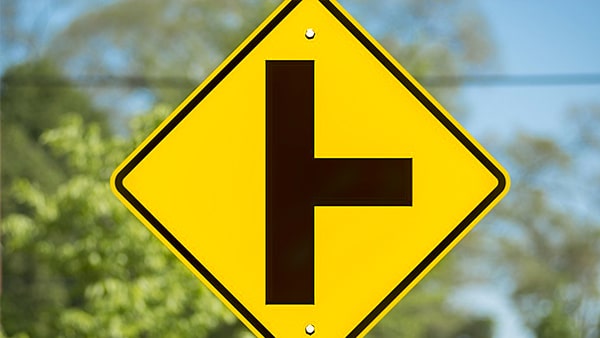
A yellow diamond sign shows a short road joining from the right. What does it warn of?

This sign means:
  1. A. Traffic must turn right
  2. B. A side road enters ahead
  3. C. Traffic must continue straight
  4. D. Right turns are prohibited

Correct answer: B. – A side road enters ahead

This warning sign indicates that a side road enters the roadway from the right. Watch for vehicles entering, leaving, or crossing your path near the junction. Reduce speed as necessary and be prepared for changing traffic conditions.

Source: Kentucky Driver Manual — Section Six, “Traffic Signs—Warning Signs”

Question 6

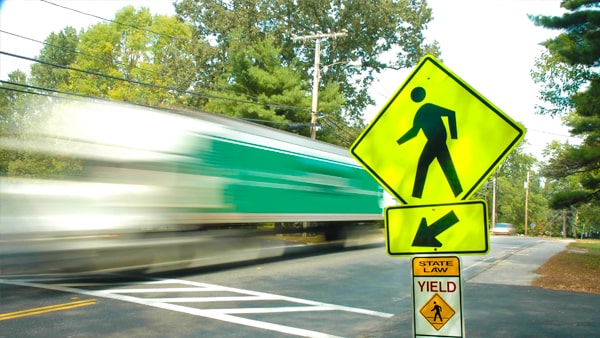
A pedestrian is using a marked midblock crosswalk where no traffic signal is operating. What must a driver do?

If a pedestrian is in a crosswalk in the middle of a block:
  1. A. Yield, slowing or stopping if necessary
  2. B. Proceed because vehicles have priority between intersections
  3. C. Yield only if the pedestrian is on the driver’s half of the road
  4. D. Sound the horn and continue through the crosswalk

Correct answer: A. – Yield, slowing or stopping if necessary

In Kentucky, a driver must yield to a pedestrian crossing the roadway when traffic signals are not operating, slowing or stopping if necessary. The driver manual specifically includes marked midblock crosswalks in this duty. A pedestrian may not suddenly enter the path of a vehicle that is too close to stop safely.

Source: KRS 189.570(4), (6)(a), (9) – Pedestrians, Kentucky Driver Manual — Section Ten, “Pedestrians”