Kentucky Driving Test Practice 4

4.8 out of 5 (717 votes)
80% Passing score
20 Questions
4 Mistakes allowed
This KY DMV practice test keeps its attention where it belongs: on the material you may actually need to recognize on the Kentucky written driving test. The focus here is child safety seat installation and use, along with the kind of general driving knowledge that tends to show up in permit test questions because it connects directly to passenger safety. It is not just a “nice to know” topic. Kentucky expects drivers to understand how children should be properly secured, when restraints are required, and why those rules matter before the car is even moving. The practice test includes 20 multiple-choice questions, with 16 correct answers needed to pass. That format gives you enough room to see whether you truly know the child passenger safety rules or whether you are relying on a half-remembered line from the manual, which, let’s be honest, is not the strongest test-day strategy. The questions are designed to make you slow down a little and think through the details: proper use, correct installation, and the basic responsibilities a driver has when young passengers are riding along. As a Kentucky practice written driving test, it also works as a useful review tool for adult applicants preparing for the permit stage. Before getting licensed, adults must pass the written test and vision screening, complete the myDrive pre-application, bring the required documents, and schedule testing with the Kentucky State Police. After passing, they receive a learner’s permit and move into the supervised-driving period. So yes, the written test is only one step, but it is the step that decides whether you get to keep moving through the process. The timing depends on your age. Applicants ages 18 to 20 must hold the learner’s permit for 180 days and drive only with a licensed driver age 21 or older in the passenger seat. Applicants age 21 and older follow a shorter timeline, holding the permit for at least 30 days before the road skills test. After passing that road test, the final license is handled through a Driver Licensing Regional Office. Adults are not required to complete Kentucky’s under-18 Graduated Licensing Program course or the under-18 60-hour practice log, which clears away some extra requirements. Still, the written knowledge matters. A free Kentucky driver test practice like this gives you a focused way to review current 2026 Kentucky driving laws, especially the child safety seat rules that are easy to skim past and much less easy to guess correctly.
FREE DMV Practice Test App
Study for your Kentucky permit test or driver’s license with the NextDoorDriving app. 700+ DMV questions and answers, 100% free!
Download on the App Store

Sample Kentucky Permit Test Questions

Question 1

Two vehicles approach a narrow, single-lane bridge from opposite directions. Who generally has the right-of-way?

  1. A. The driver traveling uphill
  2. B. The driver who reaches the bridge first
  3. C. The driver of the larger vehicle
  4. D. The driver traveling at the higher speed

Correct answer: B. – The driver who reaches the bridge first

The Kentucky driver manual instructs drivers to watch for signs identifying narrow or single-lane bridges and to take turns crossing. Generally, the driver who reaches the bridge first has the right-of-way. Reduce speed and confirm that the bridge is clear before entering.

Source: Kentucky Driver Manual — Section Eleven, “Rural Road Driving”
Question 2

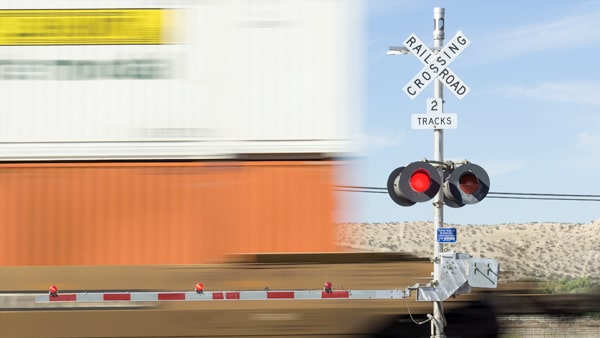
After one train passes at a crossing with multiple tracks, what should you do before moving?

After a train has passed, you should:
  1. A. Wait for an ordinary traffic signal to turn green
  2. B. Cross immediately behind the train
  3. C. Sound the horn and enter the crossing
  4. D. Obtain a clear view in both directions and check for another train

Correct answer: D. – Obtain a clear view in both directions and check for another train

Do not start across multiple tracks immediately after one train passes. Obtain a clear view in both directions because another train or railroad vehicle may be approaching on a different track. If crossing lights continue flashing or a gate remains lowered, remain stopped until the warning ends and it is safe to cross.

Source: KRS § 189.560(1) – Railroad crossings -- Duties of motor vehicle operators and commercial drivers -- Railroad's liability for death or injury, Kentucky Driver Manual — Section Six, “Railroad Crossing Warning Signs”

Question 3

Under Kentucky's implied-consent law, when is consent to alcohol or substance testing deemed given?

  1. A. When a person operates or is in physical control of a vehicle, subject to a lawful request based on reasonable grounds
  2. B. Only after the person's attorney recommends testing
  3. C. Only when a court has issued a testing order
  4. D. Only when an officer personally witnesses a separate traffic violation

Correct answer: A. – When a person operates or is in physical control of a vehicle, subject to a lawful request based on reasonable grounds

KRS § 189A.103 provides that a person operating or in physical control of a vehicle has consented to blood, breath, urine, or combined testing. The officer must have reasonable grounds to believe a DUI-related violation occurred, and the test must be lawfully requested and administered. A separate court order is not the basis of ordinary implied consent.

Source: KRS § 189A.103(1), (3) – Consent to tests for alcohol concentration or substance which may impair driving ability -- Test procedures -- Who may administer -- Personal testing, Kentucky Driver Manual — Section Three, “Alcohol and the Law”

Question 4

A steady traffic signal changes from green to yellow as you approach an intersection. What should you do?

As you near an intersection, the traffic light changes from green to yellow. Your best action would be to:
  1. A. Accelerate to enter before the signal turns red
  2. B. Brake abruptly regardless of traffic behind you
  3. C. Plan to stop in the middle of the intersection
  4. D. Stop before the intersection if you can do so safely

Correct answer: D. – Stop before the intersection if you can do so safely

A steady yellow signal warns that the green movement is ending and a red indication will immediately follow. The Kentucky driver manual directs you to stop if you can do so safely. If you have already lawfully entered on yellow, continue through rather than stopping inside the intersection.

Source: KRS § 189.338(2)(a) – Limitation of colored lights used in traffic-control signals -- Rules for vehicular and pedestrian traffic controlled by traffic-control signals -- Affirmative defense for motorcyclists, Kentucky Driver Manual — Section Six, “Traffic Signals”

Question 5

Which choice follows the driver manual's advice for reducing how often you drive?

Choose the situation that would have the best impact on reducing traffic congestion:
  1. A. Taking a bus instead of driving alone
  2. B. Reducing your following distance
  3. C. Making several separate trips
  4. D. Following another vehicle closely

Correct answer: A. – Taking a bus instead of driving alone

The driver manual recommends driving only when necessary, combining trips, and considering alternatives such as carpooling, taking a bus, bicycling, or walking. Taking public transportation can replace a separate car trip. Reducing your space cushion or tailgating is unsafe and is not an alternative transportation strategy.

Source: Kentucky Driver Manual — Section Two, “Motor Vehicles and the Environment”

Question 6

Which activity can distract a driver from the driving task?

  1. A. Talking or texting on a phone
  2. B. Having a stressful argument with a passenger
  3. C. Eating while driving
  4. D. All of these activities

Correct answer: D. – All of these activities

A distraction is anything that takes attention away from driving. Phone use can involve visual, manual, and cognitive distraction, while arguments can divert mental attention and eating can take attention or a hand away from vehicle control. Drivers are responsible for giving the driving task their full attention.

Source: Kentucky Driver Manual — Section Three, “Driver Distractions”