


Louisiana Driving Test Practice 6

4.9 out of 5 (64 votes)
80% Passing score
20 Questions
4 Mistakes allowed
Preparing for the Louisiana drivers permit test takes more than a quick skim through a few road signs and a hopeful attitude at the OMV counter. The official test expects you to know the rules well enough to apply them, especially in everyday situations where drivers tend to get casual—turn signals, lane changes, right-of-way decisions, stopping distance, and all the small judgment calls that seem obvious until the answer choices start sounding a little too similar. This Louisiana DMV practice test gives you 20 questions focused on the driving rules and safety topics you are expected to understand before getting on the road. You need 16 correct answers to pass, and the test is untimed, which is better than it sounds. It gives you room to slow down, reread the question, and notice the one detail that changes the answer. That is usually where people lose points, not because they know nothing, but because they rush through something they almost know. There is also the practical OMV piece, which is less exciting, sure, but it matters. If you are applying for a Class E Temporary Instructional Permit, Louisiana generally requires proof of identification, proof of Louisiana residency, Social Security number verification, and one additional form of identification. First-time driver’s license applicants may need a specific combination of primary and secondary identity documents, and applicants age 17 and under need a custodial parent or legal guardian signature. For REAL ID, the document list gets more exact: proof of identity, lawful status, date of birth, Social Security number, and two separate proofs of principal residence. And yes, the documents need to be original or certified copies. Photocopies are not accepted, which is one of those details worth knowing before you have already taken a number, sat down, waited, and started regretting your morning. You can retake this Louisiana permit practice test as many times as needed, so use it properly. Missed questions are not just wrong answers; they are a map of what to review before the official Louisiana DMV driving test. Work through it, clean up the weak spots, and show up knowing both the rules of the road and the paperwork that gets you in the door.
FREE DMV Practice Test App
Study for your Louisiana permit test or driver’s license with the NextDoorDriving app. 700+ DMV questions and answers, 100% free!
Download on the App Store

Sample Louisiana Permit Test Questions

Question 1

At a railroad crossing marked only by crossbucks, when may you proceed across the tracks?

  1. A. Immediately after one train clears the nearest track
  2. B. Only after the train is completely out of sight
  3. C. Only after checking the tracks in both directions and determining that crossing is safe
  4. D. Only during dry weather

Correct answer: C. – Only after checking the tracks in both directions and determining that crossing is safe

At an ungated crossbuck crossing, Louisiana law requires drivers to yield, slow to a reasonable speed, and stop if safety requires it. A driver may not proceed until the crossing can be made safely. Looking and listening in both directions is important because a crossing may contain more than one track.

Source: La. R.S. 32:171(E) – Motor vehicles approaching railroad crossings; reporting violations; penalties, Class D & E Driver’s Guide — Ch. 6, “Railroad Grade Crossing”
Question 2

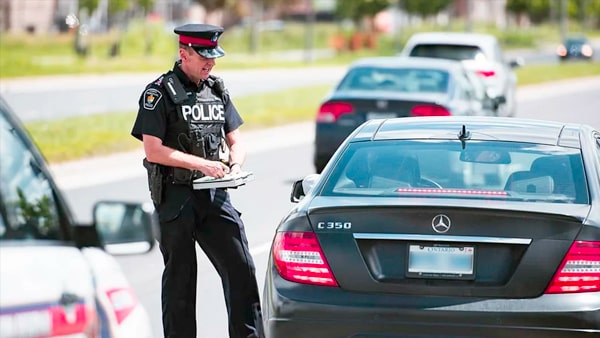
Under Louisiana's implied-consent law, what can happen if a driver arrested for DWI refuses a requested chemical test?

A police officer stops you because he suspects you are DUI. You refuse to take a chemical test. What happens now?
  1. A. The driver's license may be seized and driving privileges suspended
  2. B. The driver is automatically denied bail
  3. C. The vehicle must always be permanently forfeited
  4. D. The arrest is dismissed because no test was completed

Correct answer: A. – The driver's license may be seized and driving privileges suspended

A person driving on public highways is deemed to have consented to an approved chemical test under the conditions stated by law. After an arrest and refusal, the officer seizes the license and issues a temporary receipt. If no timely administrative hearing is requested, a first refusal results in a one-year suspension; a second or subsequent refusal within ten years results in a two-year suspension.

Source: La. R.S. 32:661(A)(1), (C)(1)(b) – Operating a vehicle under the influence of alcoholic beverages or illegal substance or controlled dangerous substances; implied consent to chemical tests; administering of test and presumptions, La. R.S. 32:667(A)(1), (B)(2) – Seizure of license; circumstances; temporary license

Question 3

An authorized emergency vehicle using warning signals is approaching from behind. What must you do?

  1. A. Move as close as possible to the right edge or curb, clear of the intersection, and stop
  2. B. Accelerate until you are ahead of surrounding traffic
  3. C. Remain in your lane and reduce speed slightly
  4. D. Stop immediately in the intersection

Correct answer: A. – Move as close as possible to the right edge or curb, clear of the intersection, and stop

Louisiana law requires drivers to yield upon the immediate approach of an authorized emergency vehicle using the required warning signals. Move parallel to and as close as possible to the right-hand edge or curb, remain clear of an intersection, and stop. Stay there until the emergency vehicle passes unless a police officer directs otherwise.

Source: La. R.S. 32:125(A) – Procedure on approach of an authorized emergency vehicle; passing a parked emergency vehicle

Question 4

Unless markings allow another lane, where should you position your vehicle when approaching a right turn?

  1. A. Near the roadway's center line
  2. B. Along the left edge of the roadway
  3. C. As close as practicable to the right-hand curb or edge
  4. D. Past the center of the intersection

Correct answer: C. – As close as practicable to the right-hand curb or edge

Louisiana law requires both the approach and the right turn to be made as close as practicable to the right-hand curb or roadway edge. The driver guide also instructs motorists to turn from the rightmost lane unless markings designate multiple right-turn lanes. Avoid swinging left before beginning the turn.

Source: La. R.S. 32:101(A)(1) – Required position and method of turning at intersections, Class D & E Driver’s Guide — Ch. 6, “Right Turn”

Question 5

When parking downhill on a two-way road without a curb, which way should the front wheels point?

  1. A. Toward the center of the roadway
  2. B. Toward the right edge of the roadway
  3. C. Straight ahead
  4. D. Toward the oncoming-traffic lane

Correct answer: B. – Toward the right edge of the roadway

When there is no curb, the front wheels should be turned toward the edge of the road whether the vehicle faces uphill or downhill. On a two-way road, that edge is normally to the right when parked in the proper direction. This wheel position directs the vehicle away from the center if the brakes fail.

Source: Class D & E Driver’s Guide — Ch. 5, “Parking on Hills”

Question 6

How should you drive when approaching and traveling through a highway work zone?

  1. A. Follow signs and flaggers, reduce speed, and be prepared to stop
  2. B. Brake suddenly when you reach the workers
  3. C. Slow mainly to watch the construction equipment
  4. D. Sound the horn continuously to alert workers

Correct answer: A. – Follow signs and flaggers, reduce speed, and be prepared to stop

The Louisiana guide instructs drivers in work zones to reduce speed and be prepared to stop. Follow temporary signs, channelizing devices, arrow panels, and directions given by flaggers. Traffic patterns may change through lane shifts or alternating closures, making attention to the official controls especially important.

Source: Class D & E Driver’s Guide — Ch. 3, “Highway Work Zones”