Maryland Permit Test Simulator

4.5 out of 5 (1166 votes)
88% Passing score
25 Questions
3 Mistakes allowed
The Maryland permit practice test should feel close enough to the real MVA knowledge test that you recognize the rhythm of it, but not so predictable that you start sleepwalking through the answers. That is the whole point. The official Maryland learner’s permit test gives you 25 multiple-choice questions, and you need 22 correct to pass. An 88% score sounds tidy on paper; in practice, it means you only get three wrong before the whole thing turns into a return trip. This practice test follows that same basic setup, with 25 random questions pulled from a wider pool so each attempt has a little movement in it. You are not just seeing the same handful of answers dressed up in a different order. You will run into Maryland traffic laws, road signs and signals, safe driving rules, defensive driving, sharing-the-road questions, and the Rookie Driver details that people tend to skim because, honestly, they look administrative until they are sitting on the exam. Maryland does not use a separate road-sign-only test for the standard noncommercial learner’s permit. Signs and signals are folded into the main knowledge test, right alongside rules about supervision, safe driving, and what happens after you actually get the permit. That matters because the knowledge test is not the finish line. It is the entry point into the licensing process: vision screening, learner’s instructional permit, driver education, supervised practice, skills test, provisional license, and eventually a full driver’s license. A lot of steps, yes. A little fussy, also yes. But they connect. Use the explanations after each question. That is where the practice test does more than tell you whether you guessed well. Missed answers usually reveal the exact spots where your memory is fuzzy — sign shapes, right-of-way rules, passenger restrictions, phone rules, nighttime practice, whatever it happens to be. And because Maryland driving is not one neat little driving environment, it helps to study with that real-world mix in mind: Baltimore traffic, suburban intersections, rural roads, wet weather, Eastern Shore stretches where things feel quiet until they are not. Take it more than once. Not because repetition is magic, but because repeated, slightly different practice is how you stop memorizing and start recognizing what the MVA is actually testing.
FREE DMV Practice Test App
Study for your Maryland permit test or driver’s license with the NextDoorDriving app. 700+ DMV questions and answers, 100% free!
Download on the App Store

Sample Maryland Permit Test Questions

Question 1

Which practice helps prevent you from driving beyond the distance illuminated by your headlights at night?

  1. A Keeping the instrument-panel lights at full brightness
  2. B Looking directly at approaching headlights
  3. C Driving slowly enough to stop within the distance you can see
  4. D Using high beams in every nighttime situation

Correct answer: C – Driving slowly enough to stop within the distance you can see

At night, adjust your speed so you can stop within the distance you can see ahead. Otherwise, a hazard may become visible too late for you to stop safely. Use low beams around traffic or on lighted roads, and do not stare into approaching headlights.

Source: Maryland Commercial Driver’s License Manual — § 2.11, “Driving at Night”, Maryland Driver’s Manual — § 5.B, “Driving at Night”
Question 2

Heavy traffic leaves no safe gap as you approach the end of an acceleration lane. What should you do?

  1. A Force your vehicle into the smallest available gap
  2. B Reverse along the entrance ramp
  3. C Use the shoulder as an extra merging lane
  4. D Remain out of the through lane until you can enter safely

Correct answer: D – Remain out of the through lane until you can enter safely

Use the acceleration lane to adjust your speed to the traffic already on the highway, but enter only when there is a safe opening. The Maryland manual requires drivers on an entrance or acceleration ramp to yield to highway traffic. Do not force a merge, reverse on the ramp, or use the shoulder as a travel lane.

Source: Maryland Driver’s Manual — § 3.B, “Right-of-Way”, Maryland Driver’s Manual — § 5.J, “Interstate Driving and Limited Access Highways — For Vehicles Entering”

Question 3

Eating or drinking while operating a vehicle can:

Drivers who eat and drink while driving:
  1. A Eliminate common driving errors
  2. B Improve awareness of changing traffic
  3. C Help the driver maintain concentration
  4. D Divert attention from the driving task

Correct answer: D – Divert attention from the driving task

Eating and drinking are listed as distracted-driving activities in the Maryland manual. Distracted driving occurs when your eyes, hands, or mind are taken away from operating the vehicle. Food and drinks should be handled before driving or after stopping in a safe location.

Source: Maryland Driver’s Manual — § 7.A, “Distracted Driving”

Question 4

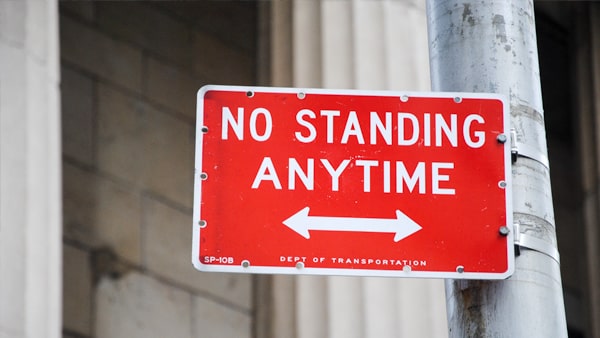
Unless another restriction is posted, what does a NO STANDING sign permit?

A "no standing sign" at a certain location means:
  1. A No stopping for any reason
  2. B Parking while the driver remains inside
  3. C A brief stop to pick up or drop off passengers
  4. D Loading or unloading merchandise

Correct answer: C – A brief stop to pick up or drop off passengers

A NO STANDING restriction prohibits waiting or parking but permits a temporary stop while passengers enter or leave the vehicle. It does not permit the driver to wait merely by remaining behind the wheel or to stop for loading merchandise. Maryland law requires drivers to obey official signs prohibiting standing.

Source: Md. Code, Transp. § 21-1003(q), Maryland Manual on Uniform Traffic Control Devices — § 2B.46, “Parking, Standing, and Stopping Signs (R7 and R8 Series)”

Question 5

Preparing to smoke or smoking while driving is classified as:

Preparing to smoke and smoking while driving:
  1. A An activity that does not affect attention
  2. B A recommended way to remain alert
  3. C A driving distraction
  4. D A vehicle-control technique

Correct answer: C – A driving distraction

The Maryland manual identifies smoking as an example of distracted driving. A distraction may take your eyes, hands, or mind away from the driving task and cause you to miss information needed to avoid a crash. Avoid handling smoking materials while the vehicle is moving.

Source: Maryland Driver’s Manual — § 7.A, “Distracted Driving”

Question 6

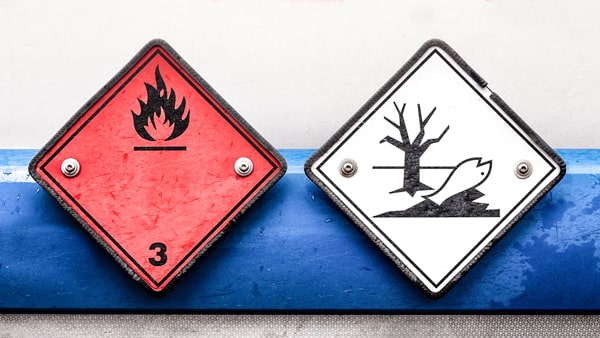
At most railroad grade crossings, what must the driver of a vehicle carrying placarded hazardous materials do?

Which of the following is true about vehicles displaying a diamond-shaped sign (indicating a hazardous load)?
  1. A Avoid all controlled-access highways
  2. B Reduce speed to no more than 35 mph
  3. C Stop between 15 and 50 feet from the nearest rail
  4. D Proceed before other traffic

Correct answer: C – Stop between 15 and 50 feet from the nearest rail

Maryland law generally requires a vehicle carrying hazardous materials in a type and quantity requiring placarding to stop between 15 and 50 feet from the nearest rail. While stopped, the driver must look and listen in both directions for trains and warning signals. The statute provides limited exceptions for certain crossings and traffic-control situations.

Source: Md. Code, Transp. § 21-703(a)(5), (b), (c), (g)