


Maryland MVA Practice Test

4.6 out of 5 (549 votes)
80% Passing score
20 Questions
4 Mistakes allowed
A Maryland MVA practice test should do more than toss random road-sign questions at you and call it preparation. The real knowledge test sits inside the larger Maryland licensing process, and that matters. Before most new drivers can schedule the behind-the-wheel driving skills test, they first have to pass the noncommercial learner’s permit knowledge test given by the Maryland Department of Transportation Motor Vehicle Administration (or MVA).   This Maryland MVA practice test gives you a practical way to study before you walk into that process. It includes 20 multiple-choice questions covering the material Maryland expects learner’s permit applicants to know: traffic laws, road signs and signals, right-of-way rules, safe driving habits, defensive driving, sharing the road, and the licensing responsibilities that come with holding a valid driver’s license. Some of it feels obvious when you read it in the manual. Some of it gets less obvious once the answer choices start looking a little too similar. That is where practice earns its keep. The official Maryland learner’s permit knowledge test is based on the Maryland Driver’s Manual. For permit applicants, the real test uses 25 multiple-choice questions, and you need 22 correct answers to pass. That works out to an 88% passing score, with only three questions to spare, and the test is timed at 20 minutes. So the goal is not casual familiarity. You want to be quick, accurate, and calm enough that the clock does not turn normal questions into a small personal crisis. This MD MVA permit practice test is especially useful for first-time drivers, teen applicants preparing for a learner’s instructional permit, adult new drivers moving through Maryland’s Rookie Driver system, and drivers who may need testing because of a licensing change, an expired out-of-state license, or a new license class. It is available online, so you can use it around your actual life instead of building your day around a study session that keeps getting postponed. After each Maryland practice permit test, the review matters just as much as the score. You can go back through missed answers, read the explanations, and use the hints to catch the rules you half-knew but did not quite own yet. That is the part that turns guessing into understanding — not in a dramatic way, just in the useful, steady way that helps when test day finally shows up.
FREE DMV Practice Test App
Study for your Maryland permit test or driver’s license with the NextDoorDriving app. 700+ DMV questions and answers, 100% free!
Download on the App Store

Sample Maryland Permit Test Questions

Question 1

When searching ahead for developing traffic hazards, how far in front of your vehicle should you generally look?

  1. A About 3 to 5 seconds
  2. B About 6 to 8 seconds
  3. C About 12 to 15 seconds
  4. D About 20 to 30 seconds

Correct answer: C – About 12 to 15 seconds

The official Maryland commercial driving manual recommends looking at least 12 to 15 seconds ahead. Searching that far forward helps you identify traffic changes, stopped vehicles, and roadway hazards early enough to adjust speed or position smoothly. Continue checking mirrors and the areas beside your vehicle rather than fixing your attention on one point.

Source: Maryland Commercial Driver’s License Manual — § 2.4.1, “Look Ahead”
Question 2

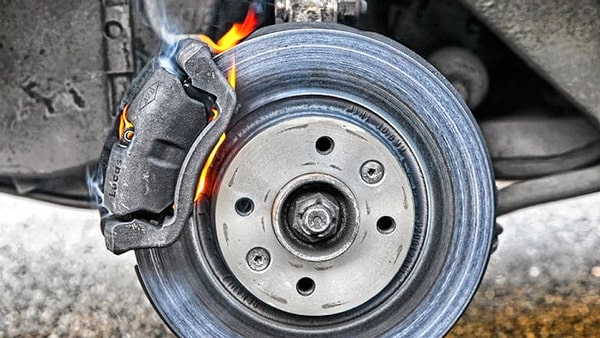
If your vehicle’s hydraulic brakes fail, which actions can help you slow and stop?

If you experience brake failure while driving, you should:
  1. A Downshift and look for the safest available stopping route
  2. B Pump the brake pedal and carefully apply the parking brake if needed
  3. C Steer toward a safe escape route while the vehicle slows
  4. D All of the above

Correct answer: D – All of the above

The official Maryland commercial manual recommends downshifting and pumping the brake pedal because pumping may restore enough hydraulic pressure to stop. The parking brake may be applied gradually while its release is held so pressure can be reduced if the wheels begin to lock. While slowing, look for the least hazardous escape route or stopping area.

Source: Maryland Commercial Driver’s License Manual — § 2.17.3, “Brake Failure”

Question 3

When making a left turn, which approaching traffic must you yield to?

  1. A Vehicles already traveling in a traffic circle behind you
  2. B Only vehicles that have entered from your right
  3. C Vehicles traveling behind you in your lane
  4. D Opposing vehicles close enough to create an immediate danger

Correct answer: D – Opposing vehicles close enough to create an immediate danger

Under Maryland law, a driver turning left must yield to a vehicle approaching from the opposite direction if it is in the intersection or close enough to present an immediate danger. Wait until the opposing vehicle has passed or the turn can otherwise be completed safely. Pedestrians and bicyclists may also have to be yielded to before completing the turn.

Source: Md. Code, Transp. § 21-402(a), Maryland Driver’s Manual — § 3.B, “Right-of-Way”

Question 4

According to the Maryland MVA, what causes most rear-end crashes?

  1. A Checking the rearview mirror too frequently
  2. B Following the vehicle ahead too closely
  3. C Driving in the right-hand lane
  4. D Passing slower vehicles

Correct answer: B – Following the vehicle ahead too closely

The Maryland manual identifies following too closely as the cause of most rear-end crashes. Insufficient space reduces the time available to recognize that traffic is slowing and bring your vehicle to a stop. Under ideal conditions, the MVA recommends maintaining a minimum following interval of three to four seconds and increasing it when conditions require.

Source: Maryland Driver’s Manual — § 3.D, “Following Distance”

Question 5

A signal changes to green, but traffic and pedestrians are still clearing the intersection. What should you do?

  1. A Wait five seconds before moving
  2. B Enter immediately to avoid delaying traffic
  3. C Proceed only after yielding to those lawfully in the intersection or crosswalk
  4. D Proceed immediately because green gives you an absolute right-of-way

Correct answer: C – Proceed only after yielding to those lawfully in the intersection or crosswalk

Under Maryland law, a circular green permits movement, but drivers must yield to vehicles and pedestrians lawfully within the intersection or an adjacent crosswalk. The driver’s manual also directs you to check the intersection before proceeding. Move only when it is safe.

Source: Md. Code, Transp. § 21-202(b), (c) – Traffic Circular Lights and Arrows; Vehicle Traffic and Pedestrians, Maryland Driver’s Manual — § 4.A, “Traffic Signals”

Question 6

When making a right turn at an intersection, where should your vehicle be positioned?

  1. A Near the center line
  2. B As close as practicable to the right-hand curb or roadway edge
  3. C In any open lane
  4. D Near the left edge of the roadway

Correct answer: B – As close as practicable to the right-hand curb or roadway edge

Maryland law requires both the approach and the right turn to be made as close as practicable to the right-hand curb or edge of the roadway. Follow any official traffic-control device that directs a different turning path. Do not unnecessarily swing into a farther lane.

Source: Md. Code, Transp. § 21-601(a), (d) – Turning Vehicles at Intersections