Maryland Practice Permit Test 4

4.7 out of 5 (245 votes)
80% Passing score
20 Questions
4 Mistakes allowed
This fourth Maryland MVA practice test covers general driving knowledge, but it also pays close attention to child passenger safety, including the proper use of child safety seats. That is not filler material. Maryland’s knowledge test is meant to check whether you understand practical safety rules, not just whether you can identify a stop sign or remember a speed-limit fact long enough to click the right answer. Some questions are straightforward. Others ask you to slow down a bit, think through the situation, and choose the answer that actually matches safe, legal driving. The structure is close to what drivers can expect from MVA permit test practice. You get the familiar multiple-choice format, but the questions are written with enough everyday context to make the material stick. A rule about passengers, supervision, or seat belts is easier to remember when it is tied to a situation that sounds like something that could happen in a real car, on a real Maryland road, with real consequences if someone guesses badly. This Maryland learners permit practice test also fits neatly into the larger licensing process, without turning into a lecture about every form and waiting period. In Maryland, the learner’s permit is the first step in the Rookie Driver program, and applicants must be at least 15 years and 9 months old, pass a vision screening, and pass the knowledge test. Once a driver has a permit, they must drive with a qualified supervising driver who is at least 21, has held a license for at least three years, and sits in the front passenger seat. Cell phone use is not allowed while driving, even hands-free, except for a 911 emergency call. So, yes, this is a practice test. But it is also a useful rehearsal for the way Maryland expects new drivers to think. Use it to check weak spots, get comfortable with the test format, and build the kind of rule knowledge that carries past the permit test and into supervised driving, driver education, the provisional license stage, and eventually a full Maryland driver’s license.
FREE DMV Practice Test App
Study for your Maryland permit test or driver’s license with the NextDoorDriving app. 700+ DMV questions and answers, 100% free!
Download on the App Store

Sample Maryland Permit Test Questions

Question 1

Before opening a parked vehicle’s driver-side door into a traffic lane, what must you do?
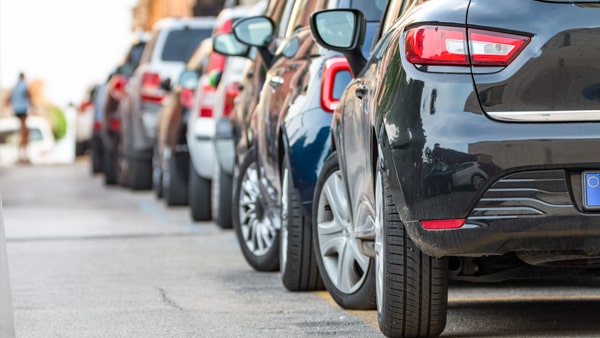
Before getting out of your parked car on the traffic side of the street, you should:
  1. A Extend an arm through the window
  2. B Activate the left turn signal
  3. C Activate the right turn signal
  4. D Check mirrors and approaching traffic and make sure opening is safe

Correct answer: D – Check mirrors and approaching traffic and make sure opening is safe

Maryland law prohibits opening a vehicle door on a side available to moving traffic unless it is reasonably safe and will not interfere with traffic. Check mirrors and the roadway for vehicles, motorcycles, and bicycles before opening the door. Do not leave the door open longer than necessary.

Source: Md. Code, Transp. § 21-1105 — Opening and Closing Vehicle Doors, Maryland Driver’s Manual — § 3.J, “General Parking Rules”
Question 2

A posted speed limit identifies:

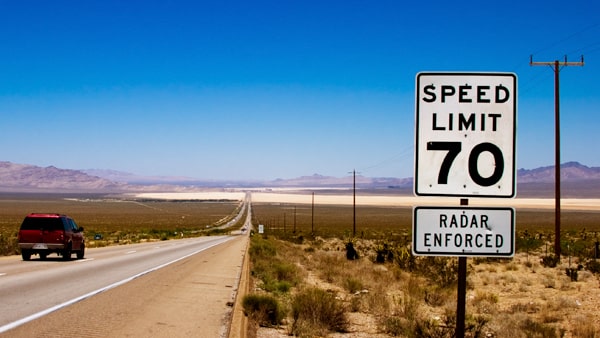
The posted speed limits show:
  1. A The minimum speed every vehicle must maintain
  2. B The exact speed required regardless of conditions
  3. C The maximum lawful speed under ideal conditions
  4. D A speed that is safe under every road and weather condition

Correct answer: C – The maximum lawful speed under ideal conditions

The posted limit is the maximum legal speed for ideal road, traffic, and weather conditions. It does not guarantee that traveling at that speed is always safe. Drivers must reduce speed when hazards involving weather, visibility, traffic, pedestrians, or the roadway require it.

Source: Md. Code, Transp. § 21-801(a), (h) — Basic Rule, Md. Code, Transp. § 21-801.1(a) — Maximum Limits, Maryland Driver’s Manual — § 3.C, “Understanding Vehicle Speed”

Question 3

A driver knows that a prescription medicine has made them unable to operate a vehicle safely. May the driver legally continue driving?

  1. A Yes, because the medicine was prescribed
  2. B Yes, if the driver remains below the speed limit
  3. C No
  4. D Yes, if the trip is short

Correct answer: C – No

Maryland prohibits driving while so impaired by a drug or combination of drugs that the person cannot drive safely. Lawful entitlement to use a prescription is generally not a defense when the driver knows its effects. A first conviction under this provision may result in up to two months’ imprisonment, a fine of up to $500, or both.

Source: Md. Code, Transp. § 21-902(c)(1) — Driving While Impaired by Drugs, Maryland Driver’s Manual — § 6.A, “Alcohol, Drugs and Driving”

Question 4

Why should your visual search include the area behind your vehicle?

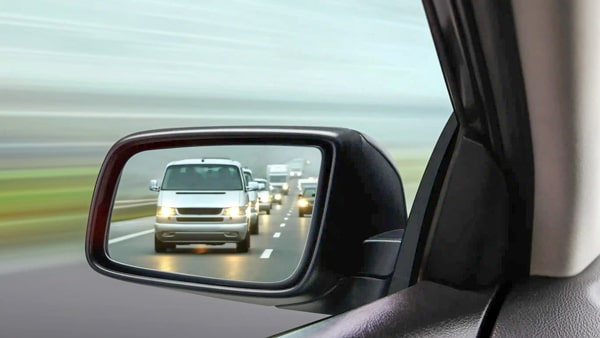
Checking traffic behind you:
  1. A Looking ahead is unnecessary when mirrors are available
  2. B It helps you notice a vehicle following too closely or another developing hazard
  3. C The rear should be checked only while braking
  4. D It matters only when backing

Correct answer: B – It helps you notice a vehicle following too closely or another developing hazard

Defensive drivers need to know what is happening around the front, sides, and rear of the vehicle. Monitoring rear traffic can reveal a rapidly approaching vehicle or one following too closely. This awareness gives you more time to adjust your speed or position safely if conditions change.

Source: Maryland Driver’s Manual — § 3.A, “Visual Search/Driver Awareness”

Question 5

Before entering an intersection after the signal turns green, what should you verify?

  1. A That cross traffic is not entering or remaining in the intersection
  2. B That you can stop watching the sides once you begin moving
  3. C That cross traffic has a green arrow
  4. D That pedestrians on the cross street may enter against their signal

Correct answer: A – That cross traffic is not entering or remaining in the intersection

A steady green signal allows you to proceed, but you must first check that the intersection is clear enough to enter safely. Look for vehicles or pedestrians already in the intersection and scan for traffic that may fail to stop. Yield to anyone lawfully within the intersection or an adjacent crosswalk.

Source: Md. Code, Transp. § 21-202(b), (c) — Traffic Lights with Steady Indication, Maryland Driver’s Manual — § 4.A, “Steady Green Signal”

Question 6

What does a steady green left arrow permit you to do?

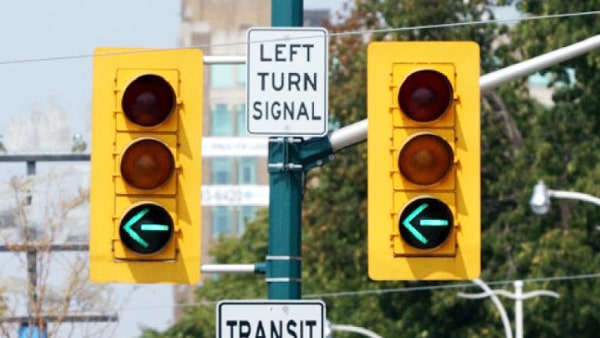
A green arrow pointing to the left on a traffic light means you may:
  1. A Turn left or proceed straight regardless of other signals
  2. B Turn left only after making a complete stop
  3. C Proceed cautiously in the arrow’s direction after yielding to anyone already in the intersection
  4. D Turn without taking action to avoid a collision

Correct answer: C – Proceed cautiously in the arrow’s direction after yielding to anyone already in the intersection

Under Maryland law, traffic facing a green arrow may cautiously enter to make the movement indicated by the arrow. Drivers must still yield to pedestrians and vehicles lawfully within the intersection or an adjacent crosswalk. The arrow does not authorize a driver to proceed without checking that the path is clear.

Source: Md. Code, Transp. § 21-202(d), (e) — Traffic Lights with Steady Indication, Maryland Driver’s Manual — § 4.A, “Steady Green Arrow Signal”