


Massachusetts CDL Practice Test Questions and Answers (MA) 7

5 out of 5 (67 votes)
80% Passing score
50 Questions
10 Mistakes allowed
Welcome to your seventh CDL General Knowledge Practice Test, a crucial step towards achieving your Massachusetts CDL in 2026. Here, you'll encounter 50 meticulously crafted MA CDL test questions and answers, mirroring the real test's structure and content. Your goal is to correctly answer at least 40 of them to pass, and rest assured, the questions remain consistent across multiple attempts, enabling you to gauge your progress effectively. This test is more than just a series of Mass CDL questions and answers; it's a comprehensive learning tool. As you navigate through the questions, you'll apply your knowledge of road signs, traffic signals, pavement markings, and the rules of the road, crucial for anyone aspiring to drive commercially in Massachusetts. Whether it's identifying the right lane for a turn or understanding intricate traffic signs, this Massachusetts CDL practice test covers it all. But, what sets our MA general knowledge practice test apart is the immediate feedback and detailed explanations provided for each permit test question. These insights are invaluable, as they deepen your understanding of the subject matter and clarify any doubts. It's like having a tutor guiding you through each step, ensuring you grasp the why behind every correct answer. Moreover, we understand that everyone's learning style is unique. That's why our MA CDL practice test offers customizable sessions. You can focus on areas where you need more practice, retake the test to improve your score, or engage with it whenever you find it convenient. This flexibility is key to a personalized learning experience that caters to your individual needs. To ensure you're getting the most up-to-date information, our content is regularly refreshed to reflect the latest driving laws and regulations. The 2026 version of this RMV practice test incorporates all the recent changes, guaranteeing that you're studying the most current and relevant material. Embark on this practice test with confidence, knowing that it's designed to equip you with the knowledge and skills required to excel in your Massachusetts CDL test in 2026!
FREE CDL Practice Test App
Pass your Massachusetts CDL General Knowledge test with the NextDoorDriving app. Real questions and answers—100% free and ad-free.
Download on the App Store

Sample Massachusetts CDL Test Questions - General Knowledge

Question 1

Which may be the only warning that a rear tire has suddenly gone flat at highway speed?

  1. A A low-air-pressure warning on the dashboard
  2. B A quiet hissing sound from outside the cab
  3. C Heavy thumping or vibration
  4. D An immediate, major decrease in vehicle speed

Correct answer: C – Heavy thumping or vibration

A tire failure often causes the vehicle to thump or vibrate heavily. With a failed rear tire, this vibration may be the only sign the driver receives. A loud bang can also indicate a blowout, while heavy steering may indicate a failed front tire. Recognizing these signs quickly gives the driver more time to respond safely.

Source: Massachusetts Commercial Driver’s License Manual — § 2.17.4, “Tire Failure”
Question 2

At highway speed, approximately how far ahead should a commercial driver scan the road?

  1. A One-eighth mile
  2. B One-quarter mile
  3. C One-half mile
  4. D Three-quarters mile

Correct answer: B – One-quarter mile

The Massachusetts CDL manual recommends looking at least 12 to 15 seconds ahead. At highway speeds, the distance traveled during that time is approximately one-quarter mile. Looking well ahead helps a driver identify traffic changes and hazards early enough to adjust speed or position gradually instead of making a sudden maneuver.

Source: Massachusetts Commercial Driver’s License Manual — § 2.4.1, “Seeing Ahead”

Question 3

Wet brakes on a vehicle pulling a trailer can make it especially easy to:

  1. A Hydroplane at every speed above 30 mph
  2. B Hydroplane regardless of tire condition
  3. C Overheat the brakes immediately
  4. D Jackknife the combination

Correct answer: D – Jackknife the combination

Wet brakes may become weak, apply unevenly, or grab. These conditions can cause reduced braking power, wheel lockup, or pulling to one side. If the vehicle is pulling a trailer, uneven braking can contribute to a jackknife. After crossing unavoidable standing water, the driver should dry and test the brakes as described in the CDL manual.

Source: Massachusetts Commercial Driver’s License Manual — § 2.13.2, “Wet Brakes”

Question 4

When should a commercial driver activate a turn signal?

  1. A Well before beginning the turn
  2. B At the moment the steering wheel is turned
  3. C After entering the new roadway
  4. D Only when another road user is immediately nearby

Correct answer: A – Well before beginning the turn

The Massachusetts CDL manual teaches drivers to signal early, well before beginning a turn. The signal should remain on throughout the maneuver because the driver needs both hands for safe steering. After completing the turn, the driver should make sure the signal is canceled if the vehicle does not cancel it automatically.

Source: Massachusetts Commercial Driver’s License Manual — § 2.5.2, “Communicating Your Presence”

Question 5

Which combination affects how high a person’s blood alcohol concentration may rise?

  1. A The amount of alcohol consumed
  2. B The rate at which the alcohol is consumed
  3. C The person’s body weight
  4. D All three factors

Correct answer: D – All three factors

The Massachusetts CDL manual identifies the amount consumed, drinking rate, and body weight as factors that determine BAC. Consuming more alcohol or drinking it faster raises BAC. A person with less body weight generally reaches the same BAC after consuming less alcohol than a heavier person.

Source: Massachusetts Commercial Driver’s License Manual (March 2025) — § 2.22, “What Determines Blood Alcohol Concentration?”

Question 6

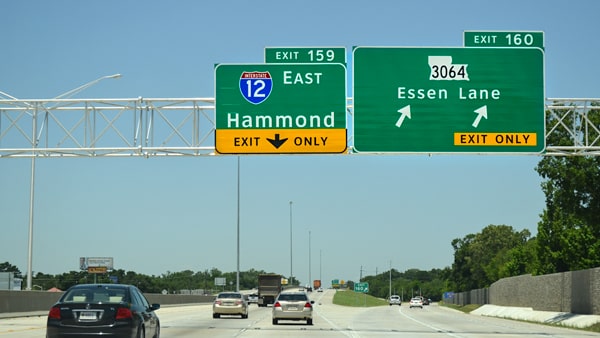
On a Massachusetts highway, which type of sign gives route, destination, distance, and service information?

____________ signs inform drivers of basic highway information.
  1. A Parking signs
  2. B Guide signs
  3. C Regulatory signs
  4. D Warning signs

Correct answer: B – Guide signs

Guide signs direct road users along streets and highways and provide information about routes and destinations. They may also identify distances, services, parks, historical sites, and other useful locations. Regulatory signs communicate traffic laws, while warning signs alert drivers to hazards or conditions ahead.

Source: Manual on Uniform Traffic Control Devices for Streets and Highways, 11th ed. — § 2D.01, “Scope of Conventional Road Guide Sign Standards and Application”