


Massachusetts DMV Test Evaluation

4.6 out of 5 (2685 votes)
80% Passing score
10 Questions
2 Mistakes allowed
Getting a Massachusetts learner’s permit is partly about knowing how to drive before anyone lets you drive, which is fair enough. But there is also the RMV portion of the experience, where your knowledge of road signs matters, yes, and somehow your ability to bring the exact right original document matters just as much. So, before you get too deep into imagining test day, start with the part you can actually practice: the rules. This Mass practice permit test gives you 10 questions pulled from the same general territory as the official driver’s manual: road signs, right-of-way, traffic laws, safe driving habits, and those small rule details that seem obvious until they are phrased in the least casual way possible. You need 8 correct answers to pass this practice round. That is a useful little reality check, not a victory parade, because the real Massachusetts permit test has 25 questions and requires at least 72% to pass. Still, a short RMV practice test is a good way to find out whether you are reading carefully or just nodding along like the manual is background noise. And then, because licensing is never only about the test, there is the paperwork. For a Standard Class D learner’s permit, Massachusetts applicants generally start the application online, then go to an RMV Service Center or participating AAA location with the required identification documents. The RMV wants proof of identity and Massachusetts residency, and it wants originals. Not photocopies. Not laminated documents that look official because someone preserved them like a middle-school achievement certificate. If you have a Social Security number, you need to provide it. If you are under 18, you also need written consent from a parent or guardian, and if the person signing is not a parent, they need documentation showing they have the authority to do that. REAL ID adds another layer. Most customers need proof of lawful presence in the United States, Social Security number, and Massachusetts residency, plus name-change documents if your current name does not match your lawful-presence document. Documents not in English may need a certified English translation, because of course that can matter too. Use this MA permit practice test as your first check-in. It will not organize your folder of documents for you, sadly, but it will tell you whether your driving knowledge is starting to look test-ready.
FREE DMV Practice Test App
Study for your Massachusetts permit test or driver’s license with the NextDoorDriving app. 700+ DMV questions and answers, 100% free!
Download on the App Store

Sample Massachusetts Permit Test Questions

Question 1

A yellow warning sign with an arrow curving right and then left indicates:
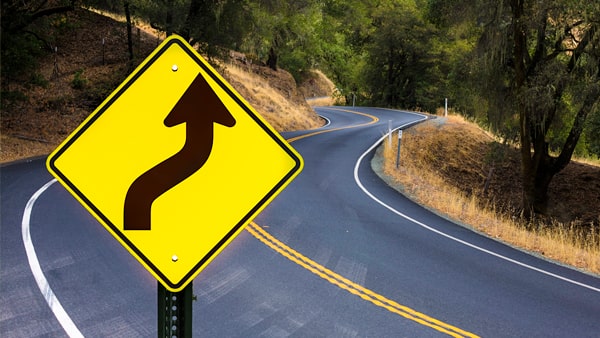
This sign means:
  1. A. A single sharp right turn
  2. B. Successive curves, beginning to the right
  3. C. Successive curves, beginning to the left
  4. D. The paved roadway ends

Correct answer: B. – Successive curves, beginning to the right

This warning sign shows that the roadway first curves right and then curves left. Reduce speed before entering the first curve and remain within your lane through both changes in direction. An advisory-speed plaque may be posted below the sign to recommend a safe speed.

Source: Massachusetts Driver’s Manual — Ch. 4, “Warning Signs”
Question 2

What color combination is normally used for highway destination and exit-distance signs?

  1. A. Yellow background with black lettering
  2. B. Black background with white lettering
  3. C. Red background with white lettering
  4. D. Green background with white lettering

Correct answer: D. – Green background with white lettering

Green guide signs provide highway directions and help drivers navigate interchanges. They use white lettering to identify destinations, routes, exits, and distances. Yellow signs generally warn of hazards, while red and white signs usually communicate regulatory information.

Source: Massachusetts Driver’s Manual — Ch. 4, “Guide Signs”

Question 3

When towing a conventional trailer on Massachusetts roads, what is required in addition to the regular hitch?

  1. A. A special state permit for every trip
  2. B. Two independent safety chains, one on each side of the hitch
  3. C. A maximum speed of 45 mph on every road
  4. D. One rope attached to the trailer frame

Correct answer: B. – Two independent safety chains, one on each side of the hitch

Massachusetts requires a trailer, other than a semi-trailer, to have safety chains in addition to its regular hitch. The regulation specifies two independent chains, one on each side, attached to control the trailer’s direction and keep the tow bar from dropping if the coupling fails. The chains must not drag and may have only enough slack for proper turning.

Source: M.G.L. c. 90, § 7 – Brakes, braking systems, mufflers, horns, lights, audible warning systems, and other equipment; compliance with safety standards; stickers and emblems, 540 CMR 22.10 – Use of Safety Chains While Towing a Trailer

Question 4

At a Massachusetts stop sign, there is a marked crosswalk but no stop line. Where must you stop?

  1. A. Before entering the crosswalk
  2. B. Fifty feet before the intersection
  3. C. At the point where a stop line might have been painted
  4. D. With the front wheels inside the crosswalk

Correct answer: A. – Before entering the crosswalk

At a stop sign, stop before the marked stop line when one is present. If there is no stop line, stop before entering the crosswalk. After making a complete stop, yield as required and proceed only when the intersection can be entered safely.

Source: Massachusetts Driver’s Manual — Ch. 4, “Stop and Yield Signs”

Question 5

Alcohol can impair which driving abilities?

  1. A. Recovery from headlight glare
  2. B. Reaction time
  3. C. Judgment of speed and distance
  4. D. All of these abilities

Correct answer: D. – All of these abilities

Alcohol weakens several abilities required for safe driving. It can slow reaction time, reduce vision and recovery from glare, and interfere with judgments about speed and distance. These effects may begin before a driver appears intoxicated, and they increase the risk of making unsafe decisions.

Source: Massachusetts Driver’s Manual — Ch. 3, “Alcohol”

Question 6

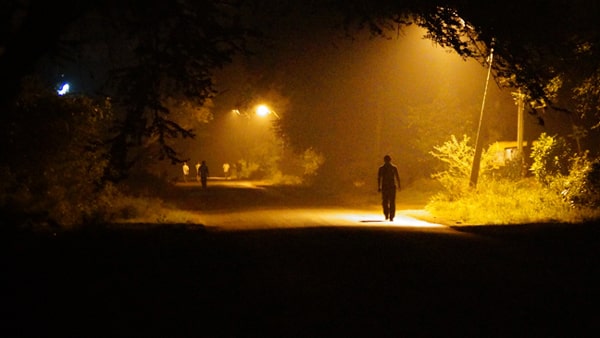
When traveling at night on a poorly lit road, you should drive at a speed that allows you to:

When driving in traffic at night on a dimly lit street, you should:
  1. A. Stop within the distance you can see ahead
  2. B. Use high beams while closely following another vehicle
  3. C. Keep the vehicle’s interior lights as bright as possible
  4. D. Use hazard lights continuously while moving

Correct answer: A. – Stop within the distance you can see ahead

At night, pedestrians, vehicles, and roadway hazards are harder to see. Reduce speed enough to react and stop safely within the area visible ahead. Driving faster than your headlights allow can leave too little distance to stop after a hazard becomes visible.

Source: Massachusetts Driver’s Manual — Ch. 5, “Night Driving”