Massachusetts DMV Sign Test 4

4.9 out of 5 (229 votes)
80% Passing score
20 Questions
4 Mistakes allowed
Massachusetts does not run a separate road-sign-only exam for a Class D learner’s permit, which is worth knowing before you spend all your study time staring at triangles, arrows, and octagons. Roadway signs are part of the full RMV permit test, tucked in with Massachusetts motor vehicle laws, rules of the road, safe driving habits, impaired-driving penalties, bicyclist safety, and hands-free driving rules. So the signs matter, absolutely, but they are not floating around by themselves. They show up as part of the bigger driving picture. This Massachusetts RMV sign test gives you focused practice on that part of the exam. You will see 20 multiple-choice questions built around the colors, shapes, symbols, and quick visual cues that Massachusetts drivers are expected to recognize without overthinking them. Red usually means stop, yield, or some form of “do not do that.” Yellow warns you. Green guides you. The shapes matter too, and the symbols are there because, in real traffic, nobody has time to read a paragraph bolted to a pole. The official Massachusetts Class D learner’s permit exam has 25 questions, and you get 25 minutes to answer them. To pass, you need 18 correct answers, which is a 72% score. That also means you can miss up to 7 questions, though treating those 7 as a cushion rather than a strategy is the smarter move. The real RMV questions are confidential, so this MA practice permit test is not pretending to be a leaked copy. It is built to mirror the kind of wording, pacing, and judgment calls you are likely to face. Take this Massachusetts permit test practice more than once. Seriously, that is where it starts to work. The first run shows you what you half-know. The next few runs clean up the hesitation, the second-guessing, the “wait, is that sign warning me or ordering me?” moments. And since the permit process also includes documents, a vision screening, and either online or in-office testing after the RMV handles your application, getting comfortable with the knowledge side early is one of the few parts of the process you can actually make easier on yourself.
FREE DMV Practice Test App
Study for your Massachusetts permit test or driver’s license with the NextDoorDriving app. 700+ DMV questions and answers, 100% free!
Download on the App Store

Sample Massachusetts Permit Test Questions

Question 1

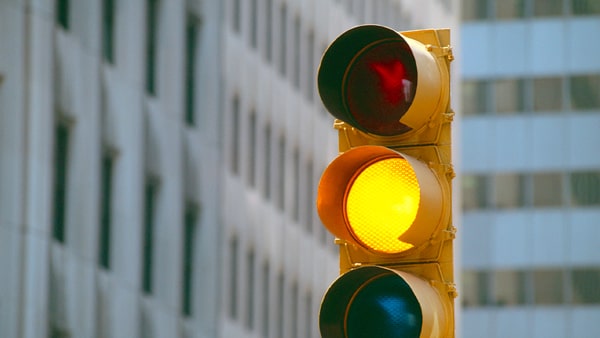
When may you continue instead of stopping for a steady yellow signal?

  1. A. An emergency vehicle is crossing your lane
  2. B. No pedestrians are visible
  3. C. You intend to turn right
  4. D. You are too close to stop safely

Correct answer: D. – You are too close to stop safely

The Massachusetts manual states that a steady yellow signal warns that the light is changing from green to red. Stop when you can do so safely. If you are already too close to stop safely, continue through carefully; if you are already stopped at the intersection or stop line, do not proceed.

Source: Massachusetts Driver’s Manual — Ch. 4, “Motor Vehicle Signals”
Question 2

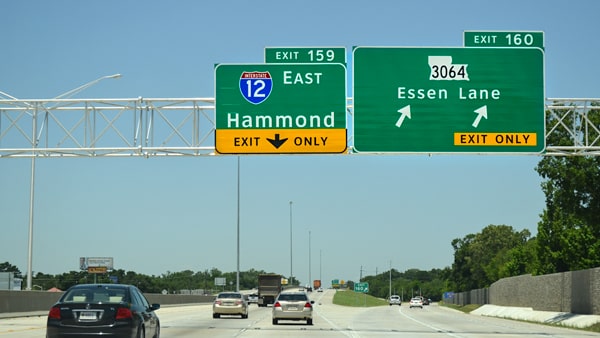
On a Massachusetts expressway, what does a THIS LANE EXIT ONLY sign mean?

If you see this sign above your lane, you:
  1. A. The lane cannot be used to reach the exit
  2. B. The lane continues through but may also exit
  3. C. The lane continues beyond the next interchange
  4. D. You must take the exit if you remain in that lane

Correct answer: D. – You must take the exit if you remain in that lane

A THIS LANE EXIT ONLY sign gives advance warning that the indicated lane will leave the roadway at the next interchange. It is not a continuing through lane. A driver who does not intend to exit must make a safe lane change before the lane departs.

Source: MassDOT Standard Sign Book — “MA-W9-8 THIS LANE EXIT ONLY”

Question 3

On a two-way road marked with two solid yellow center lines, which action is permitted?

  1. A. Crossing the lines to turn left into a driveway when it is safe
  2. B. Treating the road as a one-way street
  3. C. Using the marked area as a center turn lane
  4. D. Crossing the lines to pass a slower vehicle

Correct answer: A. – Crossing the lines to turn left into a driveway when it is safe

Two solid yellow lines separate traffic moving in opposite directions and prohibit crossing to pass. The Massachusetts manual permits crossing them to make a left turn when the movement can be completed safely. Check for approaching traffic before turning into a driveway or private road.

Source: Massachusetts Driver’s Manual — Ch. 4, “Pavement Markings—Yellow Lane Lines”

Question 4

At a red, octagonal STOP sign in Massachusetts, what must you do?

This sign means:
  1. A. Stop only when another vehicle is approaching
  2. B. Come to a complete stop, then proceed when it is safe
  3. C. Slow down and continue if the intersection looks clear
  4. D. Stop only for traffic traveling on the intersecting road

Correct answer: B. – Come to a complete stop, then proceed when it is safe

A STOP sign requires a complete stop; merely slowing is not sufficient. Stop at the marked stop line, or before the near crosswalk if there is no line. If neither exists, stop at the nearest point where you can view approaching traffic before entering, then yield as required.

Source: Mass. Gen. Laws ch. 89, § 9 – Designation of highways as through ways; traffic control signs and devices, Massachusetts Driver’s Manual — Ch. 4, “Traffic Signs—Stop and Yield Signs”

Question 5

A steady yellow signal appears as you approach an intersection. What should you do?

As you near an intersection, the traffic light changes from green to yellow. Your best action would be to:
  1. A. Accelerate so you enter before the signal turns red
  2. B. Brake abruptly, even if a safe stop is impossible
  3. C. Plan to stop after entering the intersection
  4. D. Stop before the intersection if you can do so safely

Correct answer: D. – Stop before the intersection if you can do so safely

Traffic approaching a steady yellow signal must stop at the marked stop line or intersection unless the vehicle is too close to stop safely. Do not accelerate to enter before the light changes. If a safe stop is no longer possible, continue cautiously and clear the intersection.

Source: 700 CMR 9.06(10)(d) – Obedience to Traffic Control Signals: Steady Circular Yellow, Massachusetts Driver’s Manual — Ch. 4, “Traffic Signals—Motor Vehicle Signals”

Question 6

A green left arrow ends, but a steady green circle remains. What may you do?

  1. A. Turn left after yielding to oncoming traffic and pedestrians
  2. B. Proceed straight because left turns are no longer allowed
  3. C. Turn left without yielding because the turn remains protected
  4. D. Travel in any direction without checking for conflicting traffic

Correct answer: A. – Turn left after yielding to oncoming traffic and pedestrians

A steady green circle permits a left turn, but left-turning traffic must yield to oncoming vehicles and pedestrians crossing with the traffic flow. The protected phase provided by the arrow has ended. Massachusetts regulations also require drivers to consider the safety of people already within the intersection.

Source: 700 CMR 9.06(10)(a)–(b) – Obedience to Traffic Control Signals: Steady Circular Green; Steady Right, Left, and Vertical Green Arrows