Michigan DMV Practice Test 5

4.9 out of 5 (273 votes)
80% Passing score
20 Questions
4 Mistakes allowed
This fifth Michigan DMV practice test is aimed at the material that deserves more attention than most people give it: alcohol laws, impaired driving, blood alcohol limits, penalties, and the everyday judgment Michigan expects from a safe driver. It is a Michigan driving test practice quiz, sure, but not the kind you click through once and politely forget. The better use is slower than that. Read the question, answer it, get it wrong if you have to, and then actually look at the explanation — that is where the useful part usually shows up. Michigan licensing is handled by the Michigan Department of State, Secretary of State, and the standard driver manual is What Every Driver Must Know. For adults age 18 and older, the official knowledge test is multiple choice and covers traffic laws, safe vehicle operation, and road signs. It has 50 questions total: 25 in the operator section and 25 in the signs section. You need 80% to pass, which means at least 20 correct in each section, or 40 correct overall. And yes, the section score matters. Doing well on signs will not rescue a weak operator section, or the other way around. This Michigan DMV practice permit test gives you 20 questions with immediate feedback and detailed explanations, so the practice does not flatten into answer-memorizing. The impaired-driving questions are especially worth taking seriously. Michigan’s DUI rules are not just test material; they connect to real situations — winter roads, busy highways, city traffic, late-night decisions, and those moments where a bad choice stops being theoretical very quickly. The licensing path changes depending on age. Adults must pass the knowledge exam, complete the Secretary of State requirements, and receive a Temporary Instruction Permit, usually called a TIP, before moving on to the road skills test. After getting the TIP, they must practice with a licensed adult for at least 30 days. Teen drivers take a different route. Instead of starting with the same adult knowledge-test process, most teens begin with Segment 1 driver education. They must be at least 14 years and 9 months old, complete Segment 1, pass the Segment 1 written exam, and then visit a Secretary of State office with a parent or legal guardian to apply for a Level 1 Learner’s License. There is still the usual official-business stuff, like the vision and health screening, identity documents, residency documents, legal presence, Social Security information, and the licensing fee. Later, Segment 2 brings another written exam, with a required score of at least 70% to pass that course. Use this DMV learners permit practice test to jump-start your permit process. Repeat it, read the explanations, clean up the weak spots, and let the official Michigan DMV permit test feel more familiar before it counts.

FREE DMV Practice Test App
Study for your Michigan permit test or driver’s license with the NextDoorDriving app. 700+ DMV questions and answers, 100% free!
Download on the App Store

Sample Michigan Permit Test Questions

Question 1

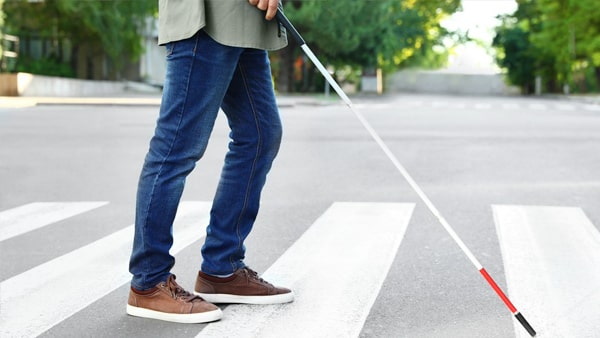
A pedestrian using a white cane is most likely:

You need to use extra caution when driving near a pedestrian using a white cane because:
  1. A Deaf or hard of hearing
  2. B Experiencing a cognitive disability
  3. C Blind or visually impaired
  4. D Unable to walk without assistance

Correct answer: C – Blind or visually impaired

A white cane is used by a person who is blind or visually impaired. When approaching such a pedestrian, reduce speed, yield as required, and be ready to stop. Avoid unnecessary horn use because the pedestrian may rely on traffic sounds to judge vehicle movement.

Source: What Every Driver Must Know — Ch. 6, “Blind pedestrians”

Question 2

Which factors can affect a person’s blood alcohol concentration?

  1. A The amount of food in the stomach
  2. B The person’s body weight
  3. C The amount of time between drinks
  4. D All three factors

Correct answer: D – All three factors

Body weight, food intake, and the amount of time over which alcohol is consumed can all affect BAC. Eating may slow alcohol absorption, but it does not prevent impairment or remove alcohol already in the body. Only time allows the body to process alcohol.

Source: What Every Driver Must Know — Ch. 4, “Alcohol and drugs”

Question 3

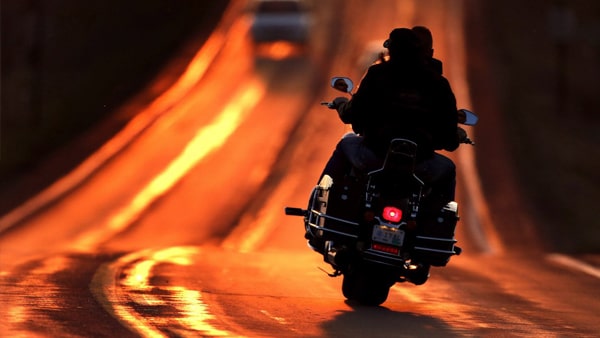
Under normal conditions, what following interval should you keep behind a motorcycle?

When traveling behind a motorcycle:
  1. A Two car lengths
  2. B Two seconds
  3. C About four seconds
  4. D One car length

Correct answer: C – About four seconds

Michigan’s handbook recommends a three- to four-second following interval under normal conditions. About four seconds gives you time and space to respond if a motorcycle slows or stops. Increase the interval to six seconds or more when speed, weather, visibility, or road conditions make stopping more difficult.

Source: What Every Driver Must Know — Ch. 7, “Stopping distances”

Question 4

Where is parking prohibited in Michigan?

  1. A In the marked access aisle beside a disability parking space
  2. B In an unrestricted legal curbside space
  3. C In a marked parking space with the owner’s permission
  4. D In a public lot during its posted operating hours

Correct answer: A – In the marked access aisle beside a disability parking space

Parking is prohibited in an access aisle or access lane immediately beside a space designated for persons with disabilities. The aisle must remain available for access to and from the reserved parking space. Parking there is a civil infraction even if the vehicle displays a disability placard.

Source: MCL 257.674(1)(t), (3) – Prohibited parking; exceptions; bus loading zone; violation as civil infraction

Question 5

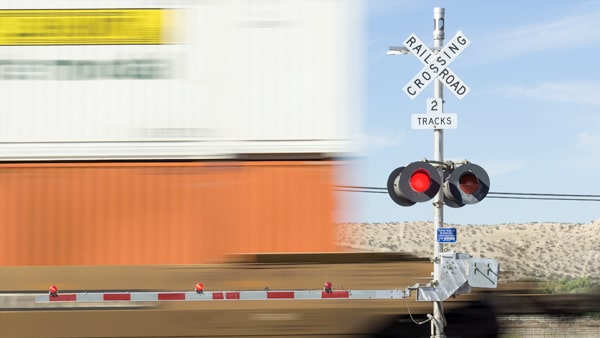
After a train clears a railroad crossing, what should you do before proceeding?

After a train has passed, you should:
  1. A Wait for a green traffic signal at every crossing
  2. B Cross immediately behind the train
  3. C Sound the horn and enter the crossing
  4. D Look again for another train and proceed only when safe

Correct answer: D – Look again for another train and proceed only when safe

Do not enter the crossing immediately just because one train has passed. Check in both directions for another train, especially where more than one track is present, and wait for warning devices or gates to stop operating. Michigan law permits proceeding only when the crossing can be entered safely.

Source: MCL 257.667(1), (3) – Stopping at railroad grade crossing; driving through, around, or under crossing gate or barrier; violation as civil infraction, What Every Driver Must Know — Ch. 6, “Railroad crossings”

Question 6

When passing on a two-lane Michigan road, you must return to your lane before coming within how many feet of an oncoming vehicle?

  1. A 100 feet
  2. B 200 feet
  3. C 300 feet
  4. D 500 feet

Correct answer: B – 200 feet

The driver’s handbook directs you to return to the right lane before coming within 200 feet of an oncoming vehicle. State law also requires the opposing lane to be clearly visible and free for enough distance to complete the pass without interfering with approaching traffic or the vehicle being passed. If that space is unavailable, do not begin the maneuver.

Source: MCL 257.638(1), (2) – Overtaking and passing on left of another vehicle; violation as civil infraction, What Every Driver Must Know — Ch. 4, “When passing is prohibited”