Michigan DMV Test Evaluation

4.6 out of 5 (1076 votes)
80% Passing score
10 Questions
2 Mistakes allowed
Michigan’s permit process has a few moving parts, and it helps to know which version of the process actually applies to you before you start drilling questions. Adults 18 and older take the Michigan driver knowledge test as part of getting a Temporary Instruction Permit, or TIP. That official test is 50 questions total, split evenly between traffic laws and safe driving on one side and road signs on the other. You need 20 correct in each 25-question section, which means 40 correct overall. Miss too many in either half and, well, the math stops being friendly. This Michigan drivers permit practice test gives you a cleaner way to measure your readiness without pretending the real exam is some casual little quiz. It includes 10 randomly selected questions covering the material Michigan expects new drivers to understand: right-of-way rules, road signs, safe vehicle operation, and the everyday judgment calls that show up once you are actually sharing the road with everyone else. To pass this Michigan driving test practice, you need 8 correct answers, keeping the same 80% standard used on the official adult knowledge test. The review at the end is where this practice test earns its keep. You are not just told what you missed and sent away with a shrug. You can look back through your answers, check the explanations, and catch the details that tend to blur together when you are studying from the manual alone. And some of those details do matter. Michigan’s adult test has separate Operator and Signs portions, while most teen drivers go through Segment 1 driver education before applying for a Level 1 Learner’s License. Same broad goal, different path. Use this Michigan permit practice test as a first-pass check, not your entire study plan in disguise. Pair it with the official What Every Driver Must Know manual, road sign review, and any driver education material that fits your age group. The point is to walk into the Secretary of State office, or the online KnowTo Drive test if you are eligible, already familiar with the rules instead of trying to reason your way through them under pressure. That approach is less dramatic, admittedly, but it works better.
FREE DMV Practice Test App
Study for your Michigan permit test or driver’s license with the NextDoorDriving app. 700+ DMV questions and answers, 100% free!
Download on the App Store

Sample Michigan Permit Test Questions

Question 1

For a Michigan driver covered by the safety-belt law, which statement is correct?
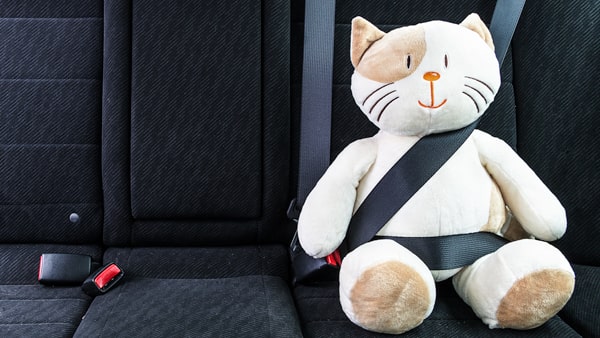
You must use your seat belt:
  1. A A belt is required only on freeways
  2. B A belt is optional when driving below 25 mph
  3. C The driver must wear a belt, and a violation is a civil infraction
  4. D Airbags may be used instead of a belt

Correct answer: C – The driver must wear a belt, and a violation is a civil infraction

A covered vehicle's driver must wear a properly adjusted and fastened safety belt. Violating this requirement is a civil infraction, and the statute sets a $25 civil fine. The law lists limited exceptions, including certain vehicles, documented medical reasons, and vehicles not required by federal law to have safety belts.

Source: MCL § 257.710e(1), (2), (8) – Safety belt required; driver or passenger to which section inapplicable; transporting child 13 years of age but less than 16 years of age; use of lap belt for purpose of road construction or maintenance; enforcement of section; violation as evidence of negligence; reduction of recovery for damages; violation as civil infraction; reports of inappropriate enforcement; intent; assessment of points prohibited
Question 2

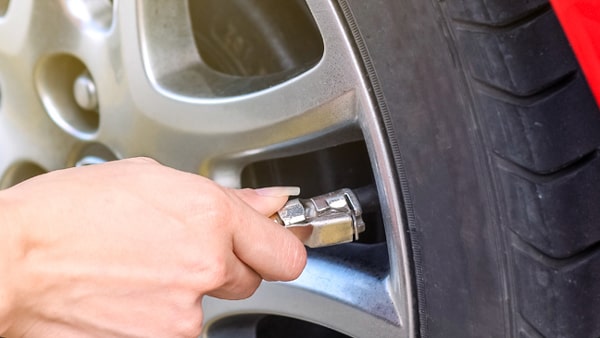
Driving with low tire pressure can contribute to which wet-road hazard?

If your tires are not inflated to the pressure recommended by the manufacturer, it may cause:
  1. A Engine overheating
  2. B Brake-fluid loss
  3. C Headlight glare
  4. D Hydroplaning

Correct answer: D – Hydroplaning

Low tire pressure is one factor that contributes to hydroplaning, along with worn tires and excessive speed. During hydroplaning, the tires ride on water rather than maintaining full contact with the pavement, and the driver may lose control. Regular tire-pressure and tread checks help identify conditions that increase this risk.

Source: What Every Driver Must Know — Ch. 7, “Rain and fog”

Question 3

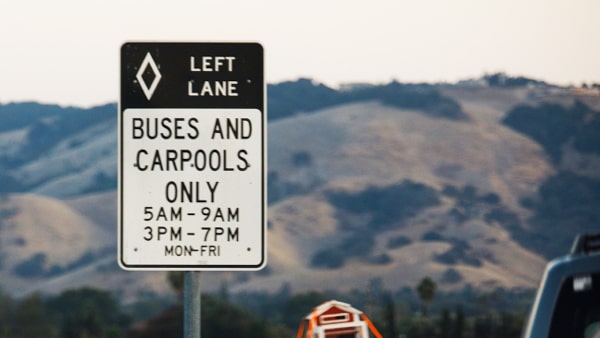
When may a passenger vehicle use a signed Michigan HOV lane during its restricted hours?

You can drive in a carpool lane if:
  1. A When it has at least two occupants, including the driver
  2. B When it is an empty passenger van
  3. C Whenever the driver wants to pass
  4. D Whenever regular traffic is congested

Correct answer: A – When it has at least two occupants, including the driver

An HOV is defined as a motor vehicle carrying at least two occupants, including the driver. During the periods shown by traffic-control devices, an HOV lane is reserved for buses and qualifying HOVs. The statutory restrictions also exempt authorized emergency vehicles, law-enforcement vehicles, buses, and motorcycles.

Source: MCL § 257.20b – “High-occupancy vehicle” or “HOV” defined, MCL § 257.642(2) – Roadway divided into 2 or more marked lanes; applicable rules; designation as HOV lane; restrictions; exceptions; designation as automated vehicle roadway or lane; violation as civil infraction

Question 4

Before opening the driver's door after parallel parking, what must you verify?

  1. A That it is daylight
  2. B That the nearest traffic light is red
  3. C That no bicycle, motorcycle, or other vehicle is approaching in the door's path
  4. D That the four-way flashers are operating

Correct answer: C – That no bicycle, motorcycle, or other vehicle is approaching in the door's path

Before opening a door on the traffic side, check the mirrors and look over your shoulder for approaching road users. Bicycles and motorcycles may be especially difficult to see because of their smaller profiles. The driver handbook recommends using your right hand to open the driver's door because this encourages you to turn and look toward approaching traffic.

Source: What Every Driver Must Know — Ch. 4, “Parking”, What Every Driver Must Know — Ch. 6, “Motorcycles, scooters, mopeds and bicycles”

Question 5

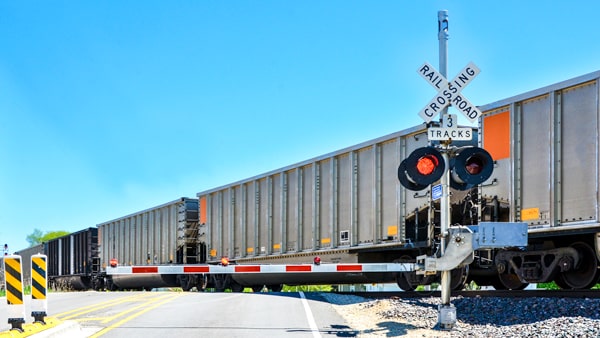
When may a driver go through, around, or under a railroad crossing gate that is closed or moving?

When may you legally drive around or under a railroad crossing gate?
  1. A Never
  2. B When the tracks appear clear
  3. C When the warning system seems defective
  4. D When there is time to cross before a train arrives

Correct answer: A – Never

Michigan law prohibits driving through, around, or under a railroad crossing gate or barrier while it is closed, opening, or closing. A driver must also stop when a lowered gate or warning signal indicates an approaching train or other on-track equipment. The vehicle may proceed only after the warning condition has ended and crossing can be completed safely.

Source: MCL § 257.667(1)–(3) – Stopping at railroad grade crossing; driving through, around, or under crossing gate or barrier; violation as civil infraction

Question 6

In Michigan, when must a turn signal be given during the final 100 feet before a turn?

  1. A Only when the turn is not protected by an arrow
  2. B Only when the vehicle is outside a turn lane
  3. C For every turn, even when no other traffic is visible
  4. D Only when traveling below the speed limit

Correct answer: C – For every turn, even when no other traffic is visible

The required signal must be given continuously for at least the final 100 feet traveled before turning. The statute does not create exceptions for designated turn lanes, protected arrows, or the apparent absence of nearby traffic. Before turning, the driver must also determine that the movement can be made safely.

Source: MCL § 257.648(1) – Operation of vehicle or bicycle; signals for stopping or turning; signal lamp or mechanical signal device on commercial motor vehicle; violation as civil infraction